Morocco begins its avocado season with moderate projections after the impact of the heat
The first shipments to Europe are planned for November, with an estimated production of between 70 and 80 thousand tons.
The 2025/26 Moroccan avocado season begins with a cautious approach. Although the export schedule to Europe remains largely unchanged—with the first shipments expected in November—the sector agrees that the extreme heat waves recorded between June and July have left a visible mark on production.
According to estimates from the Gharb Producers Association, one of the country's main growing regions, the harvest could reach approximately 80,000 tons, representing a 30% reduction compared to the previous season, when Morocco recorded around 115,000 tons of national production. The association attributes this decrease to fruit and blossom loss caused by high temperatures and persistent irregular weather conditions during fruit development.
For its part, the Moroccan Avocado Association (MAVA)—an organization representing the country's main exporters—has indicated that the national impact could be more moderate, around a third less than last season, but partially offset by new hectares under cultivation. The association emphasizes that, despite the weather-related challenges, the country's overall supply will remain competitive and in line with the volumes Europe expects from this origin during the winter months.
“We cannot yet know the true impact.”
In conversation with Avobook , Yassin Chaib, manager of the exporting company Mavoca, explained that the sector does not yet have a definitive figure on the magnitude of the losses, since the final assessment will depend on the progress of the harvest.
“We can’t really know the exact impact of the heat yet. We estimate it to be between 20 and 30%, but we won’t know the exact volume until we start harvesting and a few months have passed,” the executive stated.
Chaib added that the new crops planted by large producers—many of whom have recently entered the export market—add an additional layer of uncertainty. “There’s hardly any information about their production volume because no one has been allowed in to inspect it yet,” he commented. According to his projections, if weather conditions remain stable, national production could reach between 70,000 and 80,000 tons.
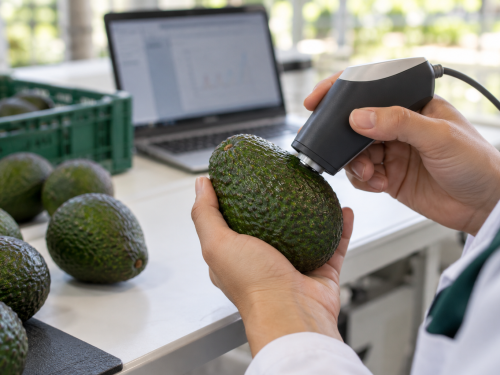
The harvest is expected to begin in mid-October, once the fruit reaches the appropriate dry matter levels for export. Chaib explained that measurements taken on the Zutano variety already show values of 20% to 21%, allowing the first harvests to be planned for the coming days, while the Hass variety is still in the evaluation phase.
“People are eager to get started, of course, but we can’t do it until the dry matter is available, because what we need to ensure is that the avocados reach the consumer in the best possible condition. That’s how we’ll create a respected origin,” emphasized the manager of Mavoca.
According to MAVA, the first shipments to Europe should take place during November, when the most commercially important sizes—14, 16, 18, and 20—reach optimal export conditions. The pace of shipments will also depend on European market demand, which is traditionally strongest in the month leading up to Christmas and in March, at the end of the season.
Europe remains the hub of Moroccan business
Despite challenging weather conditions, the European market will remain the primary destination for Moroccan avocados. MAVA confirmed that the European Union accounts for the majority of shipments, with the Netherlands, Spain, and France serving as the main entry and distribution points. Geographical proximity, coupled with shorter logistics times and lower transport costs, continues to be a key strategic advantage over suppliers in the Southern Hemisphere.
During the last season, Morocco exported over 100,000 tons of avocados, solidifying its position as a key player on the international market. Although current forecasts anticipate a decrease in available volume, producers and exporters remain committed to preserving the quality and consistency of the product as a way to strengthen the reputation of Moroccan origin in destination markets.
The 2025/26 season is shaping up to be a year of adjustment and observation for the Moroccan sector. With a more limited supply and recovering international prices, exporters' priority will be to manage shipments in stages to ensure a stable supply and avoid saturating European markets during peak demand weeks.
Both the Moroccan Avocado Association and the producers agree that the performance of this campaign will serve as a benchmark to measure the resilience of Moroccan avocados to extreme weather events, which in recent years have tested the productive sustainability of the Gharb region and other agricultural areas of the country.