Avocado, a booming fruit in Argentina
Learn about the history and rise of avocados in Argentina, a fruit that has won over consumers with its flavor and nutritional benefits.
The avocado, also known as palta, originated in Mexico, Guatemala, and El Salvador over 10,000 years ago. Nutritionally, it is rich in monounsaturated fats, similar to those found in olive oil, and is an excellent source of vitamins E, C, and A, as well as various minerals such as potassium, magnesium, phosphorus, iron, copper, and zinc.
In Argentina, avocados have experienced a growing trend toward emotional consumption, evoking childhood memories and being appreciated as part of ethnic cuisine, such as in tacos or in the preparation of guacamole. This, along with their health benefits, has boosted their consumption in the country.
In Argentina, several avocado varieties are cultivated almost year-round, with Northwest Argentina, especially Tucumán and Jujuy, standing out as the main producing regions. The most consumed variety in Argentina is Hass, followed by others such as Torres, Lula, Tonagge, and the "No Variety" or "Wild Forest Avocado" variety. Most of the avocado supply in Argentina comes from Chile, primarily the Hass variety.
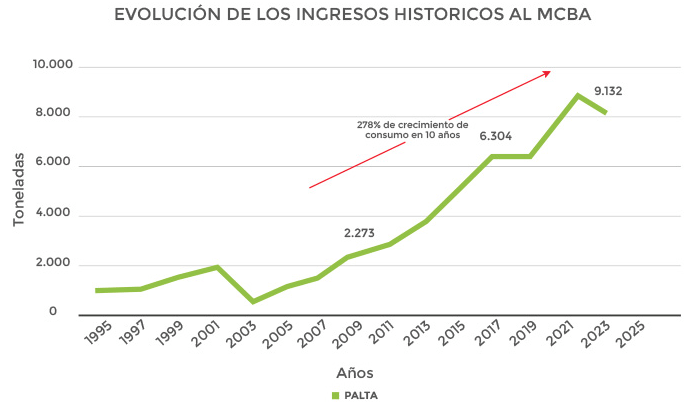
Source: mercadocentral.gob.ar