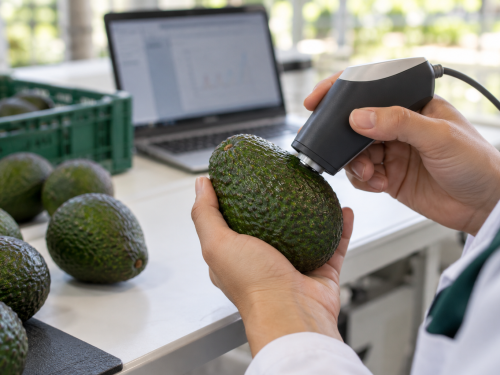
Jorge Molina Duque and his analysis of the Colombian avocado
Coltrópicos' commercial director entered the global avocado business a few years ago, but has accumulated so much knowledge that he has a clear understanding of the benefits and challenges of his country's fruit.

Colombian Jorge Molina Duque entered the global avocado business three years ago. But, listening to him, it sounds like thirty. He has dedicated much of his life to developing leadership skills as a coach . One night, while sharing drinks with friends, he began his journey into the agribusiness industry, almost by chance.
“I had been working in executive skills development for eight or ten years. When the pandemic hit, I happily continued working from home, but things got very tight. Alejandra Arellano, from Chile, asked in a WhatsApp chat if anyone knew a headhunter in my country. She told me that a friend needed someone for a business operation in Colombia. One Sunday, we connected with Sebastián de la Cuadra, and he started explaining what he was looking for. It was like he was describing me,” he recalls.
He confesses that at that time he had no idea about agriculture. Much less about avocados. But, he declares, “I have always trusted in the power of relationships.”
On September 1, 2021, we began “a three-month journey of travel, lots of conversation, across the country, visiting every field, asking the producers what they thought about the fruit, the logistics, the trees. We wrote everything down and, in January 2022, we started exporting.”
Things didn't go well for them right away. The impacts of the excessive rain prior to that shipment caused havoc, and from adversity, he began to learn, eventually becoming an expert.
The company's operations ceased in Colombia, but Jorge had already developed a taste for what he describes as his favorite thing to do: "Taking out the machete and clearing a path."
“I stayed in touch with the people I had met on my trips through the avocado fields and I started to dedicate myself to opening that path for the business from Colombia,” he recounts.
In a short time, he went from being an external consultant to becoming the commercial director of Coltrópicos, a Colombian company founded in 2021, dedicated to the production, packaging and export of fruit, where the heart of the business is the Hass avocado.
It has been there for a year and a half and, in 2023, they celebrated one hundred exports, in a country where avocado crops cover approximately 45,000 hectares.
- What are the main challenges facing avocado exports from Colombia?
“In international markets, I think the biggest challenge has to do with productivity and quality. Because here there are avocado growers who are passionate about it and avocado growers who are just doing it for the business. At the end of the day, those who do it out of passion also see it as a business. They have a commitment to the fruit, which makes them go a little further. I was talking to someone who told me that there are a lot of intermediaries here, who might be taking advantage of small farmers right now, collecting the fruit in one place, and selling it to an exporter. I think there's a challenge with traceability and the type of quality that one is actually getting. Because every producer is a different world.”
- Why is it so important to focus on quality and not just volume?
“I don’t know who else shares this opinion, but I think it’s a serious issue. At the end of the day, we have to ask ourselves: How do I work on quality? How do I work on sustainability? How do I make it appealing to producers to have quality certifications? When they say, ‘I get paid the same price per kilo, with or without certifications, and if I get certifications, I have to make a lot of investments that don’t cover the cost.’ But certification or good agricultural practices are the things that will help you have a productive and sustainable farm.”
- And what other elements could help that cultural change?
“Something we’ve talked about a lot at Avobook: the education of the producer. Education in several senses. I believe that includes commercial education and perhaps financial and administrative education related to a crop. That’s where things start.”
- What is the level of maturity of the avocado industry in Colombia?
“There are 180 or more companies registered as avocado exporters in Colombia. However, only about 40 are normally active. But when times are good, you see them start to become active again. Some people call these companies 'swallows'. They appear when business is good.”
- So, do they still have a way to go to improve their performance in the market?
“I think there are major challenges: developing sustainability, increasing productivity, how to address the major challenges of climate change and the social aspect. It’s no secret that many people are leaving rural areas to move to the cities. Foreign producers have been very concerned about paying social security and doing things right. We have to address the informal nature of agricultural work. But this is a very new business. Avocado exports from Colombia began around 2011-2012. It hasn’t been developing for more than 15 years.”
Two rivers that feed Colombia's avocados
According to Jorge Molina, the growing conditions for avocados at high altitudes are among the most characteristic in Colombia, where the Magdalena and Cauca rivers are essential in the Andes Mountains and give very rich qualities to the product.“You start seeing avocados between 1,500 and 2,400 meters above sea level. There's a point in the mountain range where it splits into three. Two rivers flow from each of the two halves. One is the Magdalena and the other is the Cauca. The Cauca side is where there's a large production, which benefits from its climate, steam, and other qualities generated by the river's flow. And on the other side is the Magdalena. But it's in the Cauca region where we see the best conditions for avocados,” he explains.
- What characteristics does Cauca have that help avocado production?
“What we hear from the producers is that there’s a very favorable microclimate. The fruit seems to breathe. There’s sun during the day, cold at night, sun again during the day, and so on. So, the fruit seems to pulsate. There are also conditions that help the fruit grow nutritionally. Antioquia is the largest producer, accounting for 55% of the avocados exported from the country. The coffee-growing region is also a high-yield area, and further south, the Cauca and Nariño valleys have become very important. They have been very fertile due to the influence of the volcanoes.”
- What are the size characteristics of that fruit?
“Colombian fruit production is concentrated in medium sizes. It has been very dependent on rainfall. If there is a lot of rain, the fruit doesn't get as big as in Peru or Chile. The end of the main season has been characterized by small sizes. We've seen that 85% of the size range has been concentrated in sizes 26, 28, 30, and 32. So, the fruit isn't very large. We can't compare ourselves to other origins, which are mechanized or automated and where nutrition can be controlled. That's a very good challenge. Not immediate, but at some point, we have to take it on.”
In Chile, the lack of rain has been a serious problem for production. From what I understand, the problem in Colombia is having too much rain.
“At times, it’s detrimental. Farmers build systems to drain rainwater from the mountain. Because you have to apply nutrients manually to the trees, and if it rains a lot, the nutrients wash away and end up in the river. The trees don’t absorb them. I think that’s a huge challenge. I take my hat off to the work of Colombian farmers for sustaining the crops and harvesting them.”
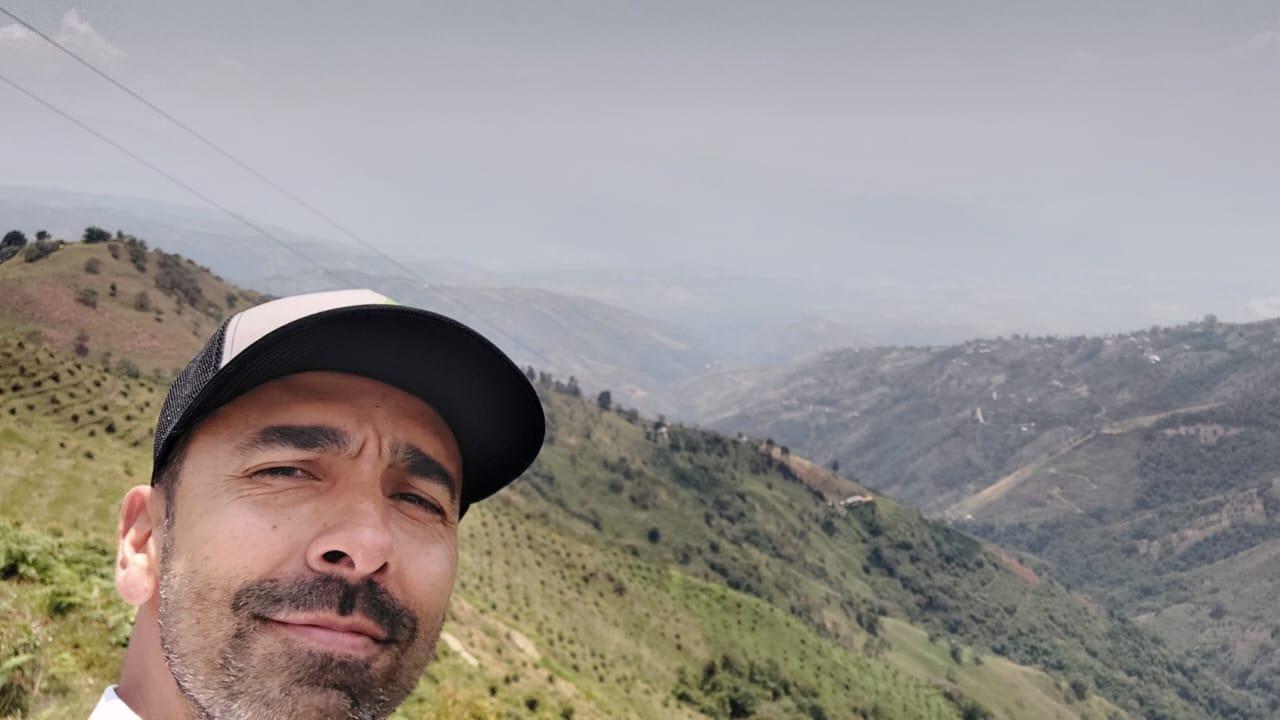
Reputation and management of Colombian avocados
Another task underway for Colombia is to build a reputation for its avocados, particularly in markets that are more demanding or have less knowledge of this origin.“We are seeing that Colombian fruit is being paid for like African fruit, and there is a difference of 2 to 3 euros compared to Chilean fruit; or 1 to 2 euros compared to Peruvian fruit,” he warns, pointing out that it is not always a fair assessment, but one that must be addressed, including the recipients of Colombian avocados.
- Would it be advisable to carry out a quality control check before going to market, in order to offer a more homogeneous product?
“I’ve been starting to see that multinationals are developing quality control mechanisms at the source, external to the packing plant. We at Coltrópicos don’t use third parties at the source; we handle it with our own quality team. But at the destination, we have a third party conduct a 100% inspection. That has helped us tremendously. That third party represents us there and maintains communication with the fruit recipient. A major challenge involves the culture surrounding the handling of our fruit.”
- What kind of cultural problem is it that needs to be addressed?
“It’s important to have protocols in place at both the origin and destination. But even more important is knowing whether the recipient has experience handling Colombian fruit. Because it’s very different from handling Chilean or Peruvian fruit. I’m talking about managing the ripening process once the fruit arrives at its destination.”
- And is that lack of knowledge very common?
“For example, these days, a client in the United States, who mainly handles Mexican fruit, knows how to inventory it and how long to store it. But we told him that Colombian fruit doesn't last as long and can't be inventoried. If you have a client who inventories Colombian fruit, we have a problem. However, we met another client who had segregated origins and showed us that he had a 'Colombian section,' meaning our fruit was kept in ripening chambers with different characteristics. We have very delicious, nutritious fruit, with a good fat content and very special qualities, but you have to know how to manage it.”
Change in the destinations of Colombian avocados
Jorge Molina warns that Colombian avocados could gradually change the distribution of their shipments, which currently have Europe as their main commercial destination.“Currently, the market for Colombian avocados is more mature in Europe. But that continent will be adding more and more origins in the coming years, which will be closer than Colombia to supply consumers. In contrast, Colombia is closer to the United States, and that's why the challenge is to further strengthen our shipments to that country,” he points out.
- How are the percentages currently distributed?
"I would say that between 70 and 80% goes to Europe. The other day, at a meeting of the Colombia Avocado Board, it was mentioned that the projection for 2029 is that some 17,000 containers will be exported from Colombia and that half of that should be going to the United States."
- Is it a very complex goal?
“Some people think that’s a lot. Last year, approximately 5,100 were exported. But there are several challenges regarding certifications, in order to access North America, which requires a sanitary protection zone, a buffer zone, where it is certified that there is no presence of pests within a one-kilometer radius. There is work involved there, which is not always easy, between the producers and the Colombian Agricultural Institute.”
- What is recommended to achieve these goals and find better opportunities for Colombian avocados?
“We need to reach an agreement. We need to get together more. Avocado growers have been gradually coming together. At least this year we went to the Berlin Fair. Ten companies shared a stand. From the largest to us, who are still in the race. Being together, we saw that we had common clients. But we need to go a little further as an industry: take care of sustainability, take care of doing the job well, take care of the producer, develop the market, and improve practices in the plants.”