Irubiterra: Adding Ecuador to the world avocado map
In an exclusive interview for Avobook, Diana and María José Freile, leaders of Irubiterra, share the challenges and strategies they have faced to position Ecuador in the competitive global avocado market.
The Hass avocado boom has transformed global markets in recent years, and Ecuador, though a relatively new player, is capitalizing on its potential to position itself among the leading exporters. With a favorable climate and a production window that rivals that of countries like Peru, Ecuador has a unique opportunity. However, the challenges are numerous, ranging from land fragmentation to a lack of adequate infrastructure.
Irubiterra, under the leadership of Diana and María José Freile, has established itself as one of the pioneering companies in bringing Ecuador to the global avocado stage. As a family-owned firm at the forefront of Hass avocado exports, the Freile sisters have combined high-level technical expertise with a strategic vision of the international market, facing and overcoming key challenges. Thanks to their leadership, Irubiterra has positioned itself as a benchmark in the industry, boosting Ecuador's recognition in the global market.
The growth of Irubiterra has been a lesson in patience, since avocados are a fruit that requires time, from planting to harvesting; it's a process that can take up to five years. Diana and María José have learned to be consistent and to meticulously plan each step.
“Understanding the natural rhythm of the avocado has allowed us to align ourselves with the plant's cycle, which is essential in an industry that depends so heavily on product quality,” they explain. This approach focuses not only on planting, but on doing so at the right time and using the best possible practices.
Key strategies for success in exporting
One of the key strategies they've implemented to achieve success in avocado exports is technical assistance. “At the beginning, we consulted several technicians, but it was when we found a Chilean expert that we made significant progress. His experience allowed us to raise our standards and optimize the yield of our plantations,” explained Diana. This assistance has been fundamental in maximizing the potential of their crops.
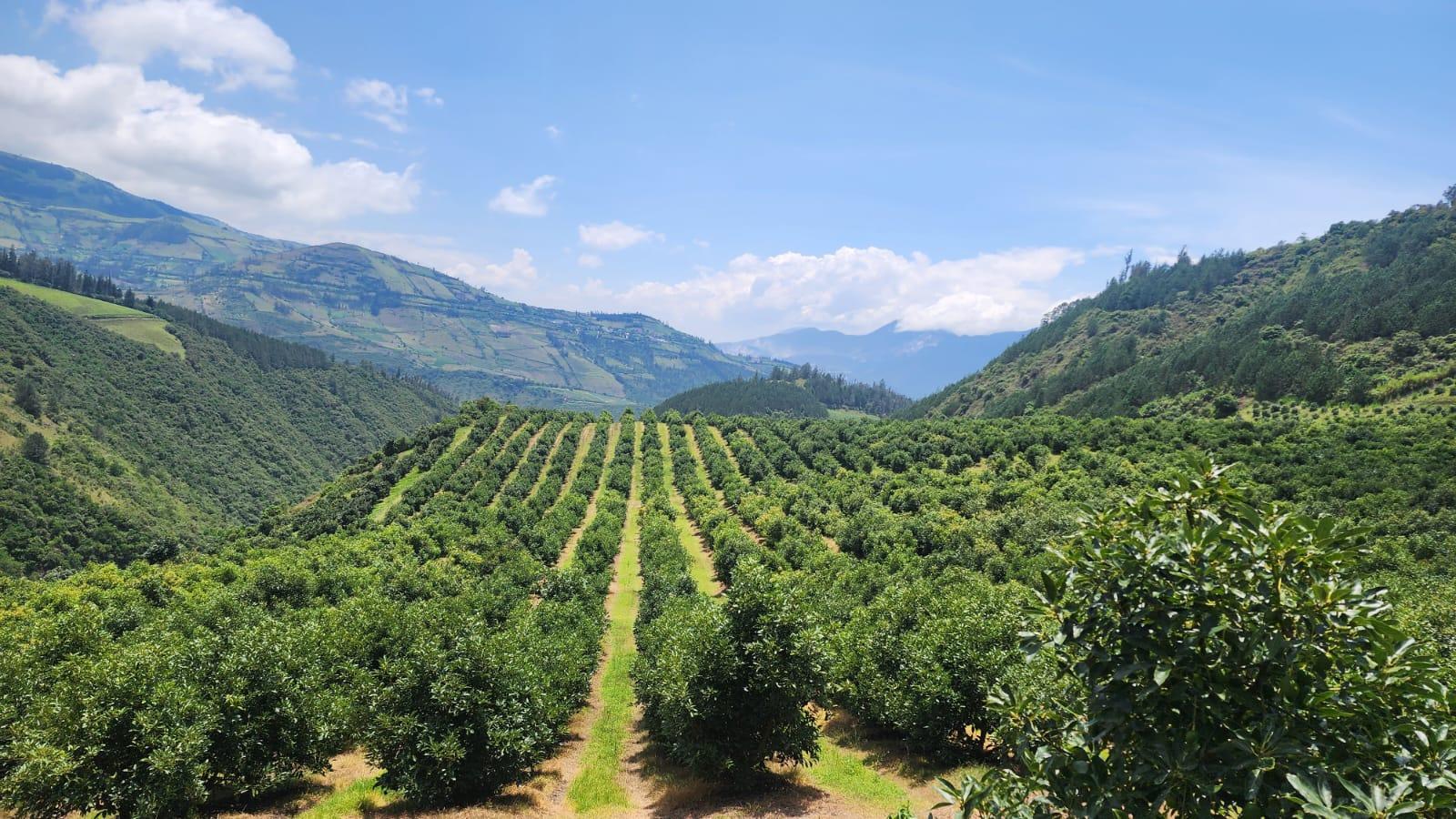
Regarding international markets, Irubiterra has expanded its exports to countries such as Spain, Germany, France, the Netherlands, and the United Kingdom. “Each of these markets has its own demands and challenges, but they have also taught us a great deal about how to adapt and continuously improve,” they state. Currently, the company has 35 hectares planted and has ambitious expansion plans. In the short term, they plan to plant another 80 hectares, and in the medium term, reach 150 hectares. This year they have exported 600,000 kilos of avocados, and by 2025 they expect to increase that figure to 700,000 kilos, with a yield of 20,000 kilos per hectare.
Ecuador: Competitive advantages and major challenges
Ecuador has recently emerged in the global avocado market, with Hass avocado production gaining momentum, although it still lags behind giants like Peru and Colombia. According to data from the Avocado Producers Association (ASOPA), Ecuadorian exports reached 5,000 tons in 2023, a notable increase compared to previous years. However, despite its potential, the country faces significant challenges, such as land fragmentation and a lack of adequate infrastructure to compete on a large scale in international markets.
Diana and María José delve into the current state of the avocado market in Ecuador. They explain that the country is in an emerging phase in the global avocado market. Unlike countries such as Peru and Colombia, where the industry is more developed, Ecuador is only just beginning to realize the export potential of this fruit.
“Although avocados have been cultivated since ancient times, we are only now beginning to establish them in international markets. That is why our goal is to lead this process, both as a company and as part of the industry, to ensure that Ecuador is recognized on the world avocado map. We have a unique competitive advantage with our production window, which allows us to offer avocados when other countries are not yet in the market,” Diana pointed out.
Thus, Irubiterra's objective is to lead this process, both as a company and as part of the industry, to ensure that Ecuador is recognized on the world avocado map. Among the challenges the country faces, María José pointed out that the size of the plots is a significant obstacle.
“First, the size of the plots is a significant challenge. The agrarian reform of the 1970s in Ecuador fragmented the haciendas into small plots, making it difficult to achieve the large-scale production necessary for export. Unifying these small producers under a quality standard and complying with export regulations and certifications is a complex challenge. Furthermore, we face logistical challenges such as the supply of inputs, packaging, and other essential materials for export. However, the biggest challenge is making the world aware of the quality of Ecuadorian avocados and ensuring that customers value and prefer our product,” the Freile sisters explained in detail.
Likewise, the demand for Ecuadorian avocados in international markets is growing, but it's a gradual process. According to the Freile sisters, customers are beginning to recognize and value the Ecuadorian origin, which is fundamental to positioning the country in the global market. “It's a job of patience and perseverance. When our customers visit our fields and see the quality of our fruit, they become convinced that Ecuadorian avocados have a place in major markets,” they affirm.
To strengthen the country brand, Irubiterra focuses on unifying the producers' association and collaborating closely with regulatory bodies like Agrocalidad. Traceability and avocado quality are aspects they carefully manage, establishing strict standards and parameters to ensure their exports meet the most demanding requirements. "The key is to make Ecuador stand out for the consistency and quality of our product," they emphasize.
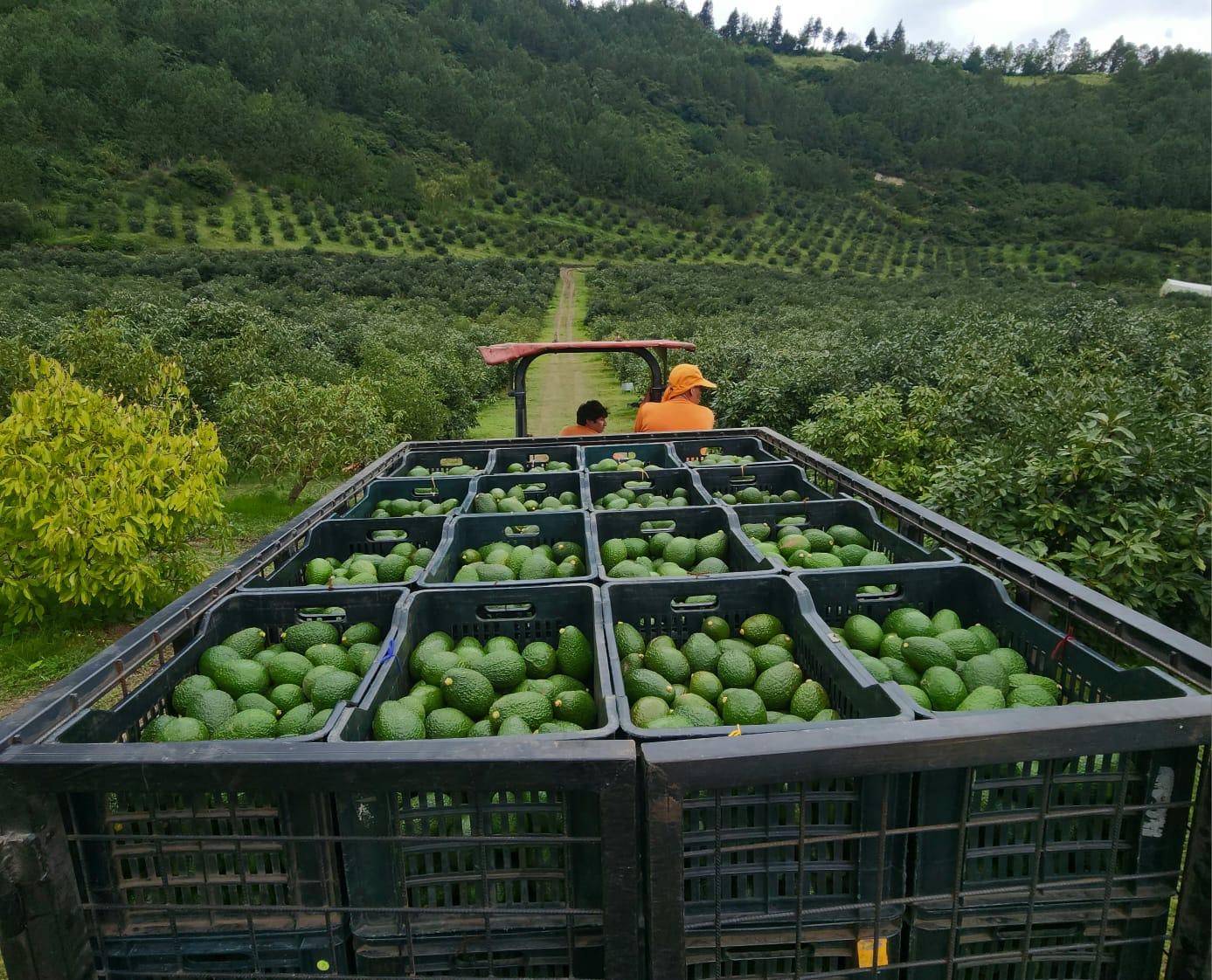
Regarding Ecuador's competitive advantages, they mention that the production window is a key factor. "We can supply the market between September and April, when other countries are not producing, which allows us to obtain better margins and meet continuous consumer demand," they explain. Furthermore, the Northern Highlands of Ecuador offer exceptional climatic conditions for avocado cultivation, with ideal temperatures and constant sunlight thanks to its proximity to the equator. These conditions result in larger, higher-quality fruit with less susceptibility to pests and diseases.
A promising future for the avocado industry in Ecuador
The future of the avocado industry in Ecuador looks bright. With a strategic production window and a commitment to quality, Diana and María José are convinced that Ecuador can become a key player in the international avocado market. "If we continue doing things right, innovating, and uniting producers, Ecuador will consolidate its position as a major player in the global avocado market. The conditions are right; now it's our turn to take full advantage of them," they conclude.
In short, Irubiterra's story is a testament to perseverance, innovation, and a love for the land. Diana and María José Freile have demonstrated that with patience, proper technical advice, and a clear vision, it's possible to bring a local product to international markets and position oneself as an industry leader. Avobook is proud to share their inspiring story.