HPP: the technology that is redefining the future of Latin American avocados
High-pressure processing is driving a new stage of added value in producing countries like Peru, Colombia, and Brazil. Hiperbaric is supporting this transformation through technological innovation and regional development.
In recent years, Latin America has established itself as a key player in the global avocado market. Peru, Colombia, Brazil, and Chile have made this crop one of their main agricultural and export priorities. But alongside the boom in fresh produce, a quieter, more transformative trend is gaining momentum: processing using high hydrostatic pressure, known as HPP (High Pressure Processing).
The technology, which allows food to be preserved without heat or additives and extends its shelf life while maintaining its properties intact, is making a decisive difference in the industry. “Latin American avocados have extraordinary quality and enormous diversification potential. Thanks to HPP technology, that quality can travel further and be maintained over time, opening up new opportunities for producers and exporters in the region,” explains María Barreal, LATAM Sales Manager at Hiperbaric, a world leader in high-pressure processing equipment.

From exporting fresh fruit to value added
For years, most Latin American countries focused their strategy on exporting fresh avocados, a successful model but one with limitations. The product's short shelf life, logistical costs, and the sanitary requirements of international markets reduce the possibilities for expansion. Faced with this scenario, processing emerges as a solid way to increase profitability and make better use of the raw material.
HPP technology has made this possible. By applying cold pressure, without the use of heat or preservatives, the method preserves the color, flavor, and texture of the avocado, extending its shelf life for several weeks. This has opened the door to the development of high-value-added products, such as natural guacamole, sauces, purees, and ready-to-eat functional blends.
“In markets where domestic avocado consumption is still limited, processing becomes an efficient alternative to reduce losses and improve returns for farmers,” Barreal points out. “Today we see companies in Peru, Colombia, and Brazil incorporating HPP lines and achieving levels of competitiveness unthinkable just a few years ago.”
The data supports this trend. According to figures from Hiperbaric, the volume of avocados processed with HPP technology in South America has increased from less than 2,000 liters in 2016 to more than 22,000 liters in 2025, a growth of over 1,000%.
On a global scale, the evolution is equally compelling: the volume of HPP avocado products has multiplied sixfold in the last 10 years, exceeding 140,000 liters processed in 2025. These figures reflect a structural transformation in the industry and the increasingly important role that Latin America plays within this market.
For Barreal, the explanation lies in the maturity of the producers and their long-term vision. “Latin America not only has the raw material; it has the knowledge, the industrial capacity, and the will to innovate. What we are seeing is a natural transition: from leadership in fresh avocados to a leading role in processed avocados with added value.”
The rise of HPP also reflects a profound shift in consumption habits. International buyers are looking for natural products, free of additives and heat treatments, but with food safety and a long shelf life. HPP-processed avocados meet these requirements: they maintain their nutritional profile, texture, and characteristic color, while also ensuring microbiological stability.
“Today’s consumer wants fresh, healthy, and sustainable products. HPP allows us to offer all of that without sacrificing convenience or international standards,” Barreal points out. “That’s why more and more international brands are relying on Latin American suppliers capable of processing with this technology.”
Among the main advantages highlighted by companies already using HPP are extended shelf life, reduced waste, and compliance with the most demanding international regulations. But there is also a significant environmental factor: by decreasing losses and optimizing fruit use, the technology contributes to improving the sustainability of the entire supply chain.
“In the region, there is a growing awareness of the importance of producing efficiently and responsibly. HPP aligns perfectly with that objective: more value, less waste, greater stability, and better returns,” says Barreal.
The role of Hiperbaric in the expansion of Latin American HPP
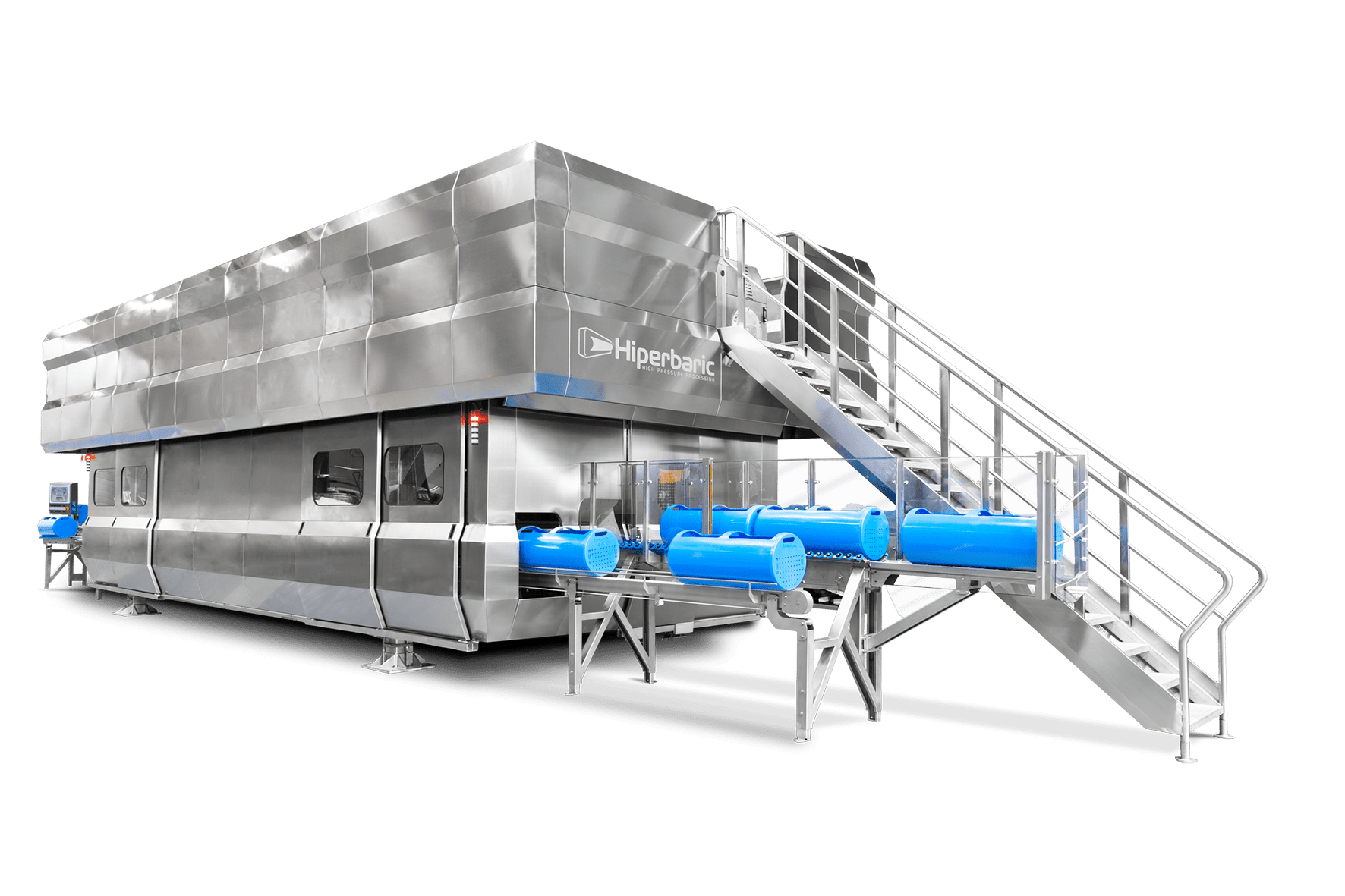
With over two decades of experience and a presence in the continent's main agro-industrial hubs, Hiperbaric has become a strategic partner for companies committed to innovation. Their support ranges from technical feasibility studies to installation, training, and after-sales service.
“What companies value most is our close relationship with them. We don’t just deliver equipment, but also knowledge, support, and a collaborative network that connects the entire industry,” Barreal emphasizes. Currently, companies in Mexico, Peru, Colombia, and Brazil operate Hiperbaric HPP lines on an industrial scale, consolidating a leading network that continues to grow year after year.
This commitment also includes training local talent and disseminating best practices to foster a strong technical community in the region. “Technology is just a tool. The real driving force is the producers who decide to innovate and look to the future. Our role is to support them in that process,” he adds.
All indications are that the potential of HPP-processed avocados is only just beginning to be explored. With abundant raw materials, favorable climatic conditions, and a consolidated export structure, Latin America is well-positioned to lead the new stage of value-added processing in this industry.
International demand continues to grow, and markets are becoming increasingly demanding. In this scenario, the combination of technology, quality, and sustainability will be key. “What’s coming is a stage of consolidation,” says Barreal. “We’ll see more factories, more products, more collaboration between producers and processors, and a more integrated and efficient agricultural export chain.”
The challenge, he argues, will be maintaining a balance between technological innovation and the natural identity of the Latin American avocado. “The future of HPP avocados lies in added value, and Latin America has everything it needs to lead that evolution.”
As part of this regional push, Hiperbaric will participate in two of the main industry events in Colombia. On November 5, it will be present at Territorio Aguacate (Medellín), and on November 6 and 7 at Andina Pack (Bogotá), in the ICEX Pavilion 11–16, Level 01, Stand 803B-2.
“We want to continue the dialogue with the producers, exporters, and entrepreneurs who are driving this transformation. Every conversation opens up new ideas and projects. Latin America has a story to tell in the world of processed avocados, and we are just beginning to write the first chapters,” concludes María Barreal.