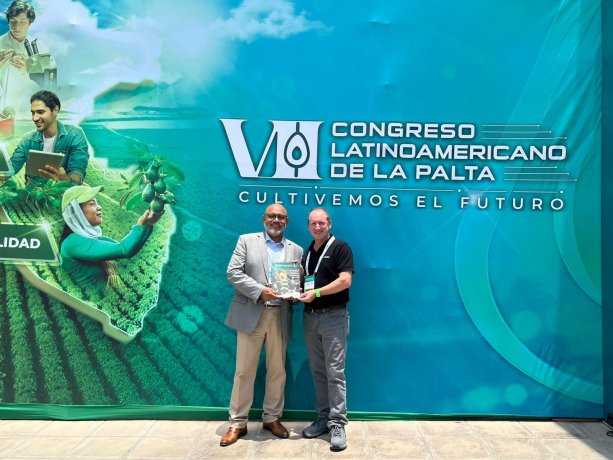
The VII Latin American Avocado Congress consolidates Peru as a nerve center of knowledge and innovation in the sector
With over a hundred technical presentations, keynote speeches, and market panels, the 7th Latin American Avocado Congress brought together experts, producers, exporters, and companies from across the region in Lima. The event, organized by ProHass, reaffirmed its position as the industry's most influential gathering, with an agenda that intertwined science, trade, technology, and sustainability to address the challenges of a crop experiencing rapid global expansion.
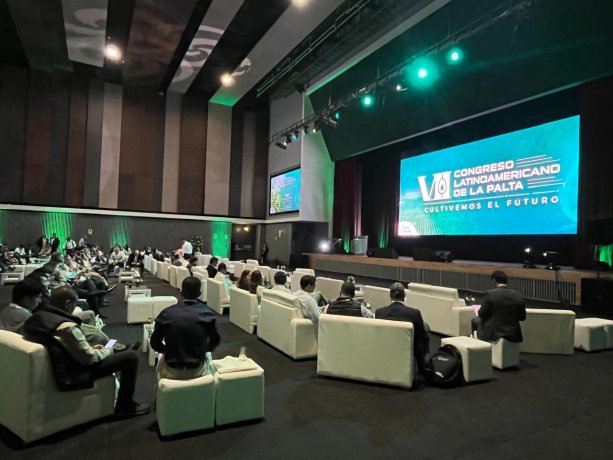
The avocado world once again turned its attention to Latin America, and particularly to Peru. Lima hosted the VII Latin American Avocado Congress, a quadrennial event organized this year by ProHass, solidifying its position as one of the most important forums for the industry in the region. For three days, representatives from Mexico, Guatemala, Colombia, Ecuador, Peru, Chile, Argentina, and Brazil, along with guests from the United States and Europe, provided an updated overview of the sector, from market trends to the scientific and technological advancements shaping the future of avocado cultivation.
The opening ceremony was led by José Antonio Castro Echecopar, president of ProHass, who highlighted the association's role in promoting a sustainable and competitive Hass avocado throughout its 26-year history. In turn, the Minister of Agrarian Development and Irrigation, Vladimir Cuno Salazar, officially opened an agenda characterized by its technical depth and comprehensive view of the production chain.
A program that connected science and the market with the urgent needs of the sector
The congress featured a broad program, with simultaneous tracks dedicated to health and safety, agronomic management, post-harvest, genetic resources, sustainability and new agricultural technologies, as well as a specific focus on trade and international promotion.
The keynote speeches on integrated pest management, genetic resources in the face of climate change, leather quality in adverse climate scenarios, and global marketing trends stood out, with a direct analysis of the opportunities opening up for Latin America in an increasingly demanding and competitive market.
Simultaneously, the technical presentations addressed recent research on water stress, rootstock compatibility, disease control, the use of biostimulants, nutrition, monitoring technologies, physiological behavior, and post-harvest management. The diversity of perspectives reflected not only the dynamism of the sector but also the need to integrate knowledge to adapt to climatic, regulatory, and commercial changes.
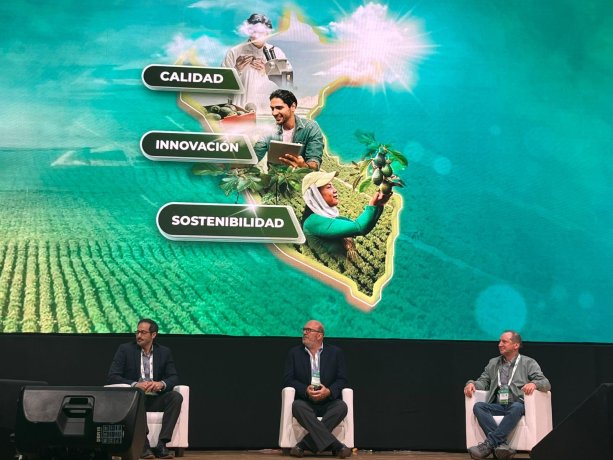
Among the events was a panel on the global market and business projections, which brought together specialists from Europe, the United States, and Latin America. Sebastián de la Cuadra, CEO of Avobook, participated and praised the congress's role in fostering unity.
“This event brings together all the issues that matter to Latin American producers and exporters today: trade, production development, logistics, research, and legislation. It covers all the areas that define the region's competitiveness,” he noted.
The executive also stressed the importance of attendees—from field technicians to directors of exporting companies—being able to compare realities and learn from other production origins:
“Here, people not only know what is happening in their own country, but also what others are doing. This exchange is very valuable, because it gives rise to applicable ideas and practices that can make a difference in productivity or quality.”
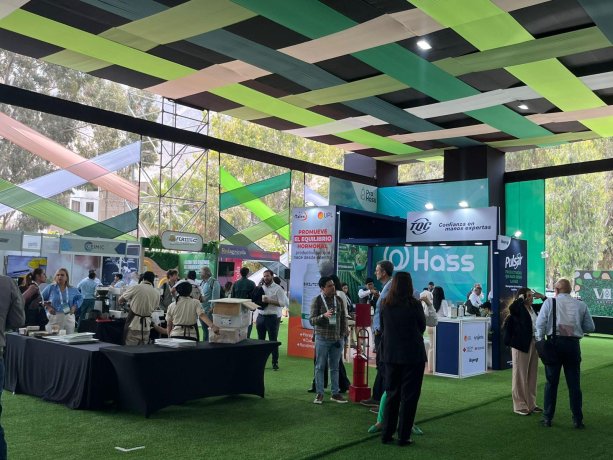
During the meeting, service companies, input suppliers, nurseries, research centers and logistics companies presented solutions and developments focused on improving efficiency, climate resistance, traceability and sustainability—although, as usual, it was also a space to reconnect with strategic partners and open new business opportunities.
“As with all conferences, this meeting allows us to strengthen ties not only commercially, but also with our columnists and collaborators,” De la Cuadra emphasized.
The final day was marked by presentations dedicated to sustainability, the circular economy, the inclusion of small farmers, and water management—topics that have become strategic priorities for the industry globally. The closing ceremony included the selection of the next host country, reaffirming the regional and rotating nature of the event.
In a context where Latin American avocados continue to expand into new markets, the 7th Latin American Avocado Congress made it clear that competitiveness no longer depends solely on field yield, but also on the ability to integrate scientific knowledge, logistical efficiency, technological development, and environmental sustainability. For a few days, Lima was the meeting point where all these worlds converged.