Moroccan avocado exports up 30% annually
This is according to the Avocado Exporters Association of that country, which seeks to be the main supplier of African avocados in Europe, increasing crops and production per hectare.
The Moroccan Association of Avocado Exporters is very clear about its country's position in the European market: they do not have the capacity to influence prices, due to their volume and the homogeneous distribution of their campaigns, but they can gain an important role after Peru, which is the main exporting power in that territory.
Moroccan crops are young. Production began in the 1990s and, currently, almost 90% is destined for sale outside its borders.
The president of the Association, Abdellah Elyamlahi, spoke exclusively with Avobook about the goals they have set for this 2024-25 season and the years to come, in a country where the year-on-year growth of exports is 30%.
“We are at the peak of growth, because afterwards we project to increase by 20% and then decrease as the spaces for planting become smaller,” explains the representative of the avocado growers of Morocco.
Diversifying the market for Moroccan avocados
According to Abdellah Elyamlahi, avocados have been cultivated in his country for 34 years. It began with some trials in the Larache and Kenitra region, where the first fruits were grown and where the crops are still cultivated today.
“The planted areas have gradually increased, reaching 10,000 hectares today. The majority is the Hass variety, almost 90 percent. Alongside it are Fuerte, Zutano, and Bacon. We export all of these varieties to Europe,” he explains.
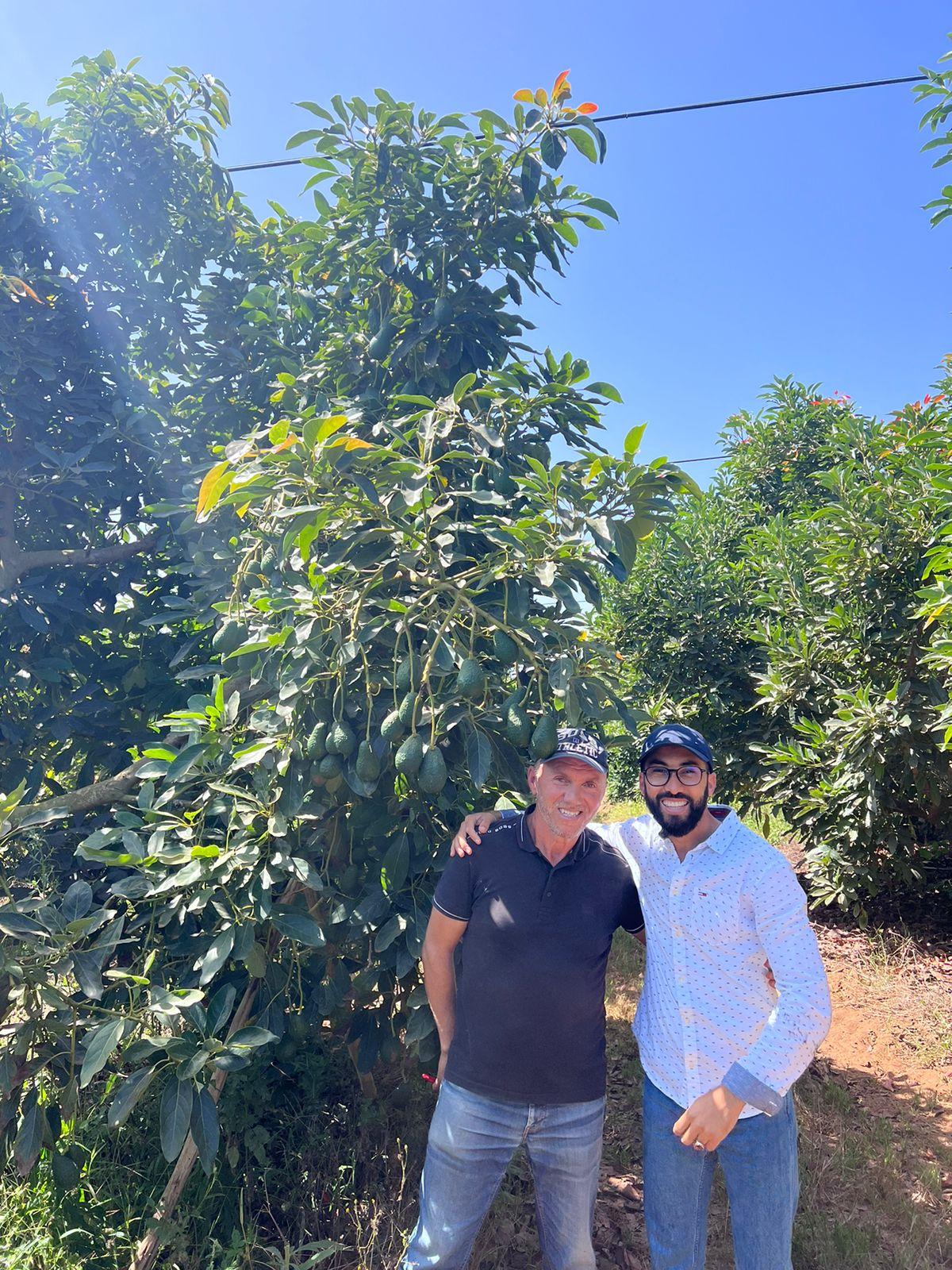
The Hass variety is the most widely sold and, unlike what happened before, the second position corresponds to the Zutano and Bacon avocado.
“We export both together. That has represented a change, because before people preferred Hass first and then Fuerte, but since Zutano is always shiny, it has moved up in the rankings. These varieties, different from Hass, are interesting for more specific markets, such as Italy and Russia, which like fruit with smooth skin,” explains the president of the Moroccan avocado growers.
The market has also diversified. Historically, its fruit entered almost exclusively through Spain, its main buyer, supplying local consumption and being exported to some neighboring countries. However, in the last five years, Morocco has had sufficient volume to add new destinations: France, Italy, the Netherlands, Germany, and Russia.
The advantages of being “a strait” from Europe
The president of the Moroccan Association of Avocado Exporters believes that, in addition to the inherent attributes of its fruit, the country's strategic location is one of its key advantages compared to other origins, making it easier to take advantage of periods with better prices and demand.
“The number one reason is our proximity to Europe. So, when importers place an order, the fruit is in their hands in three or four days. It’s the opposite when they buy from, for example, South America, which has the same window as Morocco, but it takes two or three weeks for the ship to arrive. During that time, prices can change, the market can shift, or demand can drop. In Morocco, we have the advantage of being just 15 kilometers from Europe. It’s only a matter of crossing a strait,” he explains.
He also values the quality of Moroccan avocados, stating that "it is a delicious fruit, because we have sunshine and good water."
However, its production is not exempt from the challenges imposed by the climate, as it must face two different conditions, depending on the weeks in which it is harvested.
“ The fruit that arrives now, for example, in September, is not affected by the wind. There is no wind, not much rain, the fruit on the tree is very clean. But the fruit that ripens in November and December, January and February, has to face the wind, so it runs the risk of being damaged or falling prematurely,” he explains.
Additionally, Morocco is experiencing a scenario with areas affected by a water shortage that began three years ago, which poses new challenges to the work in the orchards.
It is worth remembering that the Moroccan avocado harvest has two periods: the green-skinned fruit, which begins its season on September 15; and the Hass variety, which begins on October 15 and concludes in the first week of April, if there is still fruit left.
“If we export a lot of fruit, we finish a little before the end of February,” says Abdellah Elyamlahi.
Projected 2024-2025 season for Moroccan avocados
One of the most interesting aspects of Morocco's avocado export industry is its potential for growth in export volume. The difference between last season and projections for 2024-25 is a 30% increase, a trend that has been consistent since 2021.
“We exported 60,000 tons last year. This year, if everything goes well with the wind, rain, and all the weather factors, we could export up to 90,000 or 100,000 tons,” explains the president of the Moroccan avocado growers.
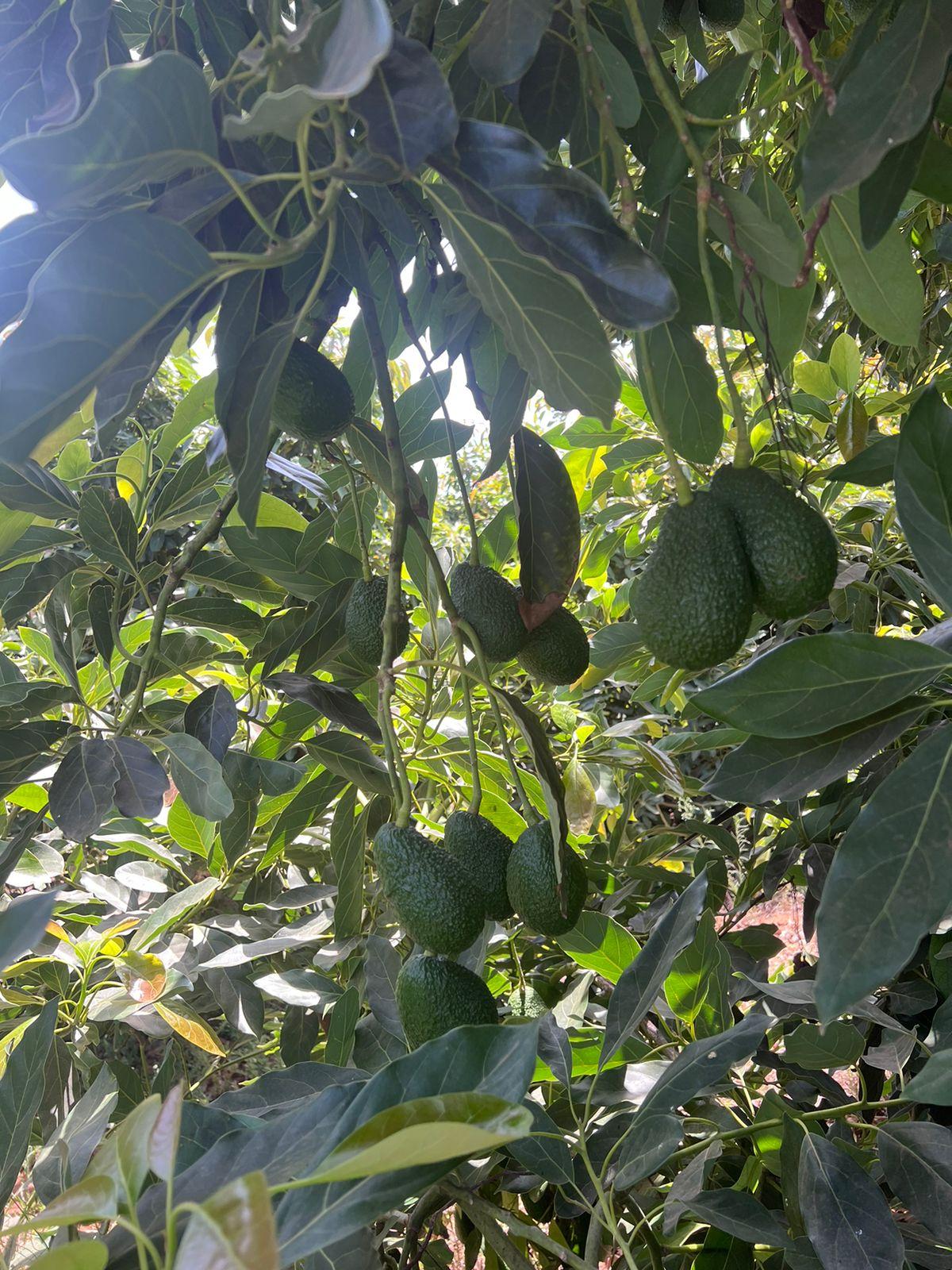
In terms of size, most of the fruit that will be supplied to the market this season will be sizes 14, 16, 18, 20 and 22.
Abdellah Elyamlahi explains that, despite the importance of the growth, these volumes will not have much influence on prices.
“Because our harvest extends until March, it doesn't come all at once. If we compare it to the volumes coming from Peru, ours is very small. They export ships every week with 400 containers. In our case, on average, week by week, when farmers want to harvest and prices are good, we can ship up to 200 or 300 containers. When the market is less attractive, we might ship 150 or 120,” he explains.
Dizzying increase in exports and cultivated hectares
The growth of exportable fruit has a linear upward trend, if you look at the Association's numbers, from 2021 to date.
“We exported approximately 40,000 tons in 2021; 60,000 in 2022 and 2023. This year it will be 90,000. There will be 20 or 30 percent growth over the next three years. Because I believe we are going to reach a point of saturation of the land. That's why the growth rate will then decrease, perhaps to 10 percent, then possibly to 5 percent. But right now we are at a peak growth rate of 30 percent,” explains the president of the Association.
Based on the increase in cultivated land, the association projects that by 2030 there will be a slowdown in the proliferation of crops.
“In 5 years the available land will decrease significantly, and the challenge will be to improve production per hectare, which is something we are already working on,” says Abdellah Elyamlahi.
Improve tonnage per hectare
Indeed, one of the main challenges for the Moroccan industry is to improve the performance of its orchards, in order to reach the level of countries with better efficiency indicators.
“The average yield is 10 tons per hectare. I say average because we have large farmers in Morocco who reach 25 or 30 tons per hectare, but we also have others who only get 5. So, there's room to increase yields in the future, when the availability of land for planting becomes somewhat saturated. This way, we can double exports not only by adding more plantations,” explains the president of the Moroccan avocado growers.
Currently, this region has approximately 25 exporting companies. There are just over a thousand avocado producers. Most of them use drip irrigation.
Goal: to be number 1 in Africa
Morocco has a clear goal: to be the number one avocado exporter in Africa and the Mediterranean.
“This year we are going to surpass Spain, which exports 55,000 tons. We have produced 60,000. We have heard that Kenya and South Africa are the largest and produce 120,000 tons per year. We want to reach 150,000, to be number one in Africa and the Mediterranean,” explains the president of the Association.
Until recently, efforts to achieve this goal were undertaken in partnership with the public sector, which subsidized investments to expand production facilities. However, the effects of climate change have slowed this support.
“Until three years ago, the government was helping with an 80% subsidy on equipment and materials when you wanted to start a new farm. That helped a lot with crops that use new irrigation systems. But now, with the water problems of the last three years, the government has stopped the subsidy for watermelon, avocado, orange, and other fruits that consume more water. Now we don't receive anything from the government. We're going it alone,” the president of the Moroccan Avocado Exporters Association told Avobook.