Europe is experiencing increased volumes, and prices for smaller sizes are rising.
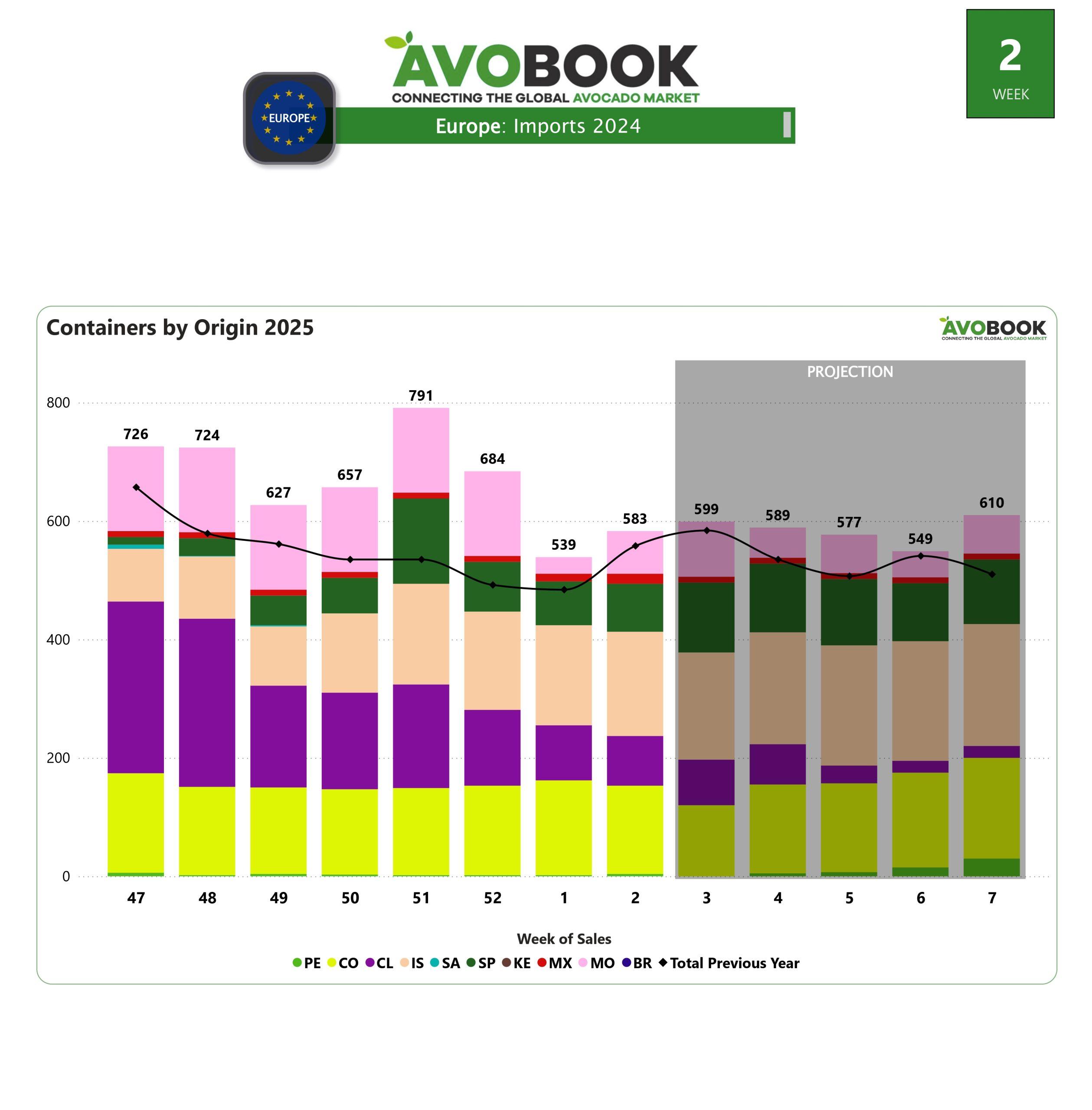
The European avocado market closed the week with 584 imported containers, marking an 8% increase over the previous week. This volume increase is accompanied by a diversification of market share, with Israel leading at 30%, followed by Colombia at 26%. Chile and Spain share 14%, Morocco maintains similar figures, while Mexico barely reaches 3%.
An interesting trend is the sustained increase in exports from Israel and Spain, which are consolidating their market share week after week. The focus now shifts to the maximum volume they can reach before the arrival of Peruvian fruit, expected in the coming weeks. According to records, the first shipments from Peru typically originate from the Andean region and began arriving in week 4 of last year. A similar timeline is anticipated this year, which could alter supply dynamics in the short term.
Regarding prices, the Spanish market saw notable improvements, especially for smaller sizes. Size 30 fruit experienced a 38% increase compared to the previous week, while size 18 rose by 24%. However, in Rotterdam, prices remain volatile and difficult to predict. This uncertainty necessitates cautious expectations, particularly concerning fruit from Colombia, which could face additional price pressures in the coming weeks.
With a slight improvement in import volumes and prices beginning to rebound in some regions, the European market is shaping up to be competitive and constantly evolving. The arrival of Peruvian fruit and logistical adjustments will be key factors in shaping future supply and price movements.
See the complete breakdown of figures and weekly trends in the global avocado market, with updated data from all origins and markets. Access the Avobook Premium Report for the second week of January. Subscribe at avobook.com!