“Avocado shipments from Peru will increase during Holy Week”
Juan Carlos Paredes, from Agrícola Pampa Baja, tells Avobook that there are many opportunities in the United States, if the industry takes care to ship fruit with optimal dry matter content.
Projections for growth in Peru's avocado supply vary. The range discussed has been from 10% to 30%, but there won't be enough certainty for at least a week.
However, the data shows that the curve is slightly lower compared to the same date last year, which is explained by the fruit's ripening process. This is according to Juan Carlos Paredes, director of Pampa Baja, a company that projects sending 17,500 tons to market from its two locations.
“We will make a leap in volume. In the north, in Olmos, with early fruit, we will ship three-quarters of that supply between March and May. In Arequipa, which is shipped between August and September, we will contribute the other 25%,” explains the former president of ProHass, who today shares his projections for Peruvian exports, exclusively from his role as a producer.
- It was predicted that Peru would have a better production volume and therefore higher exports this season. There was talk of 10% more than in 2024, even up to 30%. Which projections do you think are most accurate?
“I can no longer speak for the entire industry, but rather for my perception as a producer, as an agricultural producer in the Pampa Baja region. Because officially, the industry hasn't released a number yet. They mentioned a tentative figure, but that number actually represented 40% of the industry, which is what ProHass represents. The official figure was supposed to come out at the end of March. So, they released a tentative 30%. It seems that there isn't that volume, especially in the early part of the season.”
- Why?
“I think there’s been an issue across northern Peru of dry matter accumulation. In other words, the fruit hasn’t reached maturity as expected. It’s taken about three weeks longer on average than anticipated. The Olmos Valley, Chiclayo, and Trujillo are all experiencing this delay, which is why we haven’t seen the expected increase in production, but rather a slight decrease.”
- Of course. At Avobook we see a decrease compared to the same date last year.
“Yes. That’s the reason; we need to see how the dry matter supply is. It seems that by Easter everything will be well consolidated so that shipments can pick up.”
- And does the same thing happen with what is planned for the mountain range?
“It’s more complex to make a projection there. Because we don’t have statistics for the highlands. It’s more of an assessment from the companies that collect the fruit, and in general, the assessment is that a little more fruit is coming from the highlands than last year. But that was during normal weeks. So, if that was the initial assessment, we can’t explain why, during the first eight weeks, there has been less fruit than last year. So, it’s very difficult to know what’s happening in that area.”
- Beyond the size of the increase, is there enough market to receive Peruvian fruit this season without affecting prices, or do we need to diversify destinations?
“ There are two sides to your question: market and price. One is how much volume the markets can accept. I think several records have already been broken, several myths shattered. This 600-container-per-week figure in Europe was seen as a kind of limit. It was said that if we went above that, the price would fall. Last year we surpassed it, but the price didn't collapse. Although it fell, as is normal, due to increased supply, it didn't plummet, even though we exceeded 1,000 containers some weeks. The same thing is happening in Asia, China, for example. There, it was thought that with 40 or 50 containers a week, the market would be saturated. However, we've reached 100, and while prices haven't been great, the market has absorbed it. I think the history of consumption and demand in those countries is being rewritten.”
- And how do you see the United States, in light of the political contingencies that Mexico, the main supplier, is facing?
“I believe the United States presents an interesting opportunity. I won't get into the issue of tariffs, because that's still too uncertain. But with the supply from California and Mexico, I think Peru has a very good opportunity there this year. It will depend a lot on the receptiveness of retailers to Peruvian fruit, on the dry matter content, but there's a gap that California and Mexico are leaving, especially for the sizes we'll have.”
- From the United States, it's suggested that the space for suppliers other than Mexico or California would be created precisely by offering those sizes they wouldn't have, rather than due to a volume deficit. How does Peru see this opportunity?
“It seems that the fruit that has been shipped from Mexico up to at least week 18-20 is small. It won't be at its peak in California. So, that gap is left for early fruit from northern Peru. Especially considering that prices, kilo for kilo, size for size, are more than double those in Europe.”
- And, in terms of quality: how big a flavor gap is there between Peruvian and Mexican fruit, considering that the North American consumer won't notice much of a difference when there's a replacement?
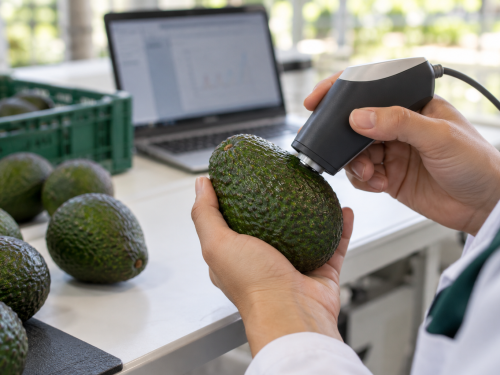
“Studies show that up to 24.5% dry matter enhances flavor due to the oil content. Beyond that, consumers no longer perceive a distinct difference in taste. But with the 22% or 23% that Peru sometimes ships, an organoleptic difference is noticeable. We can't offer that fruit to the United States. Importers demand at least 23.5%. Mexico has 26% and 27%. We need to achieve a slightly higher dry matter content. Now, producers can afford the two-week wait to obtain it because there's time and a good price.”
- But how can we control the producer's or exporter's eagerness when there are opportunities for good prices, but the fruit is not yet in optimal condition?
“Whoever does that will face a major setback. The American market doesn't consume avocados in wholesale form. They are mainly produced in supermarkets. If that fruit is rejected, it will just keep circulating. It's not like Europe, which has more outlet options.”
- How are prices projected in Europe?
“As a company, we are quite conservative. We are projecting a price 15% lower in Europe compared to last year, for our budget. But I know that's a conservative estimate. But it's very difficult to know for sure.”