The US market closes with fewer shipments, lower prices, and mixed signals among the main origins
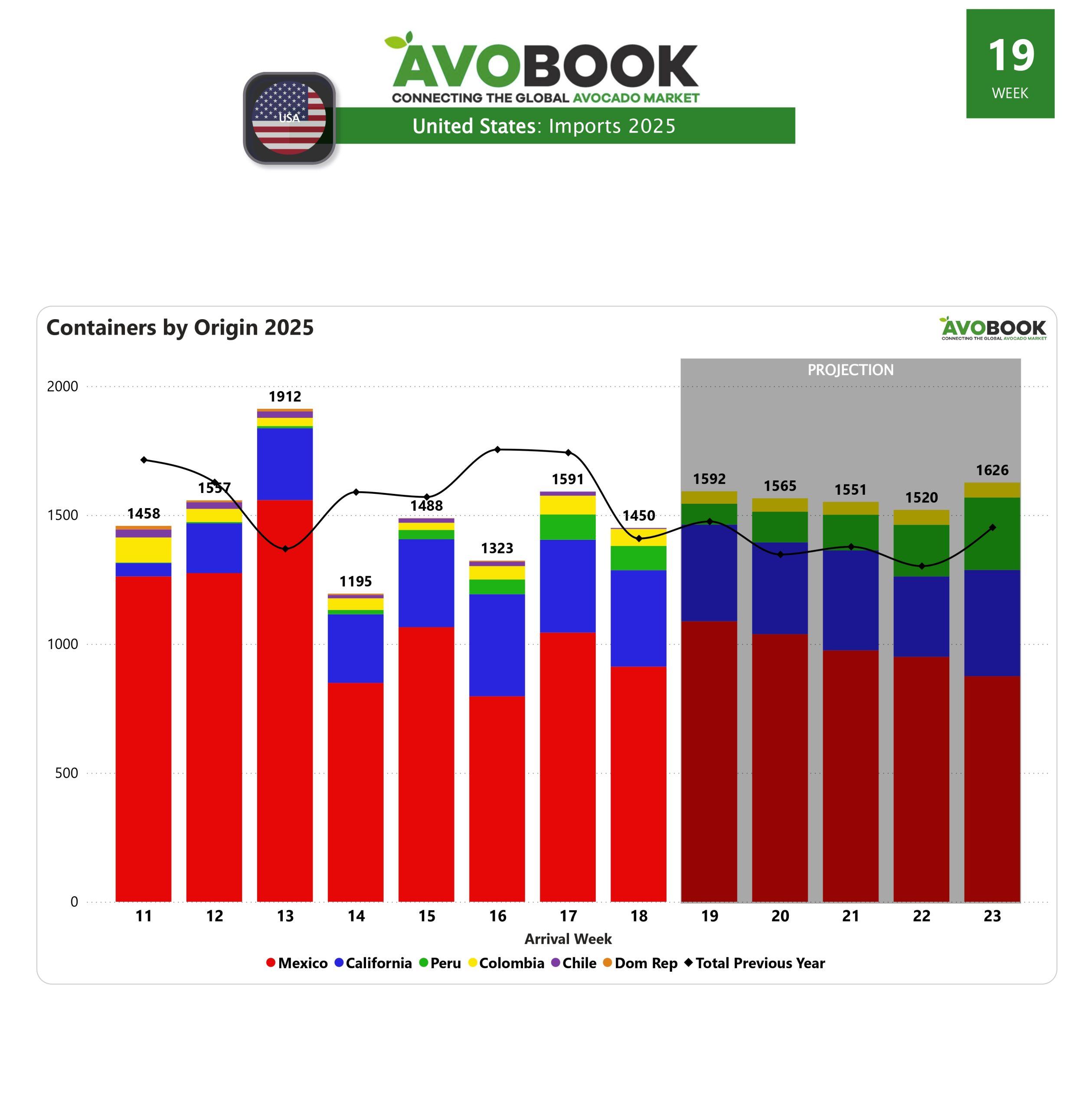
The U.S. avocado market showed a clear slowdown in volume, accompanied by a sustained downward trend in prices. By the end of week 18, approximately 1,450 shipments had arrived in the United States, representing a 9% decrease compared to the previous week. However, this number is still 3% higher than that recorded during the same week last year.
Regarding the distribution of the fruit's origin, Mexico maintains its leading position with a 63% share, although this represents a 12% decrease compared to the previous week. California, with a slight increase of 4%, occupies second place with 26% of the total. Peru and Colombia remain at similar levels, with 6% and 5% respectively. However, Peru appears to be entering an upward trend, suggesting a higher volume in the coming weeks. In contrast, Chile has practically disappeared from the map of shipments to the United States; its volume is currently marginal.
Prices continue to fall, with the trend particularly pronounced among smaller calibers. The 84 caliber, for example, saw an 8% drop. This downward pressure is also affecting larger calibers, such as the 48 caliber, which has now experienced three consecutive weeks of declining prices. In contrast, intermediate calibers have shown more erratic behavior, lacking a clear direction.
From a market analysis perspective, various experts have shed light on the current dynamics. Villaseñor explained that Mexican exports to markets other than the United States—such as Canada and Central America—along with domestic consumption, have been key to maintaining relatively high prices in certain segments. However, Mexican producers now face a new stage in which they must consider not only domestic supply but also the impact of fruit from other origins.
Sergio Paz warned that, with only seven or eight weeks remaining in the Mexican season, a significant transition period is approaching. In Jalisco, for example, the new fruit harvest has already begun, and the first shipments to Canada have been made. This marks the start of the next season, in which Mexico will seek to maintain its market presence despite increased regional competition.
You can find the full details of this article and more in the Avobook Premium Report . Subscribe now at avobook.com