May 5th in the United States: a cultural celebration with a strong economic and commercial impact
Cinco de Mayo, a holiday of Mexican origin, has taken on a profoundly different dimension in the United States. While it commemorates the Mexican army's victory over French troops at the Battle of Puebla in 1862, its deep roots in American culture stem from other historical, social, and commercial processes. In recent years, it has become a key date for consumption, particularly for sectors such as the food industry, alcoholic beverages, and the marketing of agricultural products like avocados.
Although Cinco de Mayo is not a national holiday in Mexico, its commemoration in the United States began in the 19th century among Mexican communities in California. These celebrations gained strength as a symbol of resistance during the American Civil War, and decades later, Chicano activists in the 1960s and 70s adopted it as an emblem of cultural identity and ethnic pride. It was only in the 1980s that Cinco de Mayo was commercially promoted by companies—especially breweries—becoming a widely consumed holiday, with celebrations now taking place from Los Angeles to New York.
The economic impact of this holiday has grown steadily. According to 2024 figures published by Trade Ideas in its report “The Trader’s Guide to Cinco de Mayo,” consumers in the United States spent more than $2.3 billion on products and celebrations related to Cinco de Mayo, representing an 8.5% increase over the previous year. Restaurants and bars experienced a 12% increase in transactions compared to a typical weekend, while sales of premium tequila grew by 22%. Mexican restaurant chains also reported a 15% increase in customer traffic, solidifying this date as one of the most profitable commercial events of the spring calendar (Source: Trade Ideas , May 2, 2024).
One sector particularly influenced by this celebration is the avocado. Traditionally associated with iconic dishes like guacamole, the avocado has become a star product consumed during this holiday. In fact, May 5th represents the second-largest avocado consumption day in the United States, second only to the Super Bowl. It is estimated that Americans consume more than 81 million pounds of this fruit in the days leading up to the celebration, according to industry data.
How did the market move in the preceding weeks?
In this context, the behavior of the avocado market offers a revealing look at how the holiday impacts not only demand but also export dynamics, competition, and prices.
According to Sergio Paz Vega, general manager of Coliman Avocados, Mexico exported 737 shipments of avocados to the United States during week 16 of the year (the second week of April). Despite it being a short work week due to Easter, volumes exceeded expectations thanks to advance planning and the use of accumulated inventory from the previous week.
“The fruit is already in place, and we just need to wait for the promotions to work and for inventories to drop enough so that in a few days importers will need fresh fruit to fulfill orders after the event,” explained Paz Vega. However, the expected increase in demand leading up to May 5th did not materialize with the anticipated intensity. Demand during the first days of week 17 was rated as “moderate to low,” with no clear signs of recovery, which had an immediate effect on price behavior.
Inventories in the United States, which hovered around 30,000 tons as of April 18, were bolstered by a Californian harvest exceeding 10,000 tons, figures that surprised some participants in the Mexican industry. This was compounded by the start of harvests in countries like Peru and Colombia, whose fruits are beginning to compete in the same markets. The oversupply, combined with lower-than-projected demand, fueled a downward trend in prices. “Mexican producers began the week still optimistic about an increase in demand that would at least allow them to maintain farmgate prices. That hasn't been the case either,” noted Paz Vega.
Antonio Villaseñor, director of Aztecavo, complements this view by highlighting that, during the same week, Mexico harvested 21,270 tons of avocados, of which 16,545 tons were destined for the U.S. market, representing a 78% yield. However, he warned that “demand for Mexican fruit has begun to decline due to competition from other origins, such as California, which is already harvesting around 7,000 tons per week.”
Villaseñor emphasized that the supply of hectares available for harvest in the export program to the United States decreased by 8%, while market conditions showed mixed signs: a reduction in inventories, but with strong pressure to lower FOB (Free On Board) prices. “The price at the farm gate is relatively stable, but Mexico will have to compete with more origins, such as Colombia and Peru, in the coming weeks,” he added.
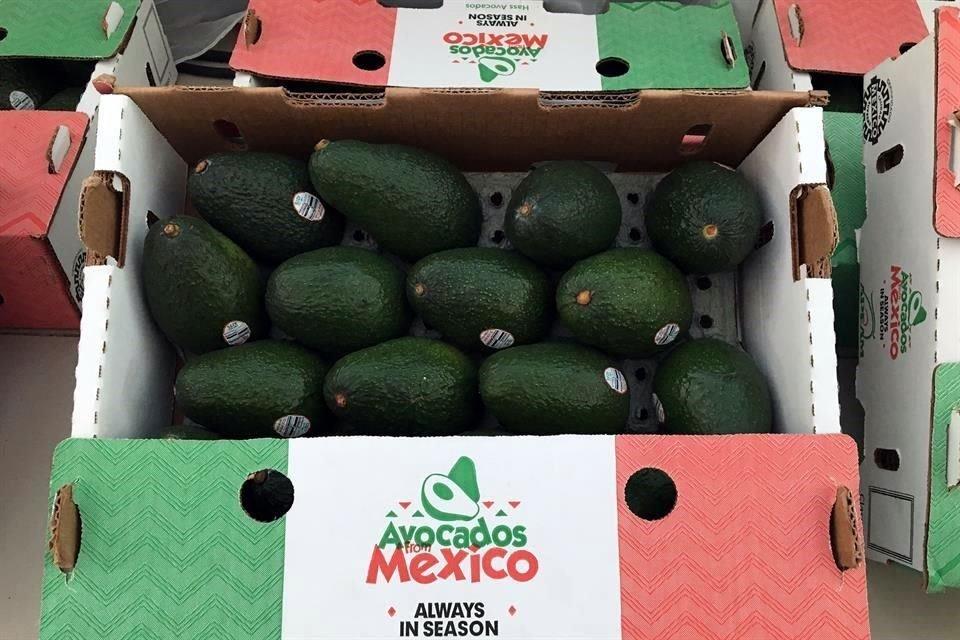
In addition to these elements, Tomás de la Cuadra, a data analyst at Avobook, provides an analysis of year-over-year export patterns. According to his review, during the last three seasons, weeks 16 and 17 typically saw peak shipments to the United States, coinciding with logistical preparations for May 5th. “But this hasn't been the case for 2025. Week 13 closed with just over 1,900 shipments, but then dropped to 1,200 in week 14, and the weeks leading up to May 5th showed no signs of significant volume compared to the other weeks,” he stated.
The analysis also highlights that, although Peru's campaign had already begun, it did not significantly affect Mexican fruit prices in the US market.
And after May 5th, what was the scene like?
During week 18, following the Cinco de Mayo celebrations, Mexico exported 850 containers of avocados to the United States, a moderate volume that did not significantly alter reported inventories at the destination. According to Sergio Paz Vega, this slowdown in exports reflects a decreasing Mexican market share, a trend expected to continue in the coming weeks.
Although domestic demand in Mexico wasn't particularly high, farmgate prices didn't adjust as quickly as the demands of the U.S. market. "There's no doubt that someone in the supply chain has been losing money, at least for some sizes," Paz warns. Size 60, in particular, presented the greatest challenges, but larger fruits—like size 40s—also experienced a considerable drop, despite their lower availability compared to previous seasons. Smaller sizes (70s), which had shown greater stability, also began to feel the price decline at the start of week 19.
So far in the 2024–2025 season (July to date), Mexico has exported approximately 10% less volume compared to the previous season. However, the year has been positive for many producers, as the average price has been significantly higher, particularly benefiting those who managed to maintain average yields.
The immediate outlook is marked by uncertainty. The bulk of the remaining volume will have to be distributed between the US and domestic markets. However, the United States is not expected to absorb the volume that producers anticipate, and competition from sources like Peru—though still incipient in terms of volume—is already generating speculation in the market. “The truth is that the market is in the process of adapting,” notes Paz, who warns that this realignment seems to have been accelerated, driven more by expectations surrounding Peruvian fruit than by its actual presence.
Given this situation, some Mexican producers have opted to redirect their harvests to the domestic market, where certain sizes are fetching better prices than in the United States. Adding to this is the start of the new fruit harvest in Jalisco, which has already begun to generate activity in markets such as Canada. This confluence of factors will force producers to make key decisions in the next seven or eight weeks.
In summary, while May 5th continues to be a date of high commercial and cultural value in the United States, market behavior in 2025 shows that its economic impact does not always translate into linear benefits for agricultural producers.