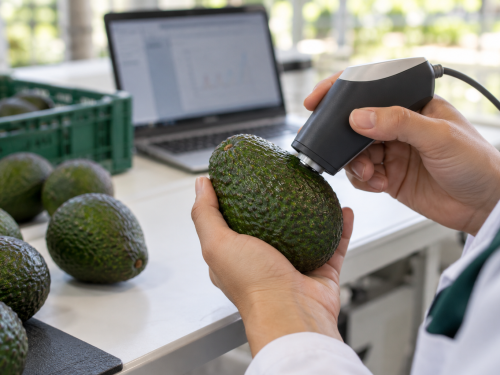
From field to freezer: the journey of avocado pulp
The avocado has long since ceased to be a product limited to fresh consumption. Today, it is also a raw material for an industry that transforms it into frozen or chilled pulp, capable of reaching the most distant markets without losing quality. The journey this fruit follows, from its harvest in the fields to the moment it appears ready to eat in a package, combines agricultural precision, processing technology, and business expertise.
For Avocomex , a US-based company dedicated to the marketing of guacamole and avocado products, the key lies in understanding that there aren't two separate production chains, one for fresh and another for processed avocados. “The avocado harvesting process is the same for both fresh and processed avocados. The fruit needs to be cut very carefully, without bruising. All processed avocados come from the same harvest destined for fresh production,” they explain.
This initial field stage is regulated by international standards. The Codex Alimentarius , developed by the FAO and WHO, stipulates that the fruit can only be harvested once it has reached a minimum dry matter content: 21 percent for the Hass variety and 20 percent for others such as Fuerte or Pinkerton. These conditions ensure that the avocado is sufficiently ripe to complete its development and withstand transport.
The second phase takes place in the packing facilities, where the fruit is sorted according to its appearance. Batches destined for fresh export consist of pieces without blemishes or external imperfections, while cosmetically rejected fruit is redirected to processing. “Inside they are just as good, but they are only discarded for cosmetic reasons,” explains Avocomex. This is where the path of the avocado that will eventually become pulp begins to diverge.
The selection process continues at processing plants, which do not allow the entry of broken or damaged fruit. The FAO also recommends that avocados undergo a pre-cooling process within six hours of harvesting to reduce damage and preserve firmness, a crucial step that also impacts the quality of the processed product.
Once at the processing plant, the avocados are received green and undergo a controlled ripening process. “This ensures the perfect, necessary, and precise ripeness for a quality product.” This process standardizes the resulting pulp, preventing unbalanced flavors or irregular textures. After reaching the ideal ripeness, the fruit is peeled, the pit removed, and then processed in industrial equipment that homogenizes the pulp. At this stage, the final characteristics of the product are defined: a smooth purée, a chunky mix, or a ready-to-use guacamole formulation.
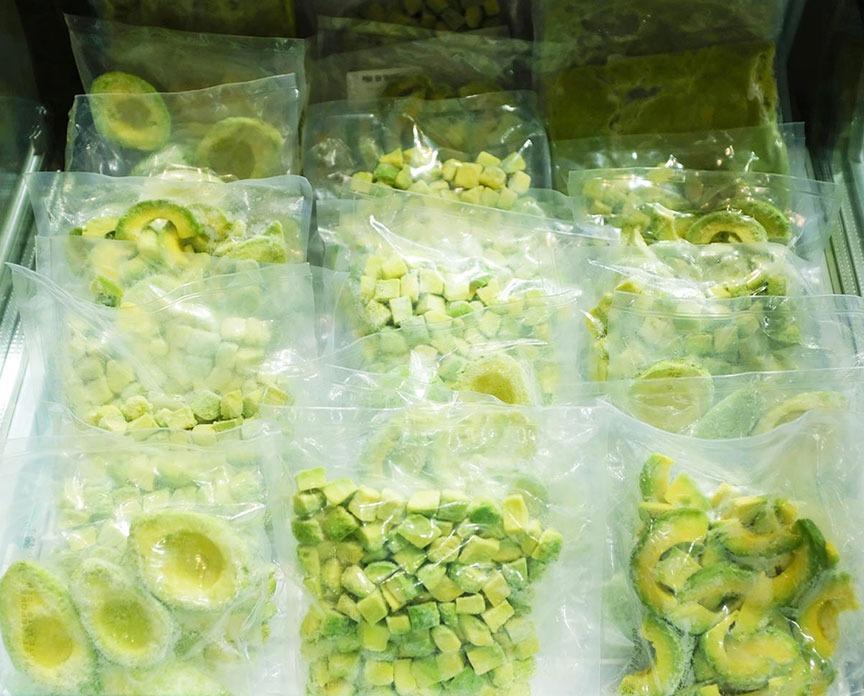
Packaging reflects the diversity of markets. Customers demand specific presentations ranging from small pots for individual consumption to large-volume bags for the food service sector.
The choice depends on the requirements of each destination, but in all cases a material that protects against moisture loss and oxidation is required.
The next step is crucial: refrigeration or freezing. The FAO emphasizes that the faster the freezing process, the better the avocado's organoleptic properties are preserved, as smaller ice crystals form and cell damage is prevented. Refrigerated avocados, on the other hand, are intended for short distances and immediate consumption.
The frozen option opens up a completely different picture. “A frozen product can last two years without any problem and travel the world without any phytosanitary protocols.” The reason is that freezing stops the avocado's natural deterioration process and, in addition, provides price stability, something key for international buyers.
The FAO confirms that freezing is the most effective method for preserving nutrients and keeping microorganisms inactive, provided the cold chain is maintained below -18 degrees Celsius. The USDA agrees that safety depends on controlled thawing, avoiding temperature fluctuations that could compromise product safety.
The result of this process is a processed avocado that retains its value compared to fresh avocados. All the pulp comes from the same fruit originally intended for fresh export, and the difference is purely cosmetic. In terms of flavor, quality, and safety, processing offers even more advantages: a longer shelf life, consistent availability, and the ability to reach any table worldwide.
In short, the journey of avocado pulp, from the field to the freezer, is a combination of agricultural rigor, technological innovation, and commercial vision. Thanks to this process, a fruit that ripens and deteriorates rapidly when fresh is transformed into a food capable of crossing oceans and remaining stable for years, without losing the flavor and quality that have made it one of the most sought-after products in the global market.