The opening of Puerto Antioquia undoubtedly opens up new opportunities for the Hass avocado agro-industry.
With the start of the new main season, Colombia projects exporting 182,000 tons of Hass avocados by year's end, strengthening its position as one of the world's leading sources of the fruit. In an interview with Avobook, Katheryn Mejía Vergel, president of Corpohass, analyzes the sector's projections, the challenges of quality and logistics, and the strategy for balancing the European and US markets.
Colombia is entering its main Hass avocado season with the momentum of a record-breaking year. The country expects to close 2025 with 182,000 tons exported, a volume that would solidify the maturity of an industry that, in less than a decade, has gone from emerging to becoming a benchmark in the global trade of this fruit.
“Between January and September, we have already exported nearly 147,000 tons, reaching 80% of our target,” explained Katheryn Mejía Vergel, CEO of Corpohass, during a conversation with Avobook . “We hope that weather and market conditions will help us close the year with close to 100% fulfillment.”
The figures support their optimism. According to Corpohass, exports grew by more than 40% between January and September compared to the previous year. In September alone, 14,611 tons were shipped, 32.9% more than in 2014. This consolidates the country's position as Colombia's third most exported fruit product, behind bananas and flowers.
In addition to the increase in volume, the country faces a season with a longer calendar. “Our projection is for the end of 2025, but if the trend continues, Colombia will have a main harvest until the end of February 2026,” Mejía Vergel stated.
This extended window, made possible by the diverse climate and the geographical distribution of the crops—primarily in Antioquia, Risaralda, Caldas, Quindío, and Tolima—offers a strategic advantage over other origins in the Southern Hemisphere. “Our goal is to consolidate Colombia as a source that can guarantee quality, volume, and on-time delivery year-round,” the executive added.
This stability, increasingly valued by buyers, allows Colombian exporters to maintain a continuous presence in international markets, even when other suppliers reduce their supply.
The major logistical milestone of this campaign is the opening of Puerto Antioquia, in the Gulf of Urabá, which promises to transform the export dynamics of Colombian Hass avocados.
“The opening of Puerto Antioquia undoubtedly opens up new opportunities for the Hass avocado agro-industry,” Mejía Vergel emphasized. “Many logistical improvements are expected, resulting in savings throughout the supply chain and better fruit performance due to reduced transportation times.”
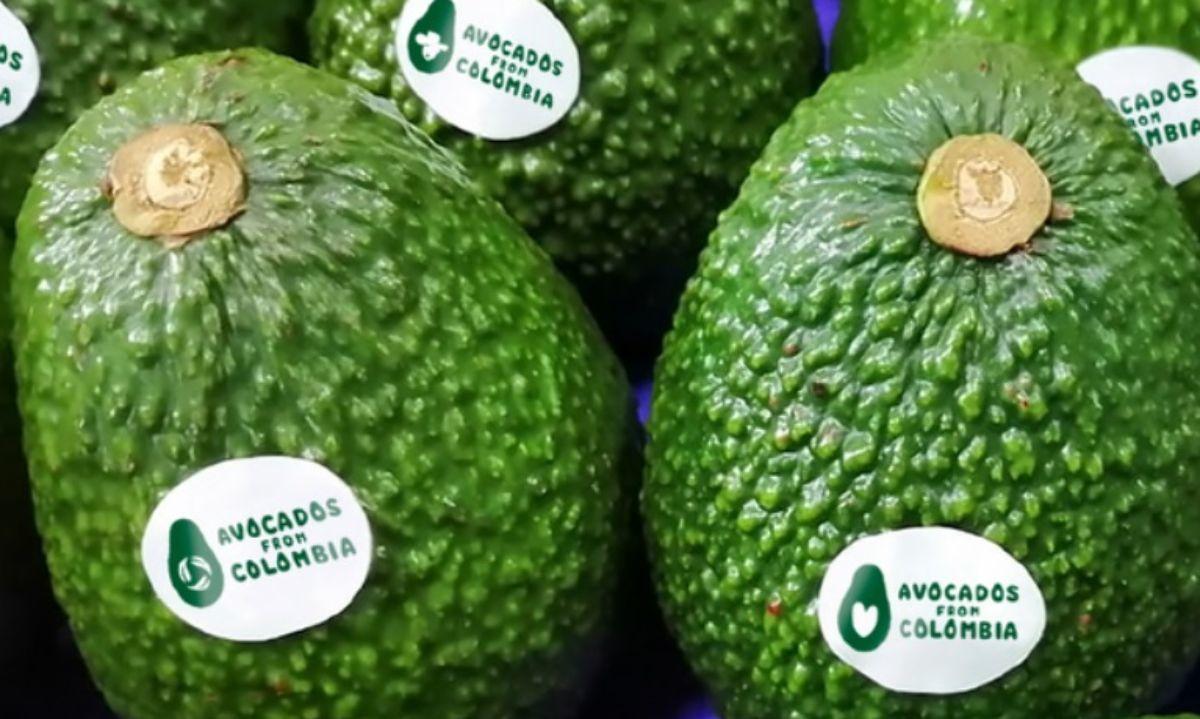
The president of Corpohass also highlighted the progress of the Avocados from Colombia Quality Program, an initiative that seeks to improve the quality and extend the post-harvest life of the fruit. “We have been developing projects with logistics stakeholders and other links in the supply chain to increase the quality and shelf life of our Hass avocados,” she explained.
The goal is for Colombian fruit to maintain its freshness during long-distance shipments to Europe, North America, and Asia, reaffirming its reputation as a high-quality product.
The 50-50 challenge: balancing Europe and the United States
Market diversification is another pillar of the Colombian strategy. “Our commitment remains to maintain our presence in these two international markets,” Mejía Vergel noted. “The strategies are underway, and we are constantly monitoring the state of the markets to meet our established goals. Undoubtedly, political issues are playing a significant role in business decisions today.”
Currently, Europe receives the majority of shipments, with the Netherlands as the main gateway. The United States, which opened its market to Colombian avocados in 2022, is showing rapid growth and is already emerging as a major counterweight to European demand. The goal of achieving a 50-50 split is ambitious, but the industry is confident that consistent supply and logistical improvements will allow it to be achieved in the coming years.
Beyond fresh fruit, industrial processing is gaining prominence as part of the value-added strategy. “Colombia currently has 13 companies dedicated to Hass avocado processing, primarily in the production of oil, pulp, guacamole, and frozen avocados,” explains Mejía Vergel. “Seventeen percent of total production is being allocated to this link in the chain, which we expect will continue to strengthen, especially in Asian markets where it is difficult to reach with fresh fruit.”
The advancement of this segment allows us to take advantage of fruit that does not meet fresh export standards and open new opportunities in higher value markets, where the consumption of processed avocado-based products grows year after year.
For Mejía Vergel, the success of the Colombian sector is based on an increasingly professionalized supply chain and the commitment of its producers. “Each ton exported represents the effort of hundreds of producers who make Colombia a land of quality. Today, the world values not only our flavor, but also our ability to produce year-round with social, environmental, and technical responsibility.”
The main 2025-2026 campaign is thus projected as a turning point for an industry that is already moving beyond volume to focus on excellence and sustainability. With a long-term vision and a collective strategy led by Corpohass, Colombian Hass avocados seek to solidify their quality seal in the world's most demanding markets.