Colombia prepares for the First Technical Protocol Seminar for Hass Avocado
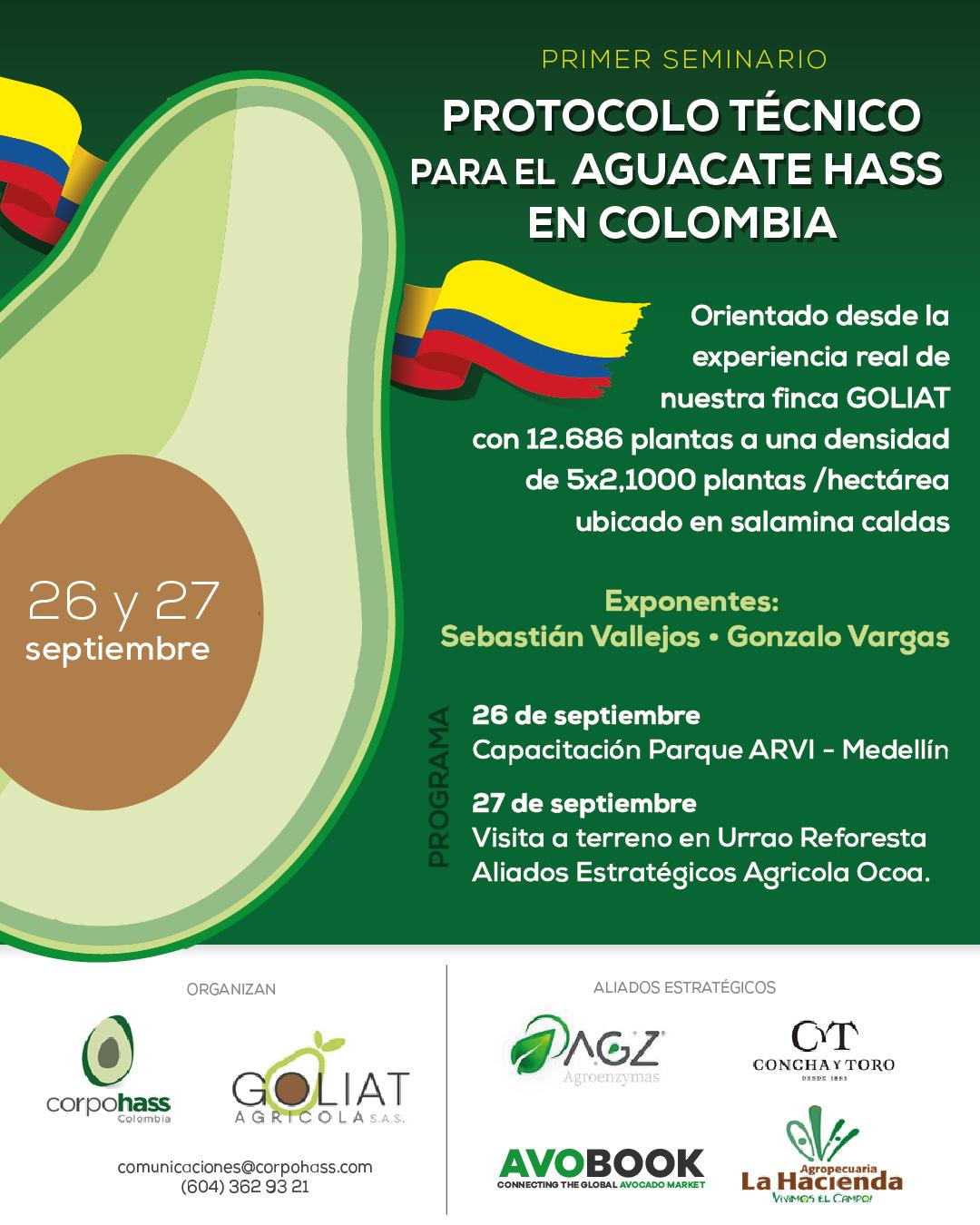
On September 26 and 27, the First Technical Protocol Seminar for Hass Avocados in Colombia will take place, a key event for the country's avocado sector, organized by Goliat Agrícola and CorpoHass. The event will be divided into two days: the first day at ARVI Park in Medellín and the second a technical visit to Urrao, with the support of Reforesta and Strategic Partners Agrícola Ocoa.
The seminar focuses on sharing the experience gained at the Goliat farm, located in Salamina, Caldas, which has 12,686 plants distributed at a density of 5,000 to 2,000 plants per hectare. The program includes an analysis of the challenges avocado production has faced in recent years, especially in the context of climate change, which has severely impacted the sector.
Lessons learned from climate change
Over the past two years, the Colombian agricultural sector, and avocado cultivation in particular, has suffered the impact of adverse weather conditions, such as harsh winters, low sunlight, and prolonged rains, which have stifled the fields and resulted in a considerable loss of planted area. According to the event organizers, many orchards were unprepared to face these conditions due to poor nursery practices and a lack of preventative measures.
In this context, the Goliat farm has been a representative case study. Despite losing 20% of its plants, the accumulated experience has allowed for the development of a work protocol tailored to the Colombian context, which will be shared with seminar attendees. This protocol covers everything from orchard conversion to the implementation of preventative treatments and the use of growth regulators, essential for improving crop management under cloudy conditions.
Protocol for the future of avocados in Colombia
Among the key topics to be addressed at the seminar is the importance of constant monitoring and proper nutrition of Colombian tropical soils, which tend to be depleted of minerals such as calcium, magnesium, zinc, and phosphorus. The use of irrigation and fertigation will also be a crucial point, given that many orchards are not adapted to these systems, which affects pulp quality and plant yield.
The organizers also emphasize that Colombia has great potential to establish itself as a world-class avocado producer, with a supply that could be available almost year-round and a strategic location for exporting to various markets.
Seminar program
- September 26: Training at ARVI Park, Medellín.
- September 27: Technical visit in Urrao, organized by Reforesta and Aliados Estratégicos Agrícola Ocoa.
The presenters will be Sebastián Vallejos and Gonzalo Vargas. The event has the support of key players in the sector, such as AGZ, Concha y Toro, Avobook, and Agropecuaria La Hacienda Agropecuaria, who will also be present at the seminar.
The First Technical Protocol Seminar for Hass Avocado is emerging as a key platform for the exchange of knowledge and the development of best practices in avocado production in Colombia, with a view to overcoming current challenges and strengthening the future of the sector.
For more information, you can contact us at comunicaciones@corpohass.com .