Carmen Gloria Lüttges, Westphalia: “The customer knows how to differentiate the quality of each origin”
Carmen Gloria Lüttges, Westfalia's commercial manager for avocados in South America, tells Avobook how exports from Chile, Peru, and Colombia are performing at one of the leading companies in the sector.
Carmen Gloria Lüttges has dedicated more than two decades of her life to the avocado industry. She began her career as an agricultural engineer in Quillota, a Chilean town dedicated to avocado production. That was 25 years ago, and since then, she has worked professionally in the field, as well as in packing, logistics, and sales.
She is currently part of the Westfalia team, the second largest exporter in Chile, where she holds two positions: commercial manager for avocados in South America, where she is responsible for managing avocado exports from Chile, Peru and Colombia 52 weeks a year; and commercial manager of avocados at Westfalia Chile.
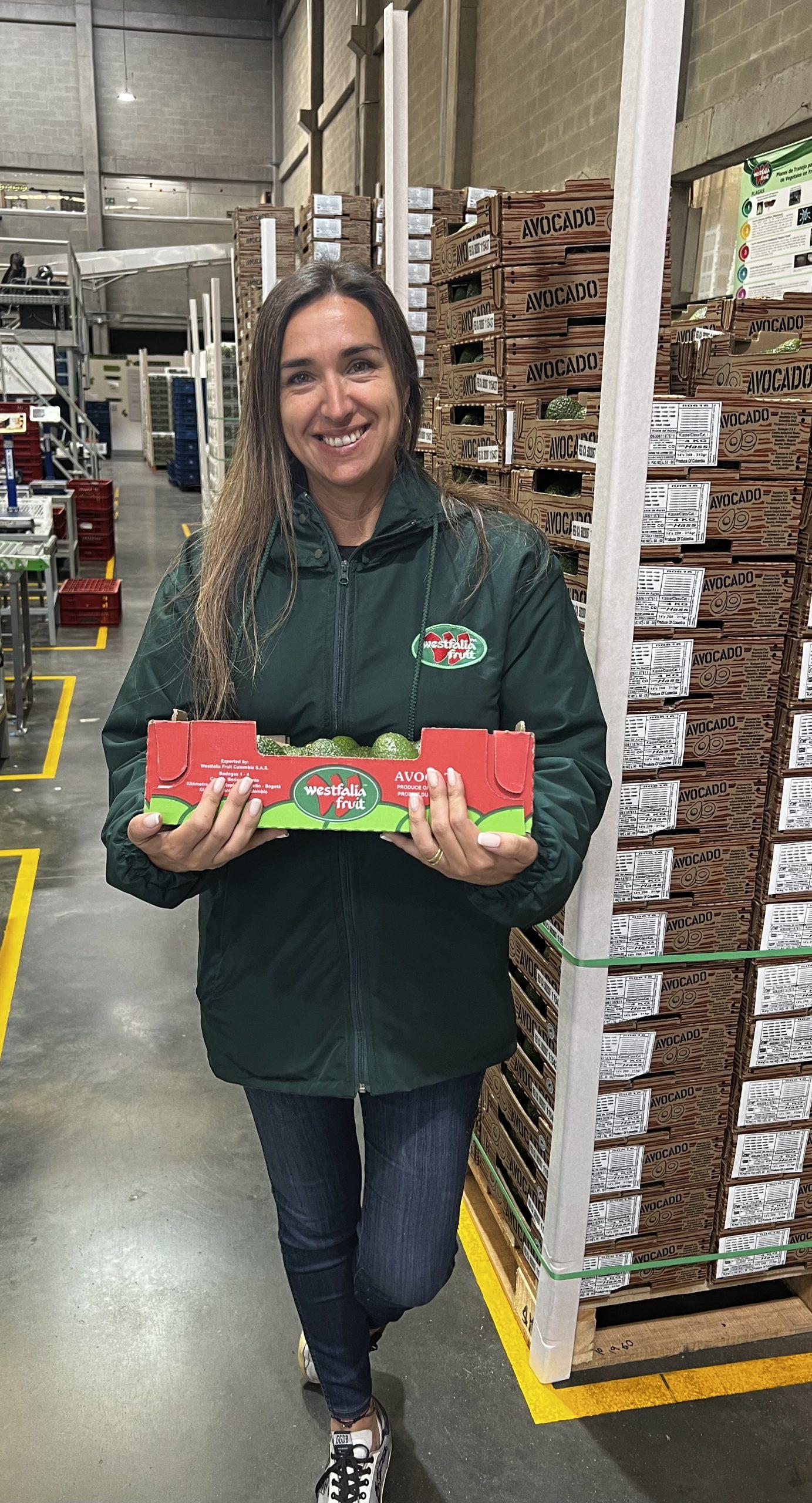
In this conversation with Avobook, Carmen Gloria shares her perspective on the current state of fruit production and exports in South America, and particularly in Chile. From changes in destination markets to innovations in product quality, her insights offer a deep understanding of this industry that helps project future business scenarios.
In this conversation, Carmen Gloria talks about "la palta," as they call the fruit in Chile, and we have left that name in her answers to maintain the naturalness of the dialogue.
- How did you get into the world of avocados?
“I started working in the field in Quillota, and after a few years, I joined the world of fruit exporters. Since I worked in the Fifth Region, I was always closely involved with avocados and citrus fruits. The truth is, I've been working with avocados, and specifically with exports, for over 20 years. I gradually increased my responsibilities until eight years ago when I started working in the export sales area for avocados with Westfalia. Today, I'm the sales manager for avocados in South America at Westfalia, where I'm in charge of Chile, Peru, and Colombia, as well as all the new projects in South America.”
- We're talking about countries with very different histories, with Chile being very powerful years ago, Peru having grown significantly, and Colombia gradually entering international markets. What can you tell me about these three countries and their current state?
“The oldest origin is Chile. Twenty years ago, we were world leaders, exporting between 90% and 95% of our avocados to the United States. But after Mexico obtained its permits to enter that market, Chile turned to Europe seeking greater competitiveness. Peru complements Chile with its season, which runs from February-March to August-September, allowing us to have supply for 52 weeks a year. As for Colombia, we were pioneers in planting and establishing an export company there more than 10 years ago. It has been a production and logistical challenge, but we continue to grow. We now have around 350 hectares of our own production and are the second largest exporter in Colombia.”
Westphalian Quality Identification
- How can the product, the avocado itself, have important commercial characteristics for its customers, being from three different origins, with different climates and production conditions?
“Customers know how to differentiate the quality of each origin. For example, with Chilean avocados, they know exactly how long they need to ripen, what temperature and humidity they require, and how long they should wait to be sold. Chile is at a higher level in terms of quality, and customers perceive and appreciate that. Therefore, they are willing to pay a higher price when, at the same time, other fruit is arriving, for example, from Colombia and Mexico.”
- Speaking of Colombia, how has that origin been addressed to standardize quality and to identify with the Westfalia brand?
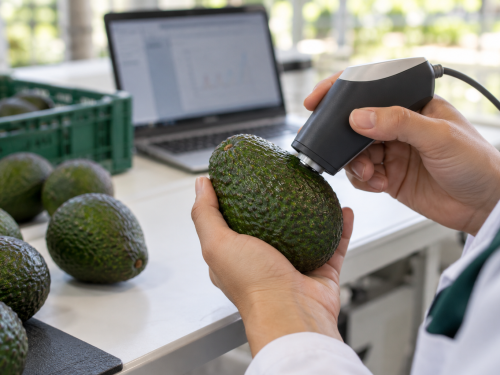
“We have focused heavily on quality in Colombia, primarily with our growers, whom our field team supports year-round in production, certification implementation, and product application. We have also implemented technology in our processing plants to ensure our fruit travels better and remains in optimal post-harvest condition. The Westfalia brand already enjoys a reputation for quality in the market.”
- So, the concept of “quality” is broader than the characteristics of the fruit
“We’ve incorporated technology into our plants, in on-line applications, in pre-cooling, in almost the entire post-harvest chain. We have a team in Westphalia, South Africa, who support us technically so we can implement everything they’re developing and deliver the best product to its destination. This has given us a strong brand reputation. Indeed, here we’re not just talking about quality in terms of whether it tastes good or has defects, but we also give our customers the confidence that all our producers are certified, that it’s a reliable product, and that the fruit arrives in perfect condition.”
- What are the percentages or distribution of fruit shipped to the United States, Europe, and other markets in the case of Westfalia?
“In Chile, currently only 5% of avocados are exported to the United States, while in Peru it's approximately 15%. In Colombia, we are just entering a market that initially didn't want Colombian avocados because they weren't familiar with them, but we have managed to convince importers and gain the trust of supermarkets. Normally, very little volume is sent to the United States, but given the conflict with USDA inspectors in Michoacán and the resulting halt to exports, Colombia seized the opportunity, increasing its shipments of avocados to the United States by 50% during a period when the European market wasn't competitive.”
- In the case of Chile, how are the percentages of fruit consumed in the domestic market and exported distributed today?
“Generally, between 50% and 55% of the volume is exported, and the rest remains in the domestic market. Domestic consumption has increased to more than 8 kilos per capita, mainly due to the stable volume available throughout the year, thanks to the influx of Peruvian avocados that complement the domestic supply. Previously, there was a significant drop in supply during the winter months, when it was difficult to find Hass avocados; now we can buy and eat avocados all year round.”
Volumes of Chilean avocados in the world market
- How has the reduction in avocado production in Chile affected things in recent years?
“The volume has been reduced because the hectares in Chile have been reduced due to the great drought that has affected the country in the last 13 years, mainly the Fourth and Fifth regions.
Unfortunately, we have seen producers we have known for years disappear in the Ovalle, Cabildo, Petorca area, and even some in the Aconcagua Valley.”
- How much is Chile capable of sending to the international market in terms of volume?
“Over the last two seasons, we've exported almost 90 million kilos. Some years the volume is higher, and other years it's lower, depending on whether it's a peak or off-peak year due to alternate bearing. The truth is, the volume isn't enough to meet all the international demand; they want more and more each year, and we're not able to supply their needs. Chilean fruit is the most sought-after during the months when Chile is present in the markets.”
- Does the local market influence the volumes that are exported?
“Of course. As we enter the height of summer, the domestic market becomes so strong in terms of prices that exports begin to lose competitiveness. Every year we are finishing the export season earlier. If in previous seasons we finished with volume in March-April, today volumes begin to decrease at the end of January, in February, and by March there are practically only a few exporters shipping a limited volume, mainly to Argentina.”
- Is that happening because the fruit is running out or because there is high demand in the local market at a good price?
“It’s both. Demand increases during the summer when people start eating more avocados. Along with the higher demand, the Chilean season begins to end, when there is less volume available, and that’s why prices start to rise.”
Consumption in China: the key is maturation
- How could avocado consumption be better promoted in China?
“Consumption will increase with promotional campaigns and as importers begin to ripen the fruit. This is what has happened in all countries where avocados are traded worldwide.”
- Are ripening plants being installed in China?
“Several importers in China are already developing ripening chambers. They are adapting the current chambers they use to ripen bananas to be able to ripen avocados, but the percentage is still very low.”