Avocado in Africa: an in-depth look at Kenyan avocados
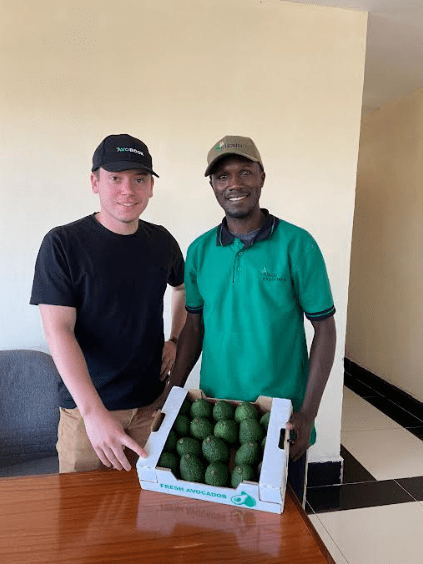
Avobook's Market Analyst, Tomás de la Cuadra, visited the African Avocado Congress, as well as production farms and export facilities, from where he provides a description of the current state of Kenyan avocados.
The Republic of Kenya is located in East Africa. In 2019, it had a population of 48 million, comprising 44 different ethnic groups. Agriculture is the second largest contributor to the GDP, after tourism and services. Crops account for 50% of its exports, with tea, coffee, and horticultural products topping the list of exports to its main trading partner: the European Union.
In this context, avocados appear as one of the products with the greatest growth potential among its exports, but they must face several challenges to consolidate their presence in the markets that already consume the fruit from Africa.
Avobook traveled to Kenya to participate in the African Avocado Congress and take the opportunity to tour crops, learn about the agro-industrial culture and the stage in the development of their product.
Avocado data in Kenya
Tomás de la Cuadra, Market Analyst at Avobook, explains that one of the objectives was to collect data from that part of the world, knowing that the essential attribute of weekly reports is to have information that is not easily accessible to those who have to make decisions.
“There is information about Africa, but very little. When we were in Berlin, we realized that some countries were more relevant because they historically have better conditions for production, like South Africa. But there we also learned about Rwanda, Kenya, and Uganda, which may be unknown to much of the world, but they are producing avocados, and little is known about their avocados,” he points out.
This is how Avobook made contact with the Kenyan Avocado Society, which organized the African Avocado Congress, not only with producers from their country, but also actors from Tanzania, Uganda and the rest of the countries from that corner of the world.
Kenyan Avocado Producers: Enthusiasm for Learning and Improvement
The African Avocado Congress was attended not only by large exporters, but also by medium and small marketers and mostly producers.
From the meeting with them, it was clear that the stage in which Kenyan avocados are growing is one of learning in productive matters, seeking to improve their crops and certify their fields.
“We realized there was a lot of enthusiasm for learning about quality and tips on how to obtain certifications that would expand their opportunities. There was a lot of ignorance on the subject, but at the same time a tremendous interest in learning,” says the Avobook Market Analyst.
Kenyan Avocado Quality
In the experience gained both at the Congress and during visits to productive fields, a recurring theme is the improvement of quality.
“In some cases, we need to reinforce our knowledge of fieldwork, but in others, the concern is focused on dealing with weather conditions. There has been a lot of rain, with recent flooding, and in the coming weeks that will cause the fruit to grow smaller,” explains Tomás de la Cuadra.
This concern is also shared by exporting companies, which are highly aware that if they want to increase their market share in Europe, they cannot leave the country in a bad position.
“They know that if they neglect the fruit, the perception of a low-quality product becomes widespread in the eyes of the consumer,” the analyst points out.
Avocado growth in Kenya
What Avobook observed in Africa shows that Kenya is very likely to grow considerably in production in the coming years, with its quality gaps gradually decreasing.
But one task that must be done is to homogenize technical knowledge, where important differences can be seen between large producers and exporters, and medium and small ones.
“We had the opportunity to visit the facilities of Keitt, Kenya’s largest exporter. We saw that they had quite large and considerable investments. And that also resulted in a very large volume destined primarily for Europe. So, this suggests to us that there may be a gap between the largest and smallest producers in terms of knowledge management, certifications, and other elements. It’s a larger gap than the one that exists between large and small producers in other avocado-producing countries,” warns de la Cuadra.
The waste is turned into avocado oil
Another characteristic of Kenyan avocados is that there is still a lot of difference in fruit quality, depending on the producer's methods.
“While in Kenya, we saw that large companies make investments that a medium or small exporter wouldn't be willing to make. That's why their work is often limited to simply selling to this larger company,” he points out.
The current state of production means that a lot of fruit goes to waste. In fact, Kenya produces between 250,000 and 300,000 metric tons of avocados annually, but up to 40% of the harvested avocados are unsellable.
One solution to that problem is to process some of that fruit, which has made Kenya one of the leaders in avocado oil production.
“We saw this with several companies that bought the discarded fruit to process it. It’s quite common. Because domestic consumption is very low, what isn’t exported hardly goes to the national market, but rather to oil production. Within Kenya, avocados aren’t a very popular fruit. We had to go to the supermarket and see that the quality of the avocados wasn’t optimal, because the local market isn’t significant,” the analyst points out.
Avocado oil finds a good market in Europe, where it is offered as a niche product
Avocado fields in Kenya
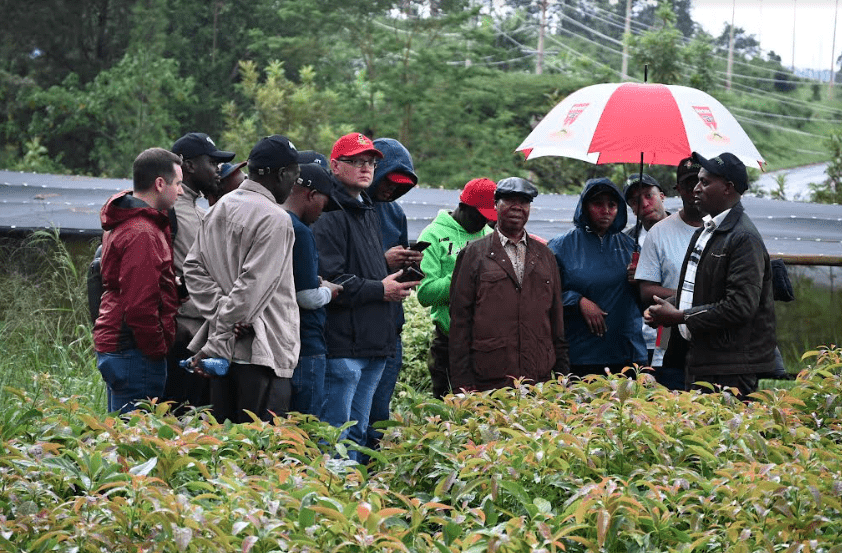
Avobook visited a field of approximately 80 hectares of crops. Tomás de la Cuadra explains that “many were taking notes on what the expert there was saying, because there is a lot of interest in improving.”
“We explored orchards where we learned about nursery establishment, avocado agronomy, sustainable farming practices, irrigation, pest and disease control, harvesting, handling, and transportation of avocados. At first, it was almost like a technical class on how to treat the plant from its very beginning. What we saw in those orchards was very good. It was a leading plantation in Kenya,” he describes.
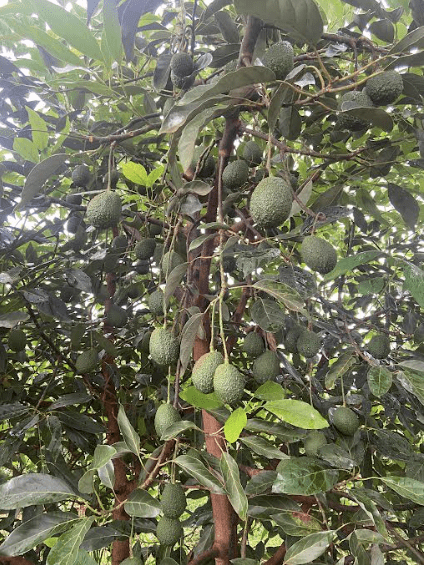
Another factor demonstrating the enthusiasm for avocado exports is that some of those interested come from outside the agricultural sector. De la Cuadra explains that during the site visit, “we realized that some participants came from other industries but were noticing the growth or potential of the business and now want to start investing.”
Advantage of Kenyan avocados: lower production costs
Kenya's projection is interesting, considering factors that allow it to produce at lower costs. De la Cuadra believes that "at some point, it may become one of the leaders in the industry. It has the advantage, like Colombia, of benefiting from rainfall. At least most of the time, provided there isn't excessive rainfall that causes flooding."
“It’s a tropical climate, so they don’t need sophisticated irrigation systems. Therefore, we’re talking about potentially much lower production costs. The cost per hour of labor is also lower. This is obviously related to the country’s circumstances, but it could attract foreign investors. Those leading the associations will play a key role in forging these agreements,” says Tomás de la Cuadra.
In terms of transportation, the task is also challenging. The Suez Canal continues to have security problems, making the 20-day journey between Kenya and Europe potentially take up to 40 days via alternative routes.
“So, this is fruit that has a fairly small margin if it suffers any delay . Added to this is the fact that the quality of some fruit continues to develop to reach its optimal level, meaning these shipments can be greatly affected if the transit time is very long,” the analyst points out.
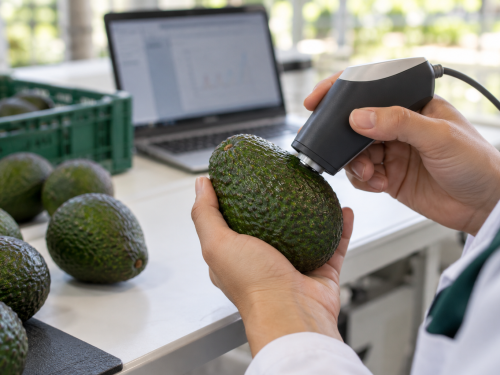
Another deficiency that needs to be addressed is the lack of quality controls at the source, which would allow the fruit's condition to be validated by third parties.
“It’s not something that’s ‘marketed’ much, so to speak, because it’s an extra cost. Many might say, ‘Why bother, if I have my own team? I know the quality of the fruit.’ Adding more costs is what, at this moment, can complicate things for the smallest exporter who wants to grow. Perhaps they aren’t seeing the long-term impact of having the support of a third-party validator,” he explains.
Avobook's visit to Kenya allowed them to learn and understand that – according to Tomás de la Cuadra's summary – “it shows great potential for the future if Kenya takes quality and certifications seriously. This will lead to it being viewed much more respected in the European market.”