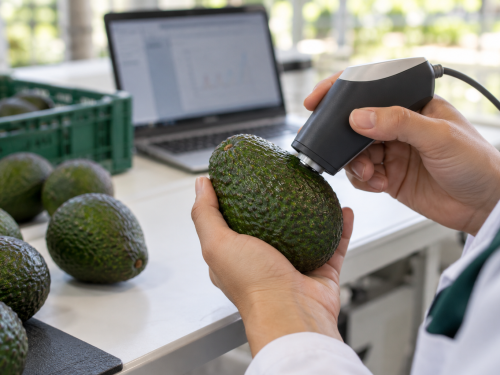
Asia: a market that is redefining the future of avocados
Asia has become a market with concrete signs of opening up for avocados. Countries like South Korea, Japan, and China have implemented measures that facilitate access and improve the competitiveness of suppliers.
According to André Vargas, Global Procurement Manager at South American Express Co. and Commercial Director at Fruwer Produce LLC, these initiatives include “temporary exemptions for fruits such as avocados” in Korea, the authorization of imports from the Philippines by Japan in 2024, and the opening of protocols in China to new origins such as Kenya and South Africa.
“Asia is facilitating the return of suppliers by offering greater market access and reduced tariffs,” Vargas explains. South Korea, for example, has extended temporary exemptions for fruits like avocados, while Japan allowed the entry of fresh fruit from the Philippines in 2024, demonstrating its intention to diversify and stabilize supply. Meanwhile, China has opened trade protocols to countries like Kenya and South Africa in recent years.
The region also combines two decisive factors: growing demand and a modern distribution ecosystem. China is already the largest regional importer, and although per capita consumption remains low, the potential for expansion is enormous. Vargas warns that here, “the authorities of the supplying countries must launch marketing campaigns to promote avocados and increase consumption; currently, efforts are very limited.”
Consumption patterns in Asia reflect cultural differences. In China, avocados are primarily eaten fresh in salads, rice bowls, or smoothies and milkshakes served in cafes. However, the most dynamic segment is the processed market: guacamole, snacks, and oil, with projected growth through 2030. In Japan, on the other hand, the fruit has become a common ingredient in sushi and salads, and its presence in guacamole and cosmetics is also growing.
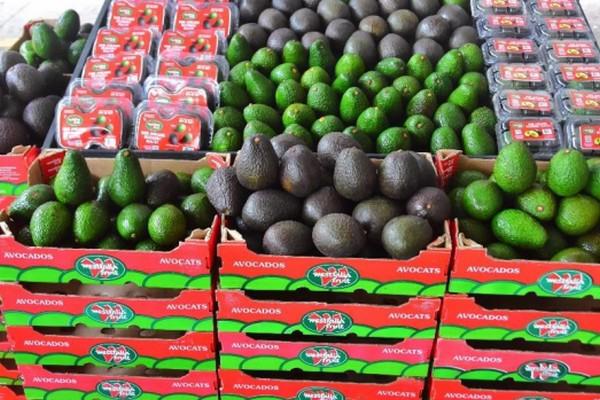
Although the fresh produce segment already accounts for the majority of consumption in China, Vargas emphasizes that there is still room for growth: “Per capita consumption remains low, leaving ample space for expansion.” To achieve this, he insists, intensive marketing efforts are required from both exporters and government authorities.
A key factor in measuring profitability is the relationship between transportation costs and prices. Vargas maintains that “if quality and brand are maintained, there is a profit margin; if they decline, the margin is reduced.” The specialist points out that China is a “highly volatile and volume-sensitive” market, so the only way to protect oneself is to ship premium fruit with smooth skin in branded boxes.
This year, he adds, China has shown greater demands regarding external quality, unlike in 2023 and 2024, revealing that “consumers are adapting and changing year after year.” In logistical terms, maritime freight to the continent has remained at reasonable levels in 2025. Japan, for its part, offers rising retail prices and a high-value market, but demands consistency, presentation, and size. “It is profitable for premium fruit with programs,” he asserts.
Demand also varies by market. In China and Asia, sizes 20 and 22 stand out, although sizes 26 and 28 have seen a resurgence in the foodservice sector, especially in 10 kg boxes. Japan maintains its preference for uniform, medium-sized fruit for retail, where consistency and branding are more important than extreme sizes.
Chile, for its part, has managed to position premium fruit in Asia, with a clear demand in China for sizes between 20 and 26.
Vargas's verdict is that Asia remains an attractive market, but only under specific conditions: quality, marketing, and consistency. The region offers access, growth, and profitability, provided exporters understand that Asian consumers are increasingly demanding and that global competition leaves no room for improvisation.