Argentina becomes the most dynamic market in South America for avocados
Argentina has burst onto the South American avocado scene and is now positioned as the region's most dynamic market. Driven by consumption that multiplies year after year and imports that in 2025 reached double or even triple the volumes of 2024, the country has become a key destination for exporters from Chile, Peru, Brazil, Colombia, and, increasingly, Mexico.
According to Actual Market Research , the Latin American avocado market will grow at a rate exceeding 7% annually between 2024 and 2029, with Argentina leading the way in this expansion. In figures, Cognitive Market Research estimates that the Argentine market reached USD 130.6 million in 2024, with projections of 10% annual growth until 2029, while Bonafide Research estimates that this growth will add more than USD 65 million in value during that period.
A consumption that is already part of the Argentine diet
The boom in the local market is largely explained by the definitive incorporation of avocados into consumption habits. Miguel Bauzá, manager of Don Jaime, an Argentine importer and exporter, confirms this: “The volume of avocado consumption in Argentina is noticeable year after year; the growth is primarily due to its establishment in the daily Argentine diet. Years ago, it wasn't definitively established . ”
However, Bauzá warns that the macroeconomic situation could affect profitability: “If the economic situation improves, since we are in that transition, I think it should increase more. This year, with the expectations of the Chilean productive sector, it will surely increase, but I don't think that with that increase the profitability will be as much as they imagine, since we are in a domestic recession and that increase in consumption will be offset by the price . ”
The supply of avocados in Argentina is extensive and diverse. While local production is concentrated in provinces such as Tucumán, Salta, Jujuy, and Catamarca, the supply is mainly sustained by imports.
Juan P. Vanzini, from the exporting and marketing company Conosur SA, explains: “The main origins that supply Argentina are Chile, Brazil, Peru, Colombia, and Mexico .” The entry of these fruits into the country is regulated by SENASA's Afidi program, which establishes phytosanitary requirements and parameters such as 23% dry matter at the beginning of the season.
Regarding Mexico, the world's largest exporter, opinions differ. Miguel Bauzá warns that entry windows are becoming increasingly narrow and that, at times, the fruit has not performed at its best in the Argentine market. For his part, Juan P. Vanzini emphasizes that, despite these seasonal limitations, "Mexico is already entering Argentina ," consolidating its position as another player in the available supply.
The dynamism of the avocado sector in Argentina is part of a broader trend in foreign trade. According to the Center for International Economics (CEI) of the Argentine Ministry of Foreign Affairs, Latin America is the main destination for Argentine exports, accounting for approximately 34% in 2023. Brazil and Chile are among the most important partners, both as buyers and suppliers, which also explains their strategic role in supplying avocados to the Argentine market. Seasonal complementarity and logistical proximity make the region a natural partner for sustaining the growth of this product.
Evolution of imported volumes
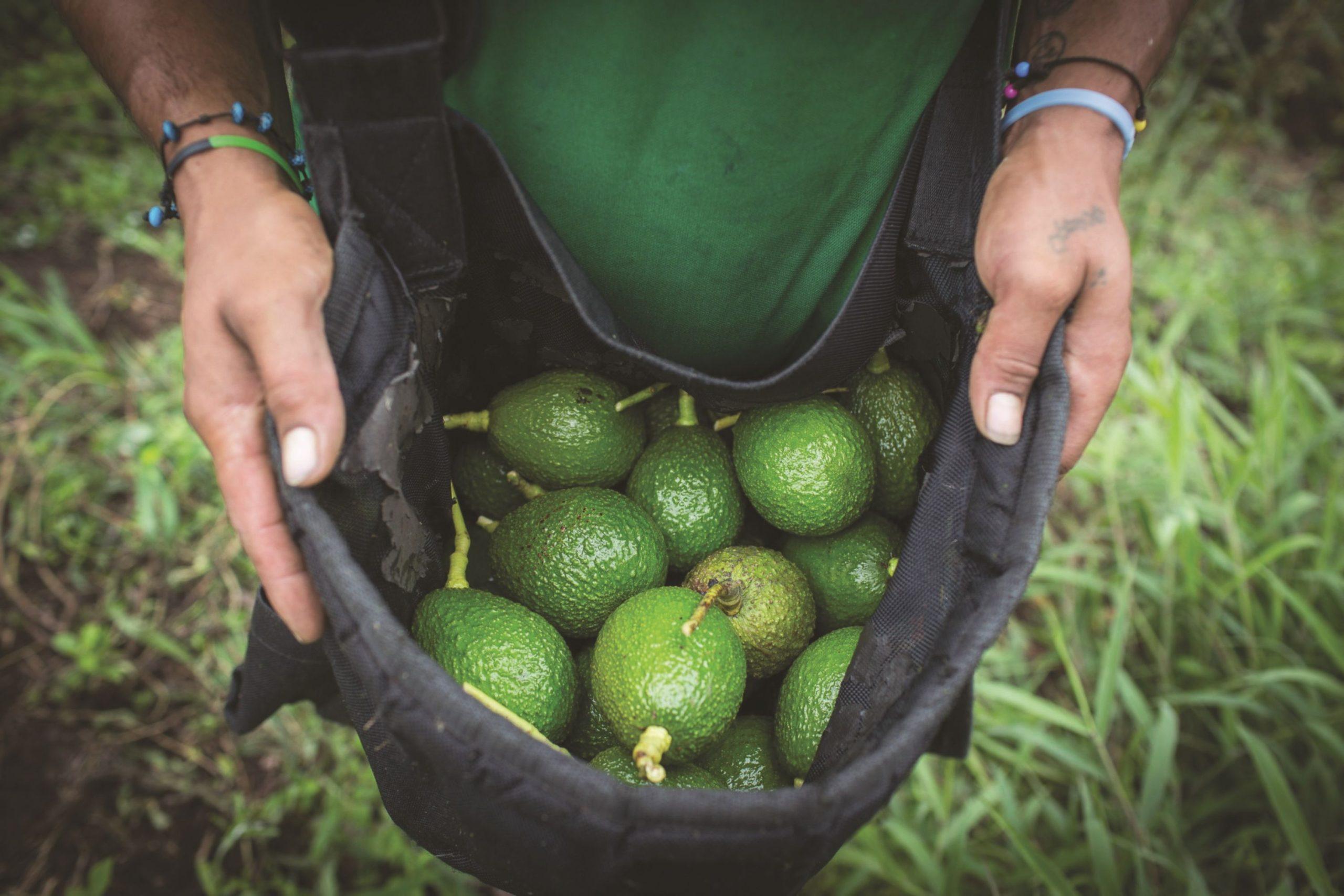
Data analysis confirms the magnitude of the growth. Tomás de la Cuadra, data analyst at Avobook, points out that in 2025 import volumes in Argentina have tripled—and even doubled—those recorded in 2024: “In January, more than 200 shipments were registered from Chile and some from Mexico, then decreasing month by month until April, when Peru and Brazil entered the market with very similar market shares . ”
The trend shows a change in the weight of the origins: “Chile was decreasing considerably compared to the previous month, Brazil remained at a similar volume and Peru was increasing until reaching July with more than 160 shipments to Argentina, while Brazil reached about 50 ,” explains de la Cuadra.
So far in 2025, market share is divided among Chile with 48%, Peru with 28%, Brazil with 21%, and Mexico with 3%. A comparison with 2024 reveals a significant change: last year, Chile accounted for 64% of shipments, reflecting how Peru and Brazil have gained ground.
Argentina is thus emerging as a strategic market within the region. Sustained consumption growth, diversification of suppliers, and projected expansion in value reinforce its role as the most dynamic avocado market in South America. The challenge for the coming years will be to balance this growing demand with a stable supply that guarantees quality, competitive prices, and greater opportunities for local production.