Price adjustments, volume stabilization, and strategies amidst a supply and demand game
Meanwhile, in the United States , the arrival of 1,180 trucks and containers marked a 14% decrease compared to the previous week, reaching the lowest volume since week 38. Despite this, the US market showed a 10% increase compared to the same week in 2023, underscoring the sector's resilience. Mexico reaffirmed its dominance with a 95% market share, leaving Colombia and Chile far behind, which barely reached 2%. In terms of prices, intermediate sizes such as 48 and 60 stood out with a 10% increase, while larger sizes experienced a slight drop of 2%, reflecting consumer selectivity in a market marked by uncertainty.
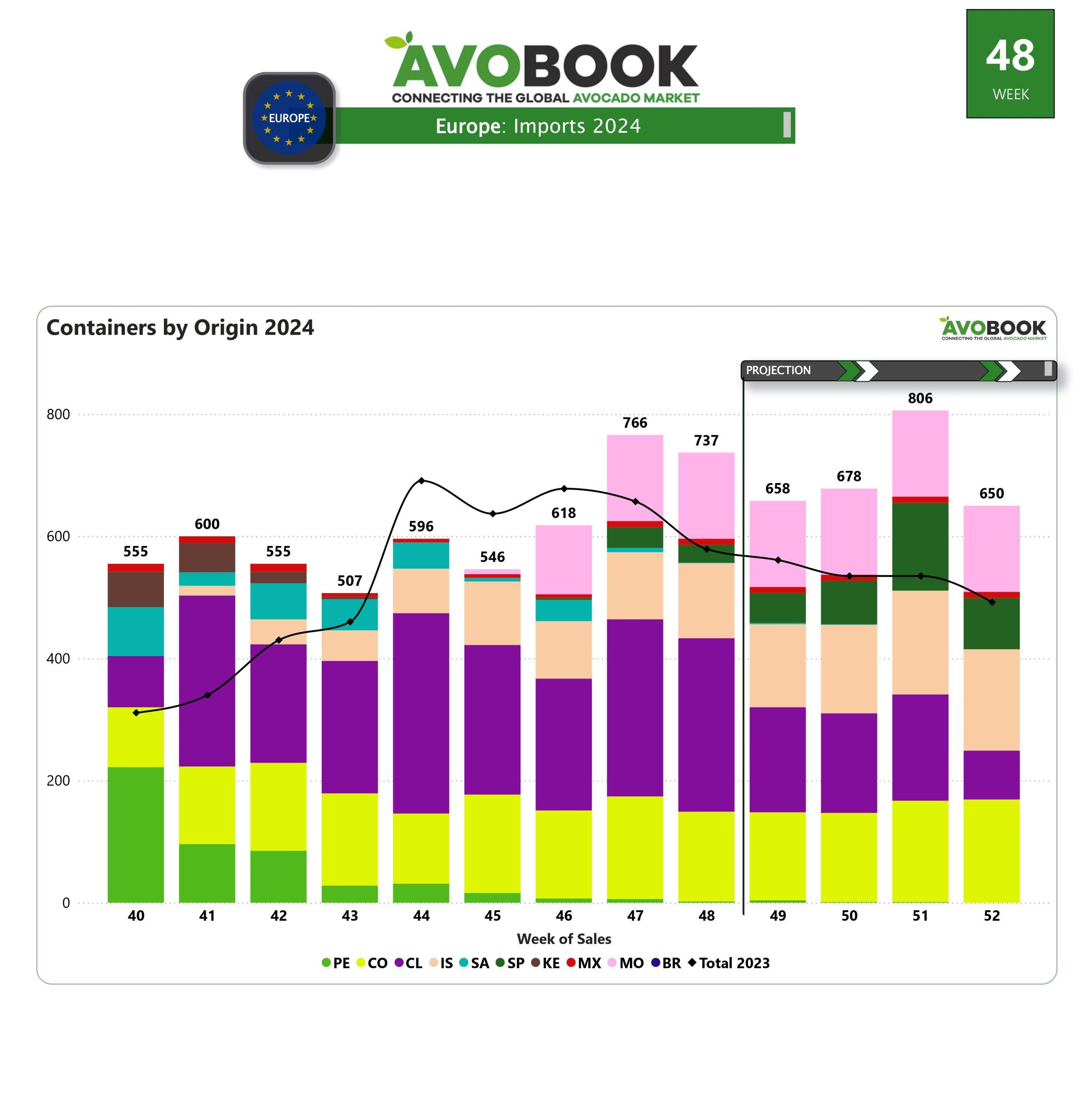
Europe , in contrast, presented a more stable picture. With 737 containers received, just 4% less than the previous week, the European market showed a 27% increase compared to the previous year. Chile led exports to this destination with a 39% share, followed by Colombia, Morocco, and Israel, the latter showing steady growth. However, prices in the Netherlands and Spain reflected signs of pressure: smaller sizes in the Netherlands plummeted by up to 10%, while in Spain, the smallest sizes of Chilean origin registered drops of up to 13%. These figures demonstrate an oversupply of smaller sizes, a recurring challenge in mature markets.
In Asia, the 12.5% decrease in arrivals to China broke a streak of sustained growth. The 35 containers received were distributed primarily between Chile (70%) and Peru (30%). This setback raises questions about the sustainability of Chilean expansion in a highly competitive and volatile market.
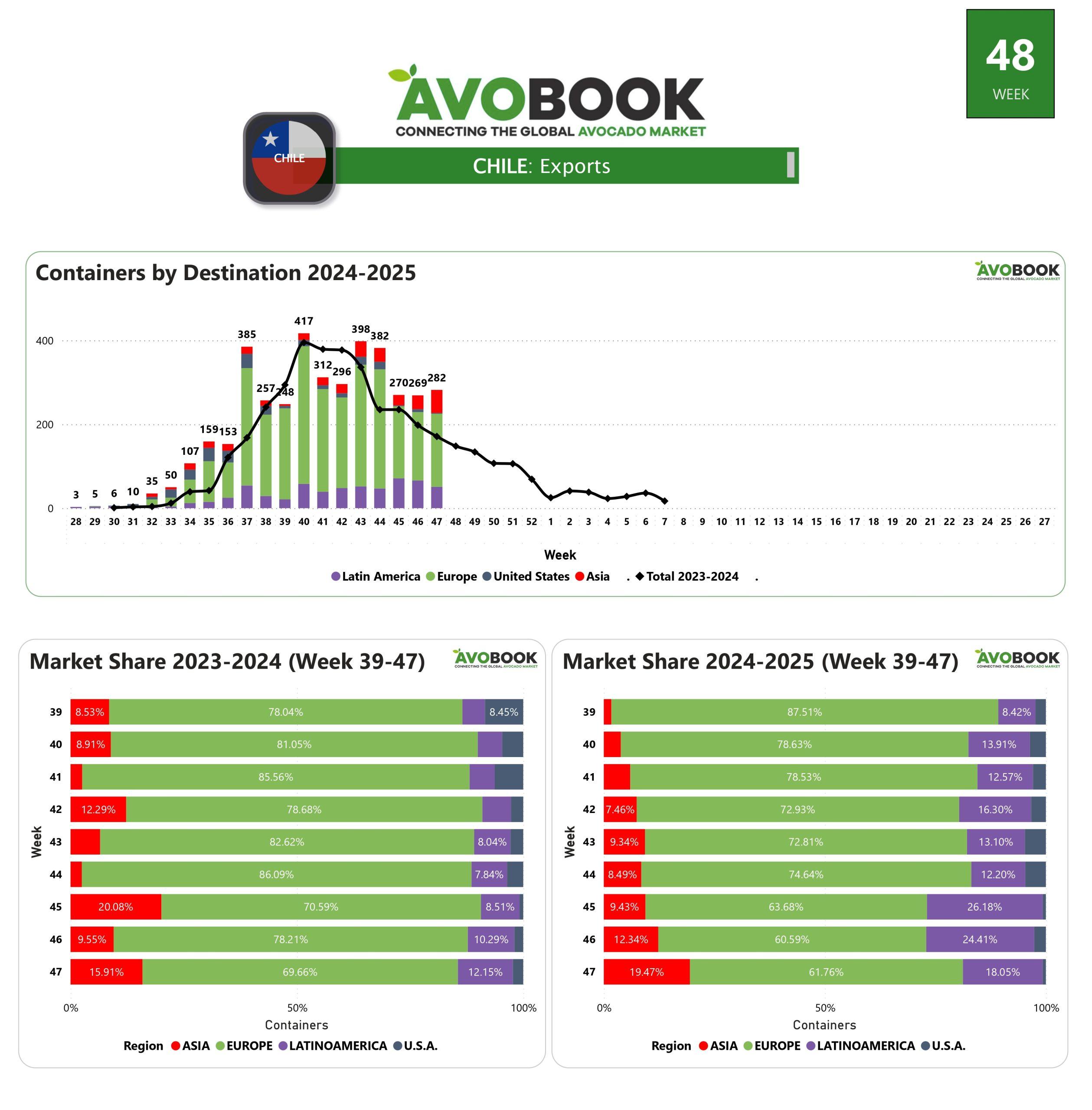
Chile , for its part, closed the week with 282 containers exported, a 5% increase compared to the previous week and an impressive 65% more than last year. Europe remains its main destination (62%), followed by Asia (20%) and Latin America (18%). The surprising recovery of Asia, surpassing Latin America in weekly shipments for the first time since week 34, is an indication of how Chilean exporters are rapidly adapting to global demands.
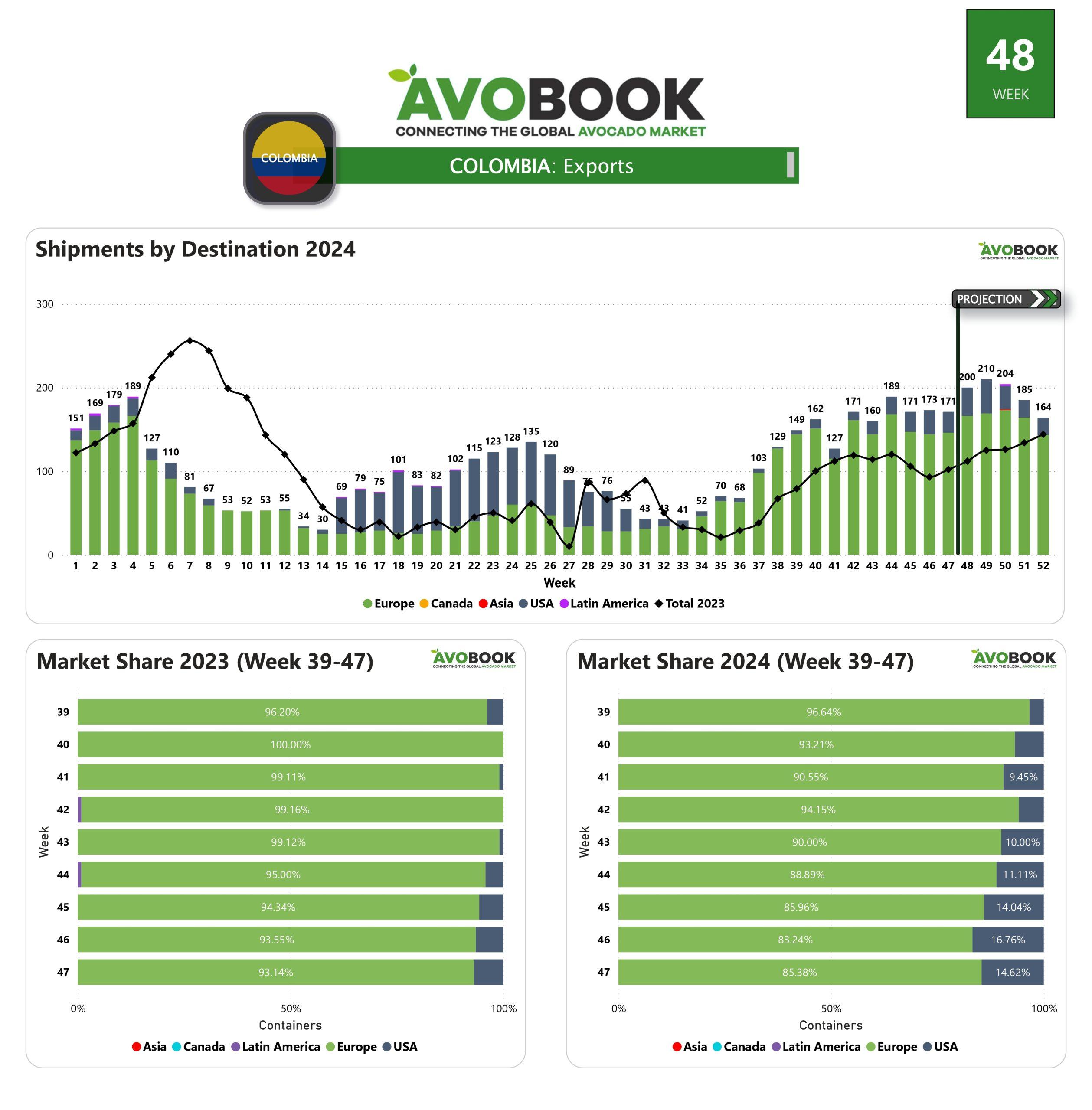
Colombia, with 171 containers exported, maintained a stable outlook. Eighty-five percent of its fruit was destined for Europe and the remainder for the United States. Although the volume was similar to last week's, projections point to a significant increase next week, with expectations of exceeding 200 containers.
You can find more information in the Avobook Premium Report ; we invite you to subscribe at avobook.com.