Avocados in Argentina: It's not a consolation prize, it's an example of small-scale productive development
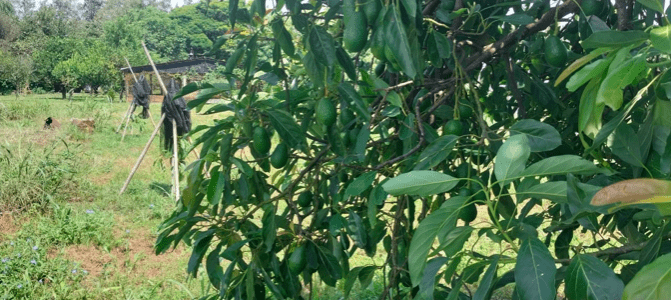
Carlos Alvarez, in Tafí Viejo, Tucumán, doesn't give up or get discouraged by market fluctuations and adverse weather. As the cover photo shows, he drives his old Fiat Someca tractor steadily and, despite the limitations, maintains high expectations for his agribusiness venture.
“Here I am, always active, it’s a pleasure to work at what you love.”
Carlos is a producer of tropical fruits such as blueberries, mangoes, avocados, passion fruit, strawberries, and lemons. He has managed to develop a supply chain that goes beyond mere trade, embracing the idea of adding value to his produce at its source.
In an extensive dialogue with Agroperfiles, he recounted aspects of his life as a producer and his progress in the use of new technologies to boost the agro-industry, and he does so under the commercial name of “La Consuelo” agro-industry of Tucumán, located in Camino Las Cañitas, Los Nogales, Tafí Viejo, which is 90 kilometers from the Calchaquí Valleys.
WITH UPS AND DOWNS, BUT STEADY
“Our small business is related to the agro-industry, with the ups and downs of producing on a small scale and exposed to the absence of policies to help small producers,” says Alvares.
Without access to credit with relatively low interest rates, allowing for repayment with a profit from what is produced, "we remain firm," he says.
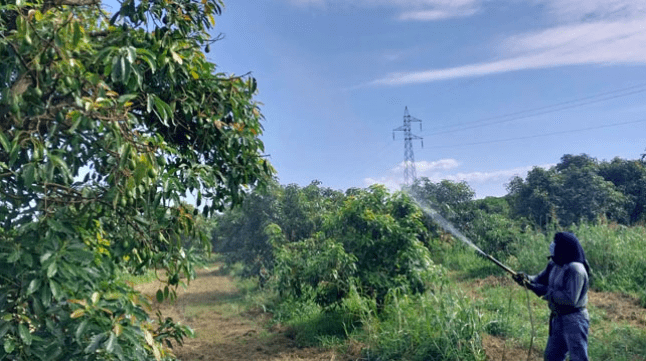
He explains that “our area has a subtropical climate, therefore we tend to produce tropical fruits such as passion fruit, avocados, mangoes, strawberries, blueberries, and lemons.
“These fruits are seasonal, so there are periods when they aren’t available, like now.” In Tucumán, the avocado (also called palta or aguacate) only reaches maturity from late March to mid-April, he explains.
In the case of the Hass avocado, which is a variety of the Persea americana fruit, it is the best for consumption…the other varieties (from seed and wild) can ripen earlier, but they do not have a strong demand like the Hass, Álvarez points out.
“We produce Hass avocados and the Torres variety (which is originally from Tucumán),” he explains.
HIGH COSTS, LOWER PRODUCTION
Last year, the drought had consequences that complicated the business. For example, the size of the Hess avocados was affected. “And we hope that this season there will be good rains and good weather for production, so we can recover and get back on our feet,” he says.
Regarding the production of frozen avocado pulp, "we have produced quite a lot because since the dollar began to rise, small and medium-sized companies were greatly affected because we could not pass on the prices to the markets."
He added that due to the differences in the dollar value, "we are entering a period in which we produce small quantities, almost on demand."
Regarding frozen fruit, "energy costs have risen tremendously, and we opted to sell fresh fruit, which sells quickly. Obviously, one link in the chain is affected, but we are forced to cut costs because consumption has decreased due to inflation. Consumers barely make purchases past the 15th of each month and don't reach the 31st," he stated.
With the idea of adding value to avocados, we made frozen and vacuum-packed avocado pulp, but we have temporarily stopped due to electricity costs,” given that “maintaining a freezer at -18 degrees Celsius is difficult to pass on to the cost prices,” he added.
THE CONSOLATION
“La Consuelo” is named “after my father’s mother, who was Spanish,” Álvarez explains.
“La Consuelo offers products and services for the agricultural industry. And it's important to know that Tucumán is a major producer of Hass avocados. Hence our challenge to achieve an avocado pulp product in two forms: pure pulp and a dressing made from avocado pulp,” he explained in his comment.