Chilean avocado: “The curdling is going very well and we hope this will be another good season”
This is explained by the new executive president of the Chilean Hass Avocado Committee, who projects that he expects there will be no saturated markets in the short and medium term, as the demand for avocados grows as much as the global supply of the fruit.
Francisco Contardo Sfeir took over as executive president of the Chilean Hass Avocado Committee in April of this year, after being elected by the members, following the departure of former president Carmen Gloria Lüttges, who is now based in Spain as CEO of Avocoop and Eurofresh.
“It’s a nice challenge,” says Contardo, who knows the Chilean avocado industry like the back of his hand, having reached the position after working his way up through the entire Committee.
“I’m about to complete eight years on the Committee. I was general manager, then I became executive director, and now I’ve been elected as executive chairman. It’s a tremendous responsibility, but I’m very motivated,” he says.
In this interview with Avobook, he provides a comprehensive overview of the current state of his country's avocado industry, whose fruit is highly valued in all relevant markets. However, one thing sets it apart from other origins: over the last two decades, it has shifted from an almost exclusive focus on exports to sharing its international shipments with the enormous domestic demand. In fact, Chile is currently the second country with the highest per capita consumption of avocados in the world, surpassed only by the giant Mexico.
- What is Chile's current position in the world in avocado exports?
“Chile will always be a very important and recognized origin. Our fruit, in general, is widely recognized abroad as high-quality fruit. And avocados are no exception. When our product enters different markets, they eagerly await its arrival because it is highly regarded by consumers around the world. Likewise, the agricultural work and the work of Chilean avocado marketers and exporters is also highly regarded abroad for its professionalism and adherence to established procedures. The fruit travels well, has good post-harvest shelf life, and arrives in different markets with ample sales window. I always give this example: to China, we travel for about 35 days and arrive with 12 days' worth of sales, which is a good window for marketing.”
- Considering that Chile has become the main destination for our own avocados, how will the percentages between the fruit that is exported and the fruit that stays at home change?
“Indeed, Chile is the main destination. I always think back to when I joined the industry in 2017, when around 33% of production stayed in Chile, which was already a significant figure compared to other export fruit products. It was already the only sector leaving such a large volume in Chile. As time went on, we approached 50%, and this season, which just ended with 240,000 tons produced, 43% remained in Chile. Therefore, Chile is the main market and has a growing demand.”
- How has consumption evolved in Chile?
“We calculated the per capita consumption metric, starting in early 2023, with 8.3 kilos of per capita consumption. In 2024, we grew to 8.6 and we believe that the domestic market still has room for growth.”
It must be one of the markets with the highest per capita consumption in the world.
“We are second. The first is Mexico, which apart from its large production volume, quite far from ours, has a consumption of 10.3 kilos per capita. But after Mexico comes Chile.”
- What does the outlook look like for the 2025-2026 season in terms of production and exports?
“We've just come out of a very positive 2024-25 season, with a production of 240,000 tons, the highest in 15 years. For the next season, we're currently gathering data. We always do this between May and August, but since this season was longer and ended in June, we started the data collection that month and expect to have the new figures in August. That said, what we can see right now is that there's a good fruit set, so we expect another good season. However, as with every season, we first need to get through winter, with the frost period, and then assess the expected volume. But we expect it to be a good volume. In terms of the export market, we also believe we'll have roughly similar percentages: from 60-40 to 50-50 between exports and what remains in Chile. I think it will always fluctuate like that. For this season, our main market will continue to be Europe, which takes around 57% of our exports.”
- Are there any markets showing noticeable growth for Chilean avocados?
“Argentina is a market that is growing significantly for us and still has room to grow. Last season, it accounted for 25% of our exports, which is quite substantial. We place particular emphasis on this destination for two reasons: it's our closest neighbor, so we can reach it more easily in terms of logistics. The fruit travels by truck, which is very different from scheduling shipments by sea, given the time involved. Because Argentina is right next door, it's a market where we can send the fruit over longer periods within our season. Therefore, we expect it to continue growing. This is true even though no marketing campaigns are currently underway. No origin has launched a campaign in Argentina, and yet consumption is still increasing. Another market that could be interesting is Brazil, which is trying to position the Hass variety for domestic consumption, understanding that they have always consumed a different type of avocado, a sweeter one, often eaten at breakfast in smoothies. They are working on positioning it for domestic consumption, in addition to their export development, which has already begun, and Chile has already received its fruit. At some point, it may have exponential growth, due to the size of the market.”
Given the presence of new and growing players, such as Peru, Colombia, Morocco, and African countries, will exporting continue to be a good option, or should we work to shift the focus towards local consumption? Will there be enough room for everyone?
“We don’t see any risks to exporting our fruit today. The opportunities are clear. In fact, this past season we saw increased production and exports. Both domestic and export volumes increased. We have room in various markets where Chilean avocados are in high demand. Therefore, we don’t see any markets as saturated or where demand is currently stagnant or unlikely to increase. Global demand is constantly growing, and that’s why we see other regions expanding and trying to enter different markets.”
- Is that diagnosis common to the United States, Europe, and other markets?
“The United States still has considerable growth potential. The West Coast is well-established, but there's still room to increase per capita consumption. And there's clearly an opportunity on the East Coast. Europe also has growth potential in terms of consumption, and you can see that there are countries, like Italy, which only started producing a few years ago, and the growth in consumption is also evident. Today, you see various dishes incorporating avocados, something that was once considered almost impossible. So, on the one hand, there are markets growing in terms of domestic demand; and on the other, new markets that are starting to consume more fruit. We believe there's room for growth. The important thing, both for us and for the various producing countries, is that fruit exports and market supply are handled responsibly and seriously, so that this space continues to exist and there isn't an oversupply in the different markets.”
- How is production in Chile doing in terms of growth?
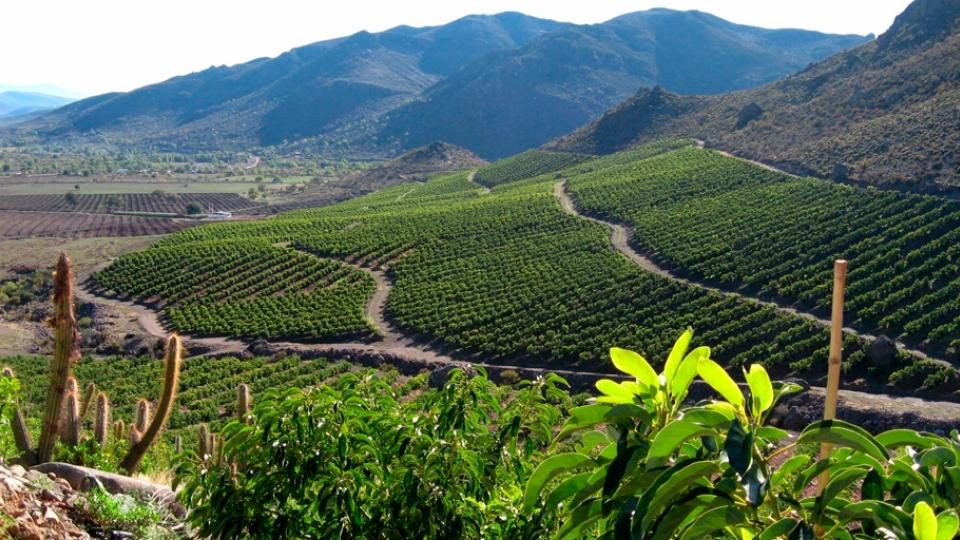
“While we have maintained a production area of 30,000 hectares nationwide, the change has been that this area has been migrating from north to south. If you analyze this, all agriculture has continued to shift further south due to increasing desertification. Therefore, avocado production has not been immune to this. A few years ago, in 2008, the Coquimbo region's share was much larger than it is today. Nowadays, we see new or emerging projects in the O'Higgins Region (two regions further south), as well as projects in the Maule Region and even in the Ñuble Region. So, we have been shifting, just like the rest of agriculture, but maintaining our total area. If we analyze the last 15 years, we have seen a decrease of around 2.4% in the number of hectares planted. It is a highly resilient industry, and we are trying to see how we can adapt to areas with climatic conditions that are compatible with our production.” Avocado production is facing new challenges related to soil and climate, which have some variations. It's a good challenge we're facing.”
- And what is the yield per hectare?
“The average yield in Chile is 8 tons per hectare. It’s an average, but the fields are quite technologically advanced. In terms of irrigation, there are more technologies that help us produce sustainably and maintain this high-quality production. For example, you see quite a few sensors in the soil measuring moisture. We hope that will allow us to increase the volume each season, but we need winter to pass to have that metric.”
- Does this geographical relocation of avocados generate any difference in the quality of the product?
“No, the avocado remains the same. Ultimately, we have a Mediterranean climate, and that climate is present throughout Chile. Obviously, with avocados, or any fruit for that matter, you can't just plant them anywhere. Therefore, you have to find areas with the specific conditions for cultivation. For example, in the southernmost regions, we mostly plant on hillsides because the trees withstand colder temperatures better that way. We need the frost to pass over the avocados, but not linger there. These areas also tend to be rainier. Planting on hillsides prevents water from pooling, which is important because it retains organic matter. That is, the twigs and leaves that fall to the ground accumulate and promote better biodiversity, which in turn absorbs and retains more water. Furthermore, avocado roots are shallow, so waterlogging isn't good for them. So, to answer the question of whether it can be grown in different areas, the answer is yes. And it's the same.” The fruit is the same quality, just grown under different conditions. That's why I said farmers are quite resilient, because they have to keep incorporating different techniques and adapting to different growing areas.”
Is it still not possible to know if the campaign will be extended again until June, like the one that just ended?
“We can’t project it yet. We still need to get through the frost period and see its impact on production. About three seasons ago, frosts could be predicted, but then we had them at the end of September, then even into November… This led farmers to adopt new methods to combat them. We believe these implementations are what allow frosts to have less of an impact on the crop. Even so, we need to wait until this period is over to really know the level of fruit abortion in the trees.”
- Which technique is yielding good results?
“The techniques depend on various factors. For example, one has worked quite well. It involves placing micro-sprinklers at a height. When frost arrives, these spray water onto the plants, creating a small igloo effect. That's why, if you go to these areas after a frost, you'll see the avocado trees completely covered in ice, but this creates an igloo effect that protects the plant. However, it doesn't work with every crop. Certain conditions must be met. Along with this one, there are other techniques that have become almost traditional, such as fans, heat fans, and others.”