Native avocado for export and oil production
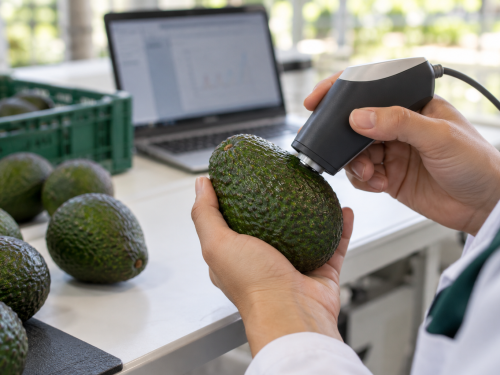
At the Bajío Experimental Field, belonging to the Central Regional Research Center (CIRCE) of the National Institute of Forestry, Agricultural and Livestock Research (INIFAP), studies were conducted on 15 types of native avocados from Comonfort, Guanajuato, and 4 from Nayarit, considered by producers to be the best in terms of yield, pulp content, and flavor. The studies focused on analyzing the physical and chemical composition of these varieties to identify their potential use in export, oil production, and other applications.
Dr. Salvador Horacio Guzmán Maldonado, a researcher at the Experimental Field, highlighted that "the preliminary results of this research indicate that there are native avocado varieties with a weight similar to Hass avocados (150-300g)." Some genotypes have a higher pulp content than Hass, reaching 91% in the case of Fuerte, and 77% in Uriel.
Regarding oil content, it has been discovered that some native avocados reach up to 68%, known as "butter avocados" such as Pachis 2, NNN, RLV Alargado, Pata de Pichón and Lindan 3, which makes them ideal for the production of oil and pulp.
The term "criollo" avocado refers to those native to a region, preserved and protected by communities primarily for their own consumption. These avocados are grown in Puebla, Michoacán, Nuevo León, San Luis Potosí, Nayarit, and Guanajuato. According to INIFAP (National Institute of Forestry, Agriculture and Livestock Research), there are at least 300 different types of criollo avocado in Guanajuato, many of which are believed to have originated from the same variety due to propagation.
INIFAP is conducting genetic studies to verify the origin of these materials, using microsatellites or sequencing in collaboration with the Center for Research and Advanced Studies of Irapuato (CINVESTAV).
Dr. Guzmán Maldonado noted that these avocados generally have a green peel, although some varieties have a thinner, black peel that is edible along with the pulp, which is believed to contain compounds beneficial to health. However, there are no reports on their nutraceutical characterization, a current research task for the INIFAP group.
According to studies from Loma Linda University (Los Angeles) and Tufts University (Boston, MA), eating half an avocado provides a feeling of satiety, improves memory in older people, and decreases the risk of thrombosis.