Africa intensifies its avocado exports to Europe and Asia: South Africa, Kenya, Tanzania and Morocco lead the change
Africa is no longer a peripheral player in the global avocado trade. In recent years, the continent has accelerated its production and professionalized its logistics, positioning countries like South Africa, Kenya, Tanzania, and Morocco as significant exporters, especially during strategic trade windows in the Northern Hemisphere.
The 2025 campaign already shows compelling figures that demonstrate this phenomenon.
South Africa: Pressure is growing in Europe
South Africa has experienced a strong export campaign so far in 2025. According to data from Avobook, the country has exceeded 250 shipments to Europe up to week 15, and in the last week recorded alone, more than 100 weekly shipments were already being counted.
Although peak volumes traditionally occur around week 20, this earlier start suggests a more active and better-coordinated season. Meanwhile, the phytosanitary agreement with China signed in 2023 allowed South Africa to make its first-ever shipment to that country in October 2024, expanding its range of destinations and reducing its dependence on the European market.
The predominant variety is Maluma Hass, which has gained notoriety for its size and appearance, even generating comparisons with Spanish avocados, which face increasing competition.
Morocco: late season, but with more volume than in 2024
Another key player has been Morocco, which has achieved approximately 900 shipments to Europe up to week 15, a higher volume than in the same period of 2024, according to Avobook data. However, the Moroccan season is already declining, with only 6 shipments recorded in the last week.
Morocco has capitalized on a strategic market window that allows it to anticipate South African supply and consolidate its position in Europe before the entry of large volumes from Peru.
Kenya and Tanzania: Accelerated volume from East Africa
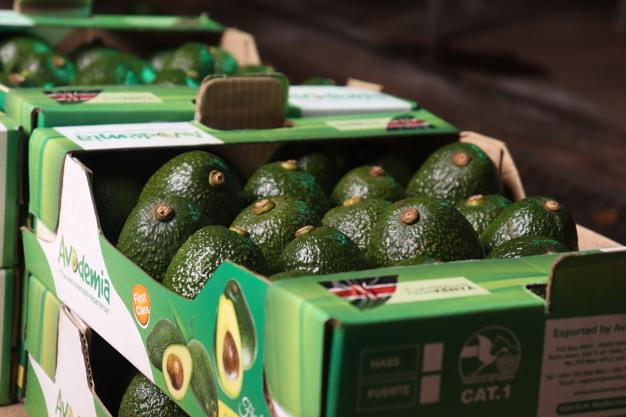
East African countries have also gained ground in the 2025 season. Through week 15, more than 300 shipments have arrived in Europe from Kenya and Tanzania, according to Avobook figures. The trend shows sustained growth: in the last week alone, shipments exceeded 100 per week, rapidly approaching last year's total volumes, when more than 450 shipments had already been dispatched by this point.
In Kenya, exports increased by 24% in 2023, reaching 127,600 tons. The country produces avocados in 42 of its 47 counties, and over 70% of the crop comes from small farmers, mostly of the Hass variety.
The rise of new markets like China has been a key factor: exports to the Asian giant increased tenfold in 2023, going from 443 tons in 2022 to 4,324 tons in just one year, according to data from the Kenya Agriculture and Food Authority.
Quality control and infrastructure: parallel challenges
To maintain their competitiveness, several African countries have intensified their quality controls. In Kenya, for example, maritime exports of Hass, Pinkerton, Fuerte, and Jumbo varieties were temporarily suspended from October 2024, allowing only air shipments under strict traceability.
In terms of infrastructure, initiatives such as the Naivasha dry port and the improvement of the railway system seek to make the transport of fresh fruit from the interior of the country to the ports of departure more efficient.
What was once a niche market is now a phenomenon of scale. The 2025 campaign reflects the growing organization of African countries to integrate strongly into the global avocado market, not only in Europe, but also in Asia and the Middle East, with earlier, more diversified, and more professionalized exports.
The question is no longer whether Africa will compete with Peru, Colombia, or Mexico, but how the global balance of power will change in the next five years if the continent continues to grow at this rate.