Africa at the avocado crossroads: Compete with Peru in Europe or conquer new horizons?
With Peru's dominance in the European avocado market firmly established, producers in Kenya and South Africa are evaluating strategies to maintain profit margins, avoid oversupply, and ensure the sustainability of their businesses. While South Africa is opting for a controlled entry, Kenya is diversifying and seeking opportunities in Asia.
The rise of African avocados has been one of the most remarkable agricultural success stories of recent years. However, the exponential growth of Peruvian exports to Europe has disrupted the trade balance. Countries like Kenya and South Africa, traditionally major suppliers to the continent, now face increasing pressure: the influx of large volumes of Peruvian avocados between May and July causes a considerable drop in prices, forcing African exporters to rethink their strategies.
While some are choosing to stay in Europe, others are exploring new markets in Asia. To what extent are African producers willing to compete in a saturated market? Or would it be better to diversify?
South Africa: anticipation, quality and European persistence
For South Africa, the strategy is clear: maintain its presence in Europe without directly competing with Peru's peak season. According to Derek Donkin, executive director of the South African Avocado Growers Association (SAAGA), the country is expected to export around 92,000 tons this year, mainly to Europe, with smaller volumes destined for China, India, and Japan.
“The strategy was to enter the European market before the arrival of large volumes from Peru,” Donkin explains. In fact, around 50% of the projected volume has already been shipped. The remainder will be distributed in a controlled manner until mid-November, preventing market saturation.
The South African industry has learned to adapt: export projections are regularly adjusted based on the performance of other origins. In the long term, South Africa is focusing on three pillars: ensuring superior quality, increasing demand in existing markets, and accessing new destinations.
On the logistical front, conditions have also improved compared to the previous year. “We have seen a significant improvement in South African port operations compared to 2024,” Donkin notes, although he cautions that congestion in European ports still persists and could continue for at least another month.
At the same time, the country invests in general product promotion: its producers contribute to World Avocado Organization campaigns in Europe and finance local initiatives to strengthen the domestic market, which consumes 45% of total production. This diversification between local consumption and exports provides a buffer against adverse international scenarios.
Kenya: altitudinal windows, expansion into Asia and a long-term vision
The situation in Kenya is more complex and geographically diverse. According to Grace Ngungi, CEO of Karakuta Fresh Produce, business decisions are closely linked to the altitude of the growing areas. In low-altitude areas (1500 to 1800 m above sea level), the trees flower twice a year, with an early harvest in March and a late one in October.
These windows allow producers to avoid direct competition with Peruvian avocados. “We maximize the early harvest, exit the market when Peru enters Europe, and return with the late harvest in September/October,” Ngungi explains.
But not all producers have that advantage. In higher altitude areas (over 1800 m), the fruit ripens between May and July, coinciding exactly with the Peruvian season. “During this period, prices can fall between 25% and 30%,” the businesswoman warns.
Faced with this scenario, many Kenyan exporters are choosing to redirect their shipments to India, Malaysia, and China, where consumption levels are still low but show a compound annual growth rate of 50%, according to an Indian client. While these destinations are price-sensitive, they offer a clear logistical advantage: “They have a journey time of only 10 days, which shortens the transaction cycle and improves cash turnover.”
However, Ngungi is clear that these markets are still in their infancy and cannot absorb the same volume as Europe. In 2024, the difference between shipments to the EU and the Far East was significant (figures that will be confirmed soon). This reality, coupled with lower prices in the East, leads to the expectation of a reduction in gross profitability in the short term, despite diversification efforts.
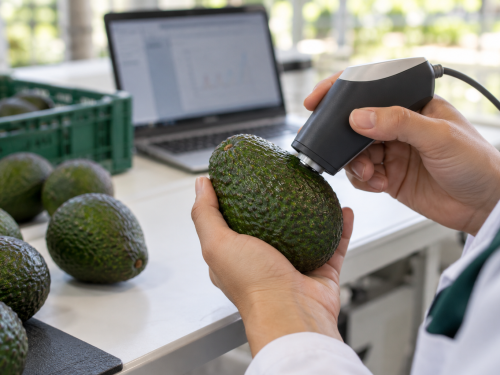
Logistical challenges are also present in Kenya, where delays directly impact product quality and the financial health of exporters. “A route that used to take 40 days to Rotterdam now takes 50,” says Ngungi. This has forced producers to develop resilience and stricter quality control methods, such as dry matter tests to identify fruit capable of withstanding longer journeys.
The long-term vision includes investments in new plantations at different altitudes to cover more market windows, adoption of quick freezing (IQF) technologies to extend product shelf life, and a focus on brand differentiation and added value.
While South Africa continues its push into Europe with a planned and promoted entry, Kenya is moving more dynamically, combining geographic strategy, diversification of destinations, and varietal adaptation. In both cases, the objective is the same: to avoid dependence on a single market and minimize the impact of international supply peaks.
“The decision isn’t just whether or not to export to Europe, but when and how to do it,” Ngungi summarizes. Donkin, for his part, insists that the future of African avocados depends on quality, planning, and smart access to global markets.