Avocado industrialization: the path to inclusion for small producers
The avocado agro-industry expands markets, reduces waste, and strengthens cooperatives in productive integration.
The industrialization of avocados has profoundly transformed the business structure, expanding its reach beyond the fresh market and generating new integration opportunities for small producers. For Mario Salazar, president of the board of directors of Agrícola Chavín, the change has been structural: “It has made the industry more inclusive and allowed for better use of the product, in different forms and presentations.”
For years, the business was focused almost exclusively on exporting fresh fruit. Today, the development of industries such as oil production, freezing, and high-pressure processing (HPP) has broadened the scope of utilization. “Ideally, a product should be used 100% and there should be no waste,” says Salazar. This principle explains much of the impact that industrialization has had on the production chain.
From dependence on fresh air to productive diversification
Industrial advancements not only diversify formats; they also change the sector's economic logic. In the past, fresh market standards excluded large volumes of fruit. Salazar recalls how, in the case of mangoes before the avocado boom, "kilos and kilos were thrown away on the roadside because they had a black spot or an unsuitable blemish." Something similar happened in the early days of the avocado business, when smaller sizes had no market and ended up buried.
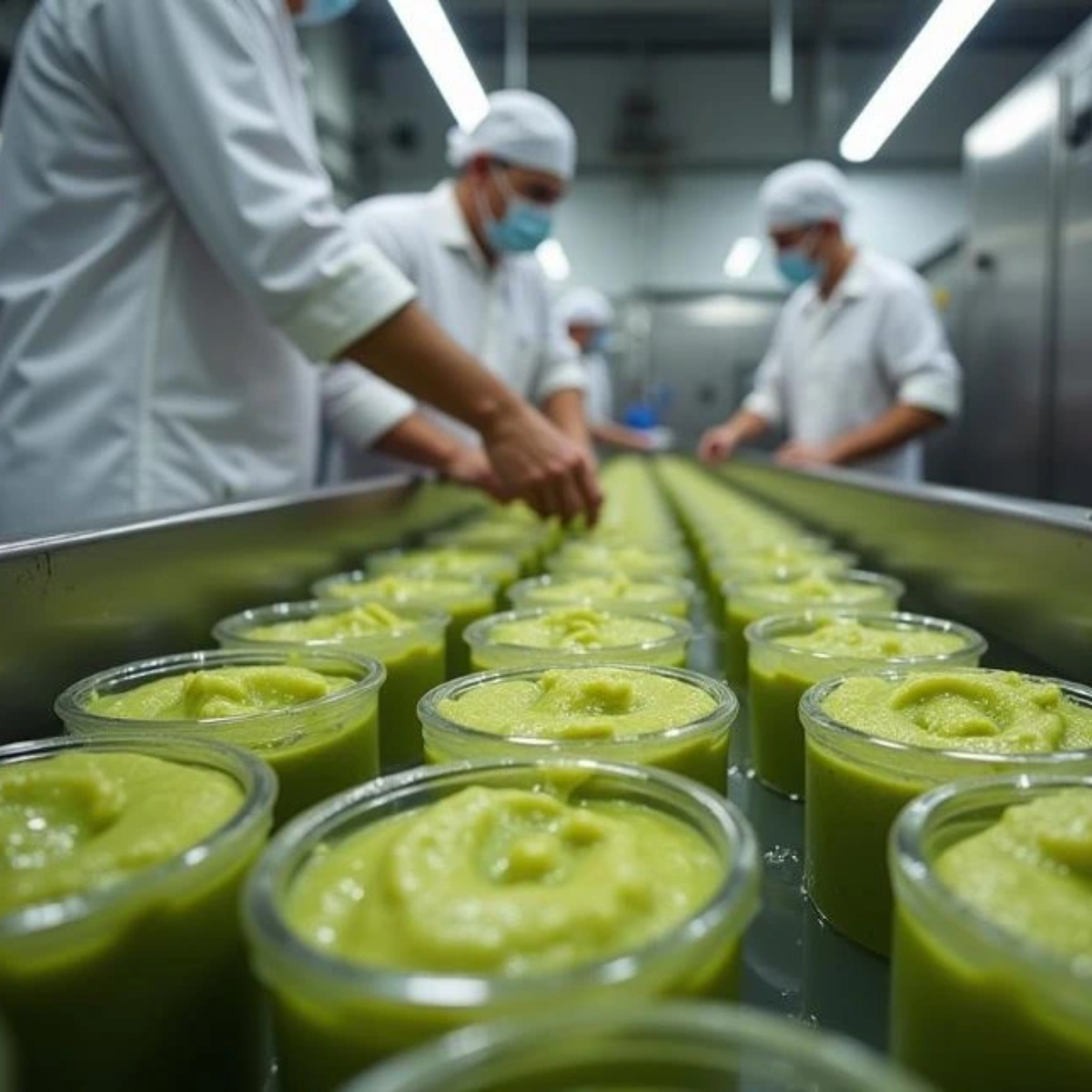
Today, that scenario is different. “Now everything is used,” he says. The existence of processing plants capable of transforming fruit that doesn't meet export standards into oil, frozen pulp, or guacamole allows for the absorption of volumes that were previously lost. This not only improves the system's efficiency but also introduces a key variable: stability.
For Salazar, industrialization doesn't create dependence on large players, but rather offers an alternative for income diversification. Without industry, the producer would be "at the mercy of only one industry, which is the fresh produce market." However, when the price of fresh produce falls, the derivative industries can sustain demand and buy fruit "at prices almost the same as those of fresh produce." This buffering capacity is, in his words, "the magic of it."
Cooperatives, formality and growth projection
The effective inclusion of small producers in the agribusiness sector requires clear conditions. In the Peruvian case, Salazar identifies formalization as the primary barrier. “The first requirement must be formalization, which is a major obstacle.” Without registration and regulatory compliance, integration into formal value chains is unfeasible. In countries with more consolidated institutional frameworks, the challenge lies in technology and productivity per hectare.
In this context, cooperatives have proven to be an efficient instrument for inclusion. According to Salazar, these models “have proven their efficiency because they improve the return on investment for small farmers.” The reason is structural: the aggregated volume strengthens their negotiating power with buyers and processors. “Cooperatives always have a stronger negotiating position,” he explains. Although internal management may vary, negotiating as a group offers better conditions than doing so individually.
Industrial development also depends on the strength of the fresh market. No one grows crops specifically to produce oil; the greatest added value remains in fresh fruit. However, sustained volume growth—which in Peru's case has shown double-digit increases in recent years—creates a base that feeds related industries. With Peru consolidated as the world's second-largest producer, there is still room for growth.
Looking ahead to 2026, the projection is for close to 10% growth in Peruvian avocados, which will also boost industrial products. The next challenge lies not only in increasing volume but also in differentiating the offering. “We need new packaging, new flavors, new avocado combinations,” says Salazar. In markets where consumption is commonplace, innovation in guacamole and blends can open up previously unexplored niches.
The industrialization of avocados has not displaced small producers; it has incorporated them under new rules. Formalization, technology, cooperation, and diversification are the pillars of a model that seeks profitability, stability, and long-term scalability.