Giovanni Cavaletto: Four decades in the transformation of the US avocado market
From family orchards in California to a 3 billion pound market, the executive analyzes the present of the sector, the pressure of supply and the strategic role of sustainability.
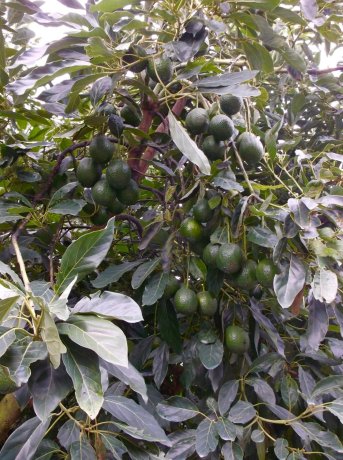
Giovanni Cavaletto has been a direct witness to the expansion of avocados in the United States. The son of producers on the central coast of California—where his family grew avocados and lemons—he began his career in a Californian cooperative that later sent him to live in Uruapan, Michoacán, in the years when Mexico was beginning to consolidate itself as a key supplier.
“I’ve worked with avocados my whole life,” he says. When he started, the U.S. market moved about 300 million pounds and was made up of 85% California, 5% Florida, and 10% Chile. Today it exceeds 3 billion pounds, and the structure has changed radically: “Now it’s 80-something percent Mexico, 7 or 8% California, and the rest is divided among Chile, Peru, Colombia, the Dominican Republic, and other origins.”
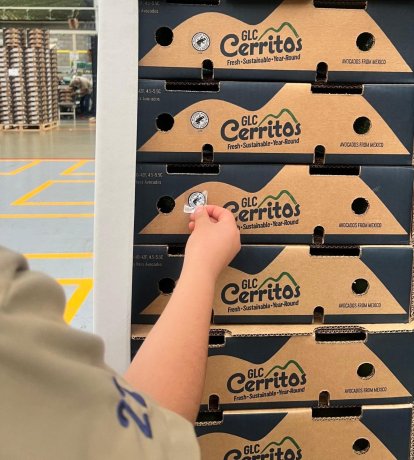
Currently, as president of the US division of GLC Cerritos —the main exporter from Jalisco— he leads the commercial strategy of a group that has made sustainability its main competitive differentiator.
Record volumes and a market under pressure
The recent Super Bowl once again set a new sales record. “We broke all records, around 15% higher than previous years,” Cavaletto notes. However, the increase in cases didn't translate into higher returns: “We're suffering from weak prices. Prices are reduced between 60 and 65% compared to last year.”
The phenomenon is partly due to increased global supply. Colombia doubled its volume, Peru grew, and Jalisco was added as a new authorized origin for the United States. “It’s no longer Michoacán’s monopoly,” he explains. Added to this is an economic environment marked by inflation and greater consumer caution. “There’s a market psychology at play as well,” he adds.
Between 1997 and 2015, consumption grew at rates close to 15% annually. Then, the expansion moderated to 3% or 4%. Initially, the slowdown seemed to be due to production limitations—by 2015, 85% of Michoacán's orchards were already certified for export—but today the scenario is different: supply is expanding again and putting pressure on prices.
In commercial terms, the market is clear about its preferences. The 48 gauge leads the demand. During January, three of the five weeks with the highest historical volume coincided with extremely tight inventories of that size. “We closed the Friday before the Super Bowl with only three days' worth of 48 gauge inventory,” he recalls. Meanwhile, gauges like 36 or 70 showed up to eight days' worth of inventory. “The focus of demand is on the 48 gauge,” he summarizes.
Seasonality also plays a key role. Between October and March, Mexico accounts for 90% to 95% of the supply, concentrated in the Hass variety (including the early Méndez variety). In summer, however, up to nine different avocado options can coexist—including different harvest windows of Mexican Hass (dark or “old” fruit, Méndez and Loca or new fruit), Hass and Lamb Hass from California, the GEM variety from California, Peruvian and Colombian fruit, as well as fruit from Florida and the Dominican Republic—which increases competition and limits the power of price leverage.
Sustainability, diversification and the global challenge
Beyond price, American buyers demand traceability, consistency, and verifiable sustainability programs. Cerritos has built its proposition on these pillars.
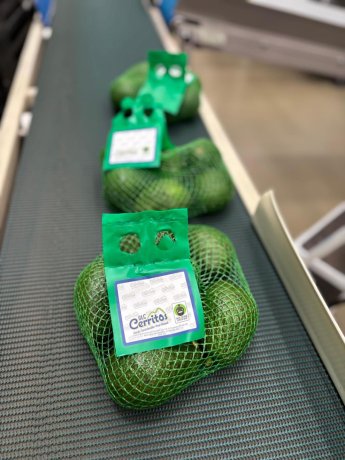
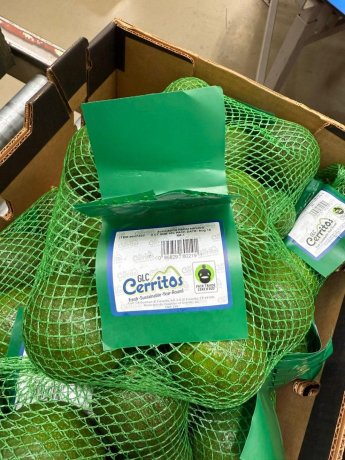
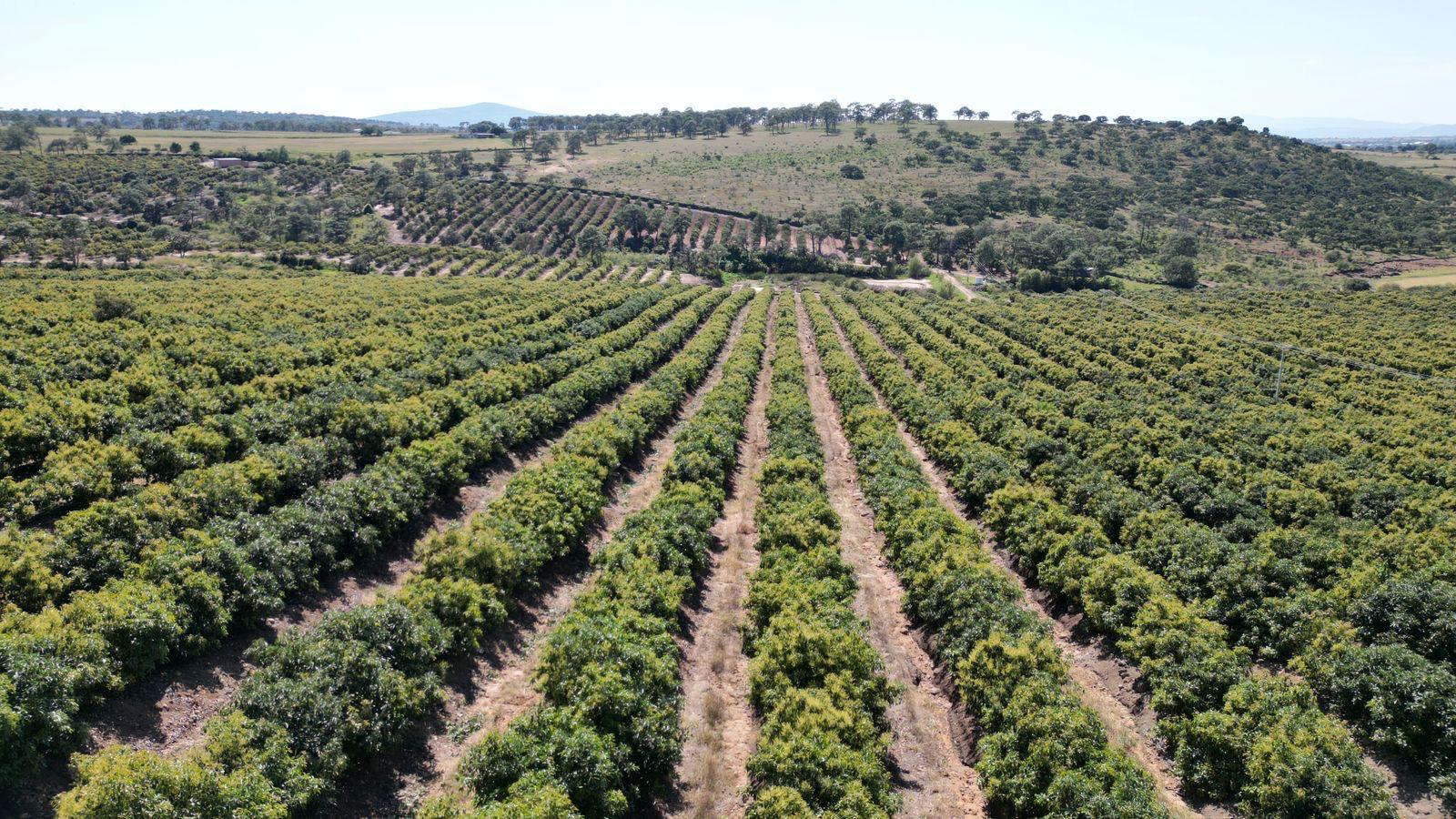
The company owns 1,300 hectares, all certified under GlobalG.AP and Rainforest Alliance, and also has a Fair Trade program that, according to Cavaletto, is one of the most robust in the sector. “This year we generated around $90,000 in Fair Trade premiums, which the local committee can allocate to social projects in their community,” he points out. For the executive, these certifications are platforms that allow them to “share the good that agriculture is doing in our communities.”
The use of satellite tools like Guardian Forestal reinforces that commitment. “If a producer offers us fruit, we can verify if their orchard is in a deforested area. We've had to say no, but it's part of building trust with the customer,” he explains.
In parallel, geographical diversification within Mexico—with production at different altitudes and windows—allows for ensuring supply for 40 to 45 weeks a year, reducing risks and strengthening the commercial proposition.
The consumption map has also evolved. Historically concentrated in the West and Southwest—areas with larger Hispanic populations—the Southeast is now gaining prominence. “The Southeast is growing and threatening the West’s dominance in per capita consumption,” Cavaletto points out. Year-round availability and sustained investment in promotion have been key to consolidating avocado shelf space.
Looking ahead to the medium and long term, the main challenge will be balancing the growing global supply with the sustained growth of demand. California is converting lemon orchards to avocados, Mexico continues to expand into new states, and countries like Peru, Colombia, Guatemala, and several African nations are increasing their presence. “The avocado craze has already infected the world,” he says. “We have to be extremely focused on continuing to develop consumption, because the supply is definitely on its way.”