Bolivian avocados seek their place in the world: Claudia Oliva's bet to open the country's first export
Claudia Oliva turned a personal dream into the project that introduced Hass avocados to Bolivia. Despite bureaucracy, challenging weather, and a lack of markets, she now leads a pioneering plantation and an industry that seeks to export and transform how the country consumes this fruit.
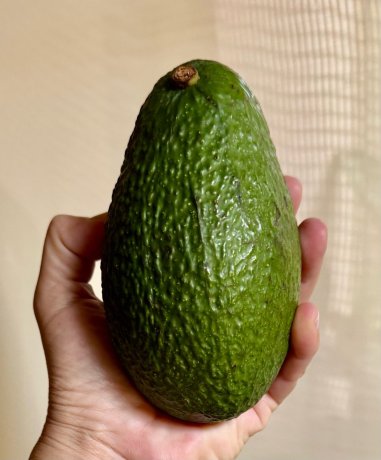
In eastern Bolivia, on the outskirts of Santa Cruz, a family business is challenging the country's agricultural history. Called Agrícola Los Paltos, its owner, Claudia Oliva, decided to invest in a crop that was practically nonexistent in Bolivia: the Hass avocado. Her project, which began to take shape in 2021, has made her one of the pioneers in avocado production in the country.
A business administrator with a master's degree in safety, environment, and management systems, Claudia returned to her professional life at 45, when her children were already in university. She did so not in an office, but in the countryside, driven by a passion that had been growing for years: avocados. Living in Colombia was a turning point. There, for three years in Bogotá, avocados were part of her daily diet, and she discovered all the ways to enjoy them. From then on, the idea of growing them herself took root.
Back in Bolivia, after more than a decade accompanying her husband—a petroleum engineer—to various countries, her search for identity for her children coincided with her own life project. “I’ve always loved plants,” she says. At her home in Santa Cruz, she already had six avocado trees that produced large, creamy fruit. The pandemic accelerated her decision: with her husband forced to stop traveling and spend more time at home, Claudia persisted until she convinced him to buy a property to dedicate himself to avocado farming.
The starting point was as ambitious as it was complex. In 2021, Agrícola Los Paltos made its first import of Hass avocado seedlings to Bolivia. The grafted trees arrived from Chincha, Peru. The process was long and arduous, and the shipment was held up at the border for days due to changing procedures and requirements.
“The first import of avocado seedlings to Bolivia took me almost three years. Three years for the government to agree to transport soil from one country to another. It was a rollercoaster ride because Bolivia knew absolutely nothing about avocado production. Even the transport was a headache.”
Finally, the certified seedlings—with all the documentation from the Peruvian Senasa and the Bolivian Senasag—arrived at their destination. After almost three months of mandatory quarantine, they were planted in December 2021. “They also experienced COVID,” he jokes, recalling how the plants, like people, went through a critical period of adaptation.
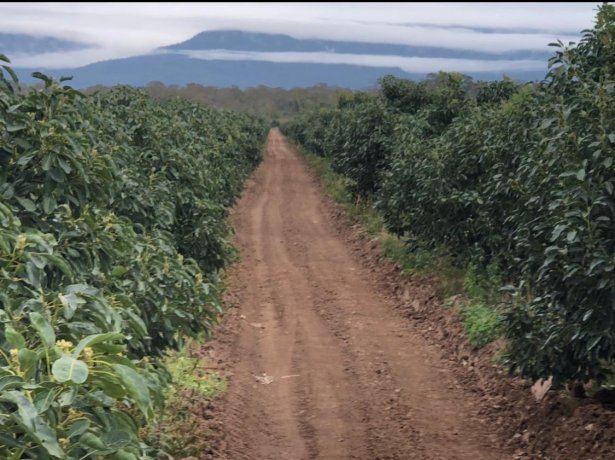
Today, Agrícola Los Paltos has 14,000 Hass avocado trees planted across 26 hectares, using a fertigation system directly inspired by Peruvian models. The area is located about 700 meters above sea level, with a tropical climate but with a factor that Claudia considers key: cool nights.
“ In summer, we reach 32 degrees Celsius, but at night it drops to between 8 and 10 degrees. The plant rests ,” he explains. The region also experiences five months of intense rainfall, followed by a complete drought in June and July. “ That’s why we have the fertigation system, so the plants don’t get stressed by the lack of water after such an abundance .”
The project, however, has not been without its setbacks. From a production standpoint, initial expectations were high.
“My engineer projected between 15 and 20 tons per hectare. And we're going to get 7 tons. It's not what was projected, it's not what we worked for. We're doing soil and foliar analyses so that this doesn't happen again.”
A first harvest that surpassed the Bolivian market
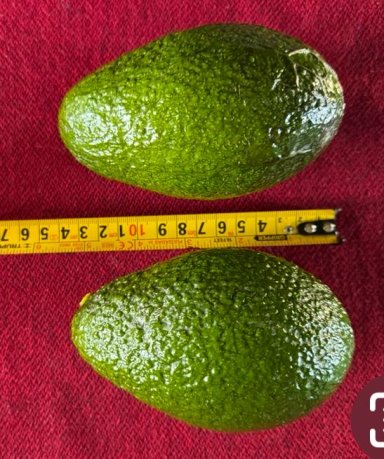
Last year saw the first commercial harvest. Compared to other producing countries, the volumes are still modest—around 2 to 3 tons per hectare—but for a country where Hass avocado consumption is still in its early stages, the impact was considerable. Total production reached approximately 18 tons, a significant volume for a domestic market that is not yet accustomed to this variety.
In Bolivia, Claudia explains, avocado consumption is concentrated on the local variety, produced locally and available mainly between December and January. The Hass avocado is practically unknown to most consumers. Faced with this reality, the pioneer also had to become a cultural and commercial promoter. “There I was, knocking on doors, going from restaurant to restaurant,” she recounts.
Little by little, Los Paltos managed to enter one of the largest supermarkets in the country and position itself in around 15 high-level restaurants, many of them with Peruvian chefs who value the quality of the product for sushi and international cuisine.
Even so, production exceeded the local market's capacity. The fear of losing fruit led Claudia to make a strategic shift: transforming the avocados into pulp. She brought in food engineers, designed recipes, and began processing the fruit. Thus, a second company was born, dedicated to the production of avocado pulp, which today holds national certification in Bolivia. This pulp is destined for both the food industry and consumers who are still learning to incorporate avocados beyond just slices in salads.
“I started packaging it, hiring food engineers, and we created our own pulp. Today I sell pulp and I still have six tons from last year. Since they don't know it, they don't know how to use it. I have to do a complete marketing campaign,” she explains.
While the pulp production line is progressing, the Hass avocado plantation is preparing for a key leap: exporting. For over two years, Claudia has been working with the Bolivian Chamber of Exporters to meet the technical and sanitary requirements that will allow them to ship fresh fruit to other markets. Chile was the first target, to the point of building a dedicated packing facility on the farm to undergo inspections and obtain certification. However, the process stalled, and despite the investments, authorization has not yet been granted.
Faced with this obstacle, Los Paltos has opened a second front: Argentina. The company is currently in talks with Argentine distributors, while health authorities in that country review the documentation and assess the necessary inspections. “What I need is to sell; there’s no point in producing if I can’t get the fruit out,” Claudia summarizes, aware that the future of the plantation depends on accessing foreign markets.
The production window also plays a strategic role. Last year, the harvest began in March, a challenging time for the domestic market because locally grown fruit was still available, creating direct competition. This year, the planning will differ depending on the destination. If the fruit is destined for export, the harvest will begin in March, taking advantage of a period of lower global supply.
“Last year we left in March, and it was a mistake because there were still native avocados available. This year, if I stay in Bolivia, I'm going to delay things as much as possible. The price of avocados doubles when the native avocados run out and before the Peruvian contraband arrives.”
Looking ahead, Claudia's vision is clear. On one hand, she wants to initiate a comprehensive certification process for the plantation, something that has so far only been achieved for the pulp production line. On the other, she aims to secure a business partner or investor to help her scale the project. She is convinced that Bolivia's agro-climatic conditions are exceptional for avocados: fertile soils, ample rainfall, and a milder climate than other producing areas in the region. But she knows that passion alone is not enough. It requires capital, technology, and sustained market access.
Meanwhile, the pulp company is preparing to process not only avocados, but also other iconic fruits of the country, such as pineapple and blueberries, using technologies like IQF and industrial lines that are on their way to Bolivia. The idea is to diversify and not depend exclusively on a short window of fresh avocado supply.
Despite the challenges—from border bureaucracy to yield gaps and trade limitations—Claudia remains steadfast in the conviction that led her to plant the first 14,000 Hass avocado trees. “I believe that if you dream it, you can create it,” she says. After years of envisioning this project, she affirms that she hasn't lost a single moment of optimism. Her greatest wish is that the Hass avocado will cease to be a rarity in Bolivia, that the country will become a key player in the regional avocado industry, and that her farm, Agrícola Los Paltos, will be just the beginning of a new chapter for Bolivian avocados.