US market pressured by increased supply
Avocado prices in the US fall to their lowest level in 12 years
The increase in the Mexican harvest and a weak start to the year are pushing values to historically low levels, with a still moderate recovery.
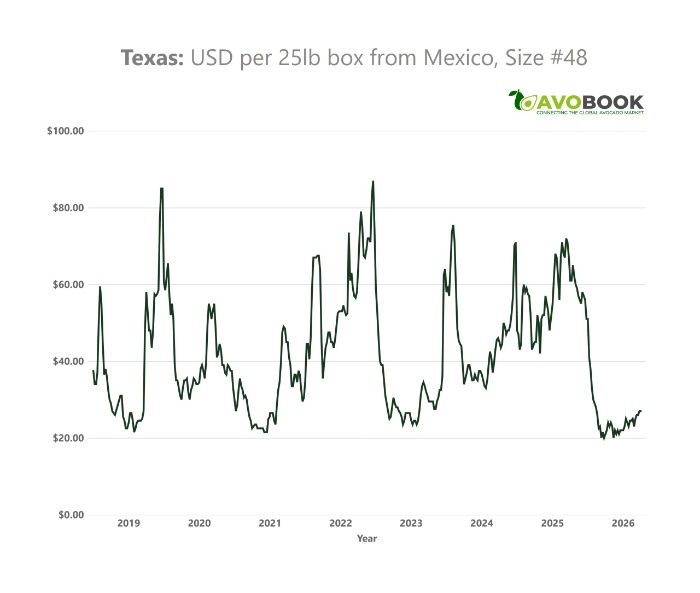
The US avocado market is experiencing one of its lowest price periods in the last decade, marked by a sharp increase in supply and a slower-than-usual recovery. This is evidenced by both the analysis of Avobook's data team and the perspective of its CEO, Sebastián de la Cuadra, who agree that the volume coming from Mexico has been the main factor behind this trend.
According to Avobook's data team, during February and March of 2026, prices in the US market—specifically in Texas for Mexican fruit—remained low, near their historical lows. This situation was observed in sizes such as #48 and #70, with values considerably lower than those recorded during the same period between 2022 and 2024, years in which the market showed significantly higher prices.
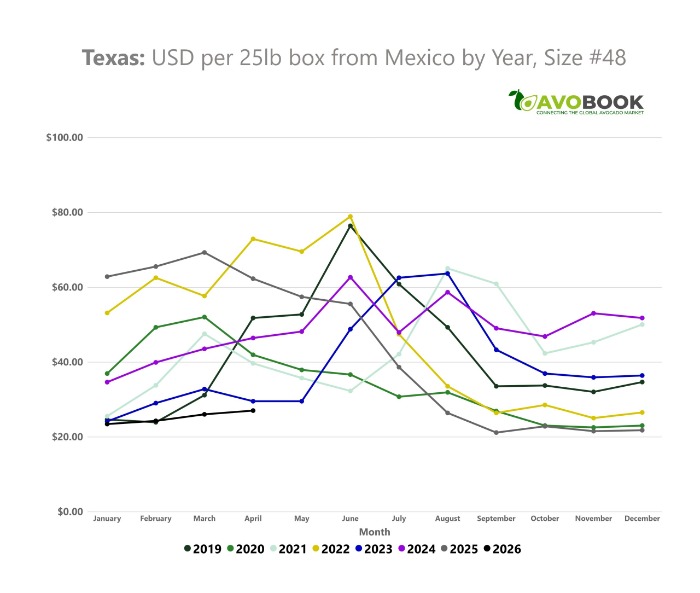
This behavior reflects a scenario of increased supply, even with high demand. Seasonally, prices typically begin to rebound between March and April; however, in 2026 this recovery has been slower than expected. Even so, April is beginning to show slight signs of an upward trend, which could mark a turning point after the lows observed during the first quarter.
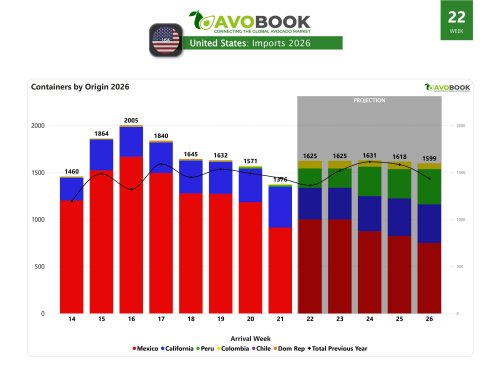
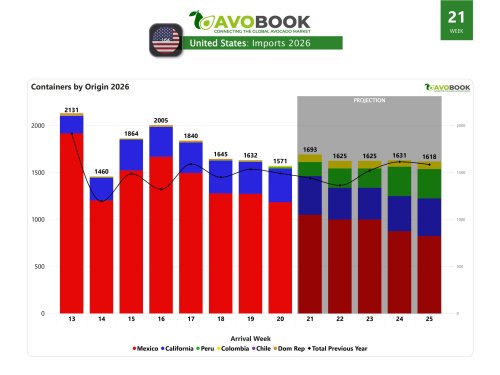
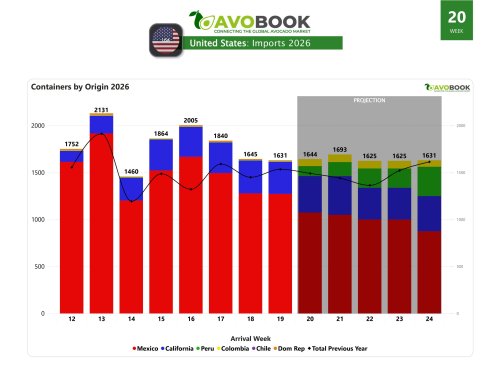
From the supply side, Sebastián de la Cuadra explains that “these price levels haven't been seen in the United States for at least a decade,” attributing this phenomenon directly to the increased Mexican harvest. In particular, he highlights that Mexico has exported approximately 20% more volume to the United States compared to the previous year, which has exerted significant downward pressure on prices.
“Last year there was less volume, which is why prices were practically double,” he points out. In contrast, the increase in production in Michoacán—the main producing region—has generated an oversupply that explains the current situation. However, this dynamic is expected to begin changing in the coming weeks.
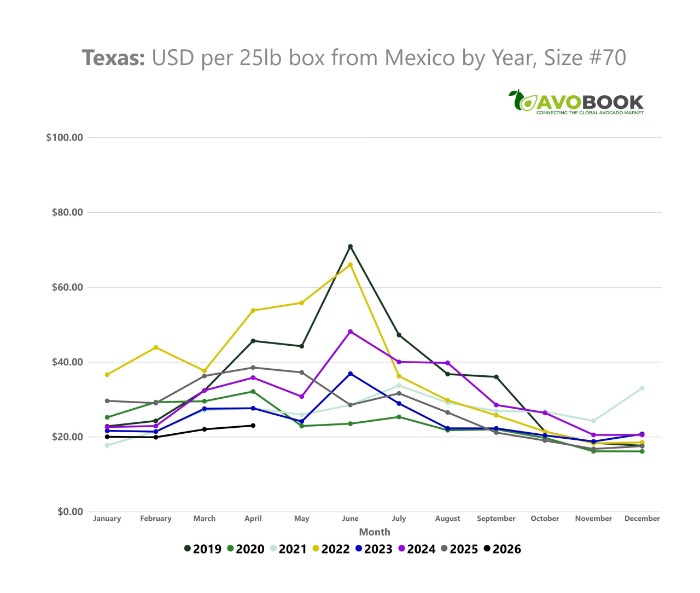
According to reports, approximately 20% of the main Mexican harvest remains, which is expected to last until June, before the start of the peak season known as "loose blossom" in July. This adjustment in fruit availability should translate into slight upward pressure on prices during April, May, and June, as supply begins to decrease.
In line with this analysis, Avobook's data team projects a moderate recovery in the short term, driven by reduced supply from Mexico. However, it cautions that this increase would be limited by previously high volumes and the entry of other origins, particularly Peru.
De la Cuadra emphasizes that price trends will depend primarily on supply. “The only way to stabilize prices depends on the harvest volume,” he states, adding that monitoring the upcoming season, which begins between July and August, will be key.
In general terms, the market appears to have bottomed out after a weak start to the year, giving way to a phase of gradual recovery. However, unlike previous cycles, a strong rebound is not anticipated in the short term, but rather a progressive stabilization within a context of greater balance between supply and demand.
Subscribe to our WhatsApp channel and receive the latest news from the international avocado market every week:https://www.whatsapp.com/channel/0029Vb81Exv1yT2Eff1Hjo2w