Renzo Canepa
From isolated data to integrated information, the real leap in agronomic management
Chili
Modern agriculture produces terabytes of data daily, but accumulating data does not equate to making good decisions . Soil analysis (physical, chemical, microbiological), leaf tissue analysis, plant sap analysis, or a satellite index contribute very little if analyzed in isolation; the real value lies in transforming this stream of heterogeneous measurements into contextualized information , capable of connecting human decisions with the crop's biological response in real time.
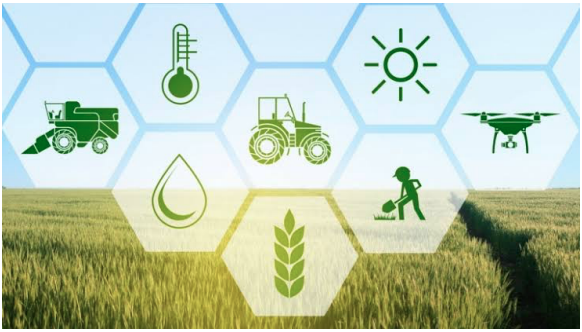
Interconnecting agronomic and operational factors is the key to success thanks to technologies and new knowledge available worldwide.
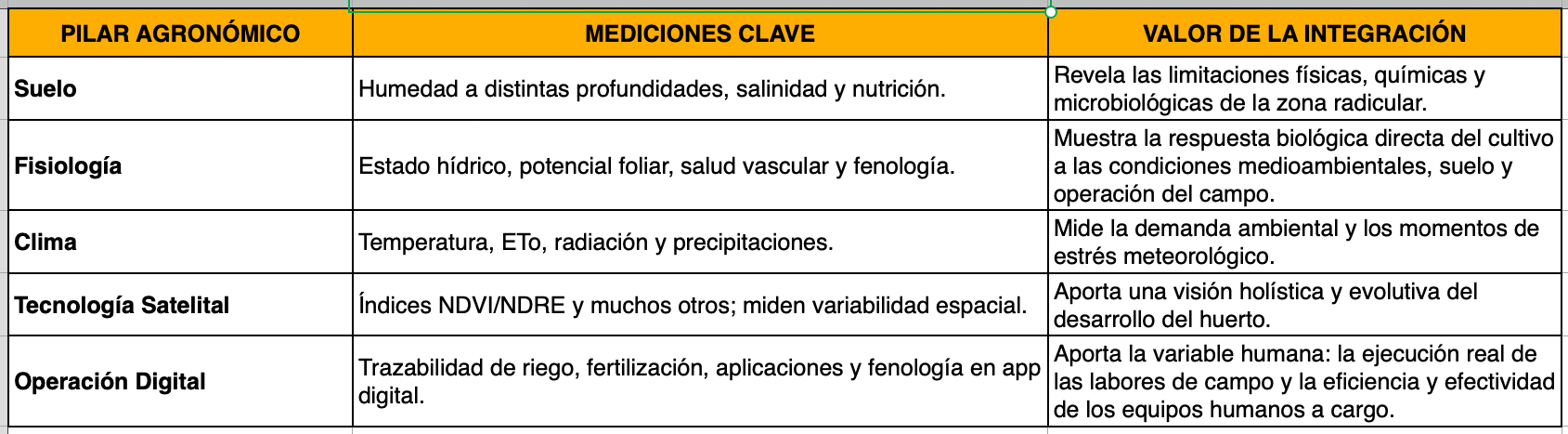
To accurately understand what happens within each plot or irrigation sector, it is essential to examine five fundamental layers that interact continuously:
Correlate Cause and Effect in Real Time
The biggest obstacle in traditional agriculture is the time lag between what happens in the field and the assessment of its consequences. Without real-time digital recording applications that capture tasks at the exact moment they occur (who applied, how much was irrigated, which area was treated), it is impossible to identify the true source of a problem or success and make informed, data-driven decisions.
When field operations are digitally integrated with agroclimatic measurements, diagnosis ceases to be INTUITION and becomes a demonstrable CERTAINTY:
- Operational management mismatch: A drop in plant vigor (visible by satellite) may be mistakenly attributed to disease, when app records reveal a delay in the irrigation window or an unreported dripper blockage.
- Response to inputs: An increase in the physiological stress of the plant can be explained by comparing the exact date of a fertilization recorded in the app with the peaks of electrical conductivity measured by the soil probes.
This direct correlation between cause (operation + climate + soil) and effect (physiological response + spectral signature) transforms management from reactive to predictive. The ultimate goal of digital agriculture is not to fill the field with sensors, but to unify their readings so that each piece of data gives meaning to the next.
The analogy that best reflects our vision of how to operate any crop is preparing an athlete or a sports team for the Olympics consistently year after year, periodically reviewing the areas of nutrition (fertilization and irrigation), kinesiology (physiology), psychology (soil in its entirety), basic disorders (monitoring of pests and diseases), etc.; being permanently correlated with the basic preparation (records of what the field actually executes through a digital application).
Renzo Canepa Gutierrez
Chili
renzo@agrocanepa.cl – +56 9 79053241
Agro Canepa SpA