Adilson Luis Penariol
Brazil: the challenge of managing a historic harvest
Brazil
Record-breaking seasons are usually celebrated with enthusiasm due to the large volumes achieved. However, they also test an industry's ability to manage a growing supply, develop new markets, and maintain a healthy balance between exports and local consumption. That is precisely what the Brazilian Hass avocado sector experienced during the 2016 season.
With a national production exceeding 60,000 tons, the country recorded its largest harvest in recent history. Following this milestone, the challenge was no longer simply to produce more fruit in the orchards, but to manage that growth efficiently, strategically distributing the increased volumes between the domestic market and demanding international destinations.
This season's harvest was characterized by a more concentrated harvest than usual. Many producers attempted to bring forward the harvest, but the delayed accumulation of dry matter meant that a large portion of the volume was concentrated during April and May. As a result, avocado exports from Brazil increased significantly during those two months.
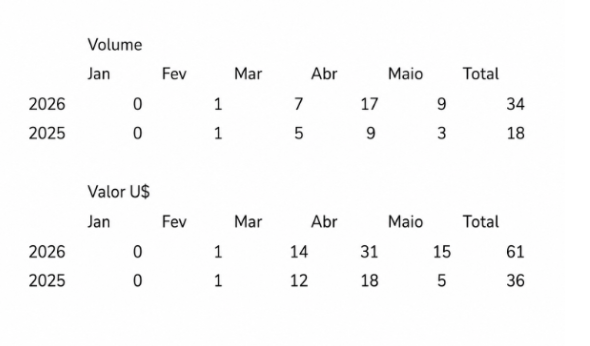
However, the international landscape changed rapidly with the arrival of larger volumes of Peruvian fruit in the European market . From June onwards, Brazilian shipments decreased, and a significant portion of the fruit had to be redirected to the domestic market, generating downward pressure on local prices.
Every agricultural industry operates within this complex balance. Lower fruit availability typically leads to faster, better returns for producers, while oversupply puts downward pressure on prices. However, this same situation can also become the perfect opportunity to expand the consumer base.
The real winner was Brazil's domestic market
One of the most positive and noteworthy aspects of this year's campaign was the remarkable strengthening of the Brazilian market. Thanks to the abundant availability of fruit and intensive promotional campaigns in supermarket chains and retail outlets, Hass avocados reached consumers at much more attractive prices, even narrowing the historical price gap with traditional tropical avocados.
This scenario of affordable prices allowed thousands of people to add the product to their shopping basket for the first time, and domestic consumption grew significantly. While in previous seasons the domestic market absorbed around 8,000 tons, during 2026 that figure could easily reach 12,000 tons.
Beyond the specific volume achieved, this performance demonstrates that the sustainable development of the industry does not depend solely on exports. Building and consolidating a strong domestic market is the best tool to mitigate the sustained increase in production and provide financial stability to the sector in the coming years.
A projected growth that does not stop
The outlook for avocado production in Brazil remains extremely favorable. The cultivated area continues to expand at a steady rate of almost 1,000 hectares per year, a growth driven primarily by the state of Minas Gerais, although significant new plantations are also being established in areas such as Rio Grande do Sul, Bahia, and Pernambuco, seeking to extend harvest windows thanks to their diverse climatic conditions.
The country currently has approximately 10,000 hectares planted and a short-term production potential of around 100,000 tons. However, it is projected to reach 15,000 hectares in the coming years and surpass the 150,000-ton mark, solidifying Brazil's position as a major player in the international avocado market.
The 2026 season offered a valuable lesson for the entire supply chain: the industry's success will no longer be measured solely by tonnage produced or containers exported, but by the ability to cultivate markets capable of absorbing a constantly expanding supply in a balanced way. This will undoubtedly be the key to the future of Hass avocados in Brazil.
Adilson Luis Penariol
Partner/Director AvoPrime Ftutas SA
adilson.luis@avoprime.com.br