Colombian market
Colombia now has 42,000 hectares of Hass avocados
Orchard renewal, a smaller off-season harvest, and rising labor and fertilizer costs mark a period of adjustment for Colombian-grown coffee.
After several years of sustained expansion, the Hass avocado industry in Colombia is beginning to show signs of adjustment. Although the country maintains a solid production base and still has room to grow in export volume, the current scenario is forcing the sector to focus more on efficiency than expansion.
Factors such as the low prices recorded in 2025, the devaluation of the dollar, the rise in labor costs and the increase in fertilizers are discouraging the entry of new cultivation areas, while producers concentrate their efforts on sustaining the profitability of already established fields.
Andrés Toro, COO of the company Cartama, explains that Colombia is entering a different stage in its productive development. “Yes, it is a stage of consolidation. Low market prices in 2025, combined with the devaluation of the dollar, rising labor and fertilizer costs, discourage the introduction of new cultivation areas and force existing ones to be very efficient and competitive in order to remain viable,” he points out.
Orchard renovation with no net growth
One of the defining elements of this new phase is the process of orchard renewal. Some affected fields are being taken out of production while new plantings begin, but this does not imply a significant increase in the total cultivated area.
According to ICA data cited by Toro, just over 900 new hectares were registered in 2025, reaching a total of 42,000 hectares of Hass avocados registered for export in Colombia. Currently, the country exports around 200,000 tons.
In terms of volume, growth remains in the double digits, while in terms of area, the increase is between 2% and 3%. However, the executive warns that the real potential still lies in productivity per hectare.
“If we take a very general average of tons exported per hectare, that indicator is still very low, at 4.7 tons per hectare. This leads me to believe that we can still grow to at least double the volume in the next five years,” he states.
In other words, rather than adding new hectares, the challenge would be to improve the performance of existing fields.
The crossbeam would be the most affected
Although a possible drop of around 5% in total production this season has been suggested, Toro believes that the analysis should focus on the behavior of the different production windows.
The main concern is the off-season harvest, which coincides with Peru's commercial window and which this year is particularly weakened by climatic factors.
“Due to weather issues, rain and cold in the latter part of 2025, we are seeing a particularly low offspring harvest,” he explains.
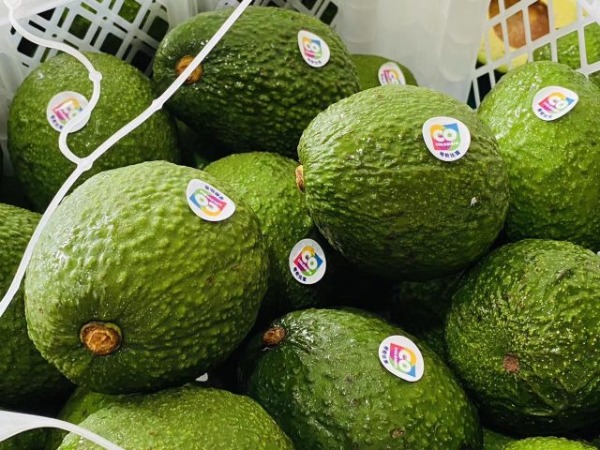
In contrast, the main harvest—which takes place between October and March—shows better prospects, with trees exhibiting strong flowering and good fruit set. However, flowering is more widespread than usual, which could shift a significant portion of that volume to 2027.
“Let’s hope that the summer, marked by an El Niño phenomenon, prevents a loss of volume,” he adds.
This behavior could translate into lower immediate availability of fruit, especially during the months when Colombia typically takes advantage of better marketing windows. The reduced supply of the off-season harvest coincides directly with Peru's strong presence in Europe, one of Colombia's main markets.
According to Toro, Peru projects a slightly higher volume this year than last season, with a strong concentration on small sizes and a rate close to 800 containers per week in Europe.
However, the lower Colombian production in this window also facilitates a better commercial adaptation.
“For Colombia, with a reduced supply, it’s easier to compete and adapt. Generally speaking, we need more fruit to meet our production requirements,” he explains.
In the case of Morocco, the situation has also worked in Colombia's favor. Although greater competitive pressure from that source was expected, the floods affected its export supply.
“Morocco, contrary to expectations, has been affected in its supply this year due to the floods, and prices in the Colombian market have been good so far,” he says.
This has allowed the market to maintain favorable commercial conditions for Colombian origin, despite the lower availability of fruit.
One of the most sensitive factors for the industry continues to be the increase in costs, especially considering that much of Colombian production takes place in hilly areas, with low mechanization and high dependence on labor.
The increase in the minimum wage —close to 25%— is in addition to the rise in fertilizer prices, driven by international logistical restrictions such as difficulties in passing through the Strait of Hormuz.
According to Toro, this combination directly impacts profitability and forces a rethinking of the production operation.
“Labor costs plus the increase in fertilizers are a direct blow to the profitability and cash flow of crops. We have an obligation to review processes, times and movements, and different ways of doing things,” he says.
In this scenario, productivity ceases to be a desirable goal and becomes an indispensable condition.
“In a context of high labor and agricultural input costs, productivity per hectare, with export quality, is a must,” he concludes.
Thus, rather than a halt in growth, Colombia faces a consolidation stage where productive efficiency will define how competitive its avocados will remain in international markets.