“The United States market still has room to grow.”
Avobook spoke with Antonio Villaseñor, CEO of Aztecavo, one of the leading exporters of Mexican avocados to the United States, who explains the strategies that help their company's market position and how he views the arrival of new origins to the country where Mexico is the undisputed king.
José Antonio Villaseñor is connected to the world of avocados not only through family tradition. He begins his conversation with Avobook by saying, “I’m from Uruapan, in Michoacán, Mexico.”
It's almost a statement of principles, because this area is known as "the Orchard of Michoacán," because it is one of the most fertile lands in the state, with a subtropical climate ideal for growing fruits, especially avocados, lemons, guavas, and strawberries.
Combine those qualities with the skills of its people for making wooden crafts.
Antonio knows his land and the benefits of avocado production and export, knowing that he is in the most important supply center in the United States.
“Entering this world happened very naturally. Basically, because my father (from whom I inherited my name) started his career in avocados as a producer in the 1970s, although his true calling was more commercial. Starting in the 1980s, he began an export business to France, when there was overproduction in Mexico. It was the first market that began to show interest in Mexico,” Villaseñor explains.
At that time, the United States was under a ban on the import of Mexican avocados, which lasted for 83 years, from 1914 to 1997. The difference between what was produced and consumed within the country was sent to France, a portion to Japan, Canada, and other alternative markets.
These were also the years when Antonio began a brief career as a professional footballer, which ended when he finished his studies and joined his father's team, within the business to which they both continue to dedicate themselves with total energy.
“He’s still here,” he says proudly.
Antonio's approach is more commercially focused, managing clients and always seeking the best marketing alternatives.
“At first, Europe was our main market: France, England, Spain, the Scandinavian countries, Germany, and England. Later, we diversified a bit and started shipping to Japan, we had experience in Chile, and a little bit in China. But everything changed radically in the Mexican industry when the United States market opened up,” explains Villaseñor, CEO of the Michoacán-based company Aztecavo.
Aztecavo: among the Top 5 in the avocado trade in the United States
Aztecavo was founded in 2005 in partnership with a Chilean firm owned by businessman Rodrigo Barros, who also owned Agricom. This partnership continued until 2019, when Agricom was sold to Westfalia and the Villaseñor family decided to pursue their own path with the company.
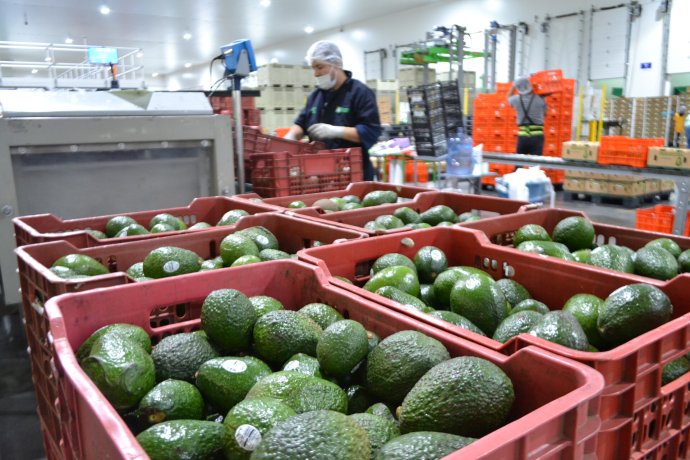
Currently, Aztecavo focuses on buying, selling, and exporting. Although it maintains some crops, its own production represents a minimal volume of the business.
- Approximately how many producers does Aztecavo have a relationship with?
“In Mexico and Michoacán, the avocado industry is quite fragmented. In the U.S. program alone, there are 35,000 producers. Of those 35,000, Aztecavo works with around 2,500 per season. It varies slightly, but approximately 70% of the total volume is concentrated among about 200 producers. Therefore, the company is dedicated to serving both the producers and our clients.”
- What volume does the company represent in avocado shipments to the United States?
“We are managing a harvest of around 70,000 tons, depending on the season. We ship between 60,000 and 70,000 tons to the United States per season. That represents a market share of between 5% and 7% in packaging to that country. We are among the top 5 exporters.”
- In a universe of how many players in that market?
“There are around 90 registered packing plants. We are among the top 5. But that group includes very important transnational companies, such as Mission Produce, Del Monte, and Westfalia. We are the only Mexican company that is larger in terms of exports to the United States.”
- What has been the most important factor in the evolution of Aztecavo and its prominence in the United States?
“We have been able to seize opportunities and adapt to the customer. The overall market grew at a double-digit rate. For many years, consumption in the United States was low. In the 1990s and early 2000s, it was possibly around one kilogram per capita, or even less. Now we are between three and a half and four kilograms per capita, which has led to overall industry growth. In our case, the key has been our focus on service to both the producer and the customer. This gave us the competitive advantage to increase our volume over time. The market has been changing in terms of packaging, presentations, and delivery conditions, and we have been adapting to these new market conditions.”
- What have been the most important adaptations?
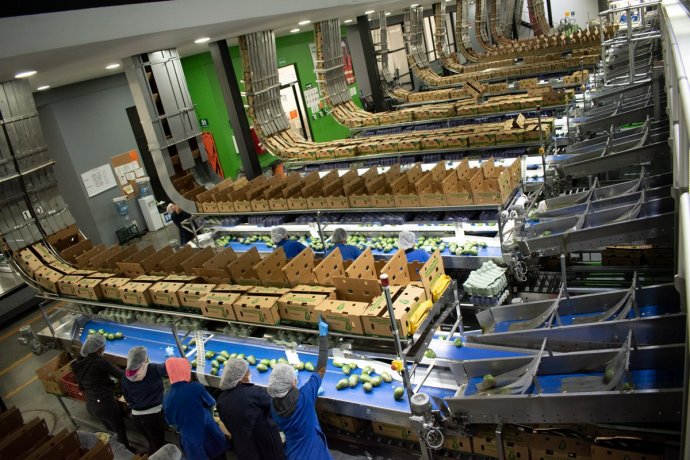
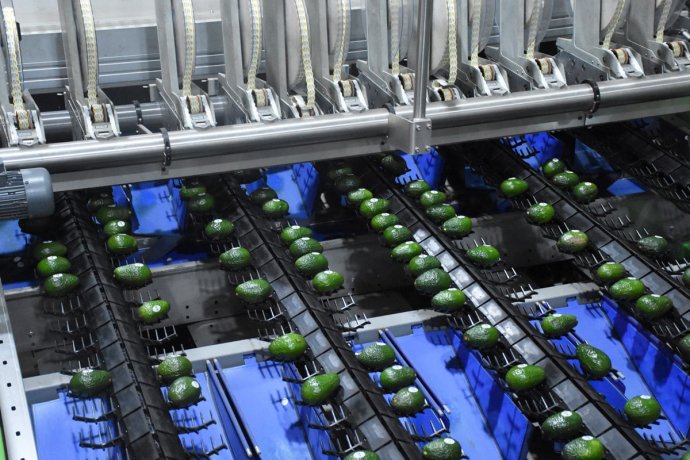
“Globally, the important thing used to be size. The packaging was almost uniform, in 25-pound boxes. Over time, each customer, and then each retailer in the United States, like Walmart, Costco, and so on, has wanted to customize their packaging and delivery methods. That's why there are now so many different presentations, which makes the process a bit more complex. As my dad used to say: before, if a customer asked for something, his response would be, 'Well, this is what the tree is going to give me, and that's what I'm going to send you.' Now it's more about service: 'What do you want? What are you looking for?' This whole service aspect is what can differentiate you from other suppliers. Besides, of course, quality is key—it's a perishable fruit, not perfect, and it can vary from orchard to orchard, from altitude to sea level, and so on. And the other key is consistency in deliveries.”
- If they don't have control over production, how do they deal with the characteristics of the fruit considering they have a relationship with so many producers?
“There isn’t a single company that can truly handle its production directly (commercially). Most of it has to be through buying and selling, due to the quantities involved. Although it can vary from year to year, both the producers and we are getting to know the product and how to work on quality more or less.”
- Some argue that Mexican avocados dictate the rules of the avocado market in the United States. Do you agree with that statement?
“Absolutely. In the United States, 8 out of every 10 avocados consumed are Mexican. Clearly, Mexico's market share is very strong. Add to that our proximity to the market and the much more efficient communication, transportation, and delivery systems. When avocados come from Chile, Peru, or Colombia, they require ships and a completely different logistical approach than what we have in Mexico. Then there's the promotion carried out by Avocados From Mexico, with significant investments. California is the local production, but it's almost entirely destined for a very specific market niche. This production represents only 10% of what Mexico produces or exports to the United States.”
- What is the niche market that California avocados reach?
"California avocados stay in California. Maybe a little goes to Arizona, to the satellite states, but they really stay in California and, most likely, in the higher-end markets, where they seek to give the producer a better return. Markets looking for something more economical are probably being supplied with Mexican fruit."
- Mexico also has high domestic consumption. What percentage is going abroad and how much is staying in the country?
“Of the total volume that Mexico produces, easily 50% is exported and 50% stays. In the specific case of Michoacán, practically 70% is exported to the United States. But Mexico produces in around 25 states and that fruit is what is supplying the national market.”
- How are the percentages of Mexican fruit that go to the United States divided between those sent to other markets?
“Michoacán and Jalisco export to the United States. In the case of Michoacán, I think almost 80% goes to the United States, a little to Canada as well, and some to Japan, but very little. Jalisco is a bit more diversified, exporting to the United States, Japan, and Europe. The other states try to focus on the domestic market or Canada.”
The general economic rule states that if there is a large volume of a product on the market, the price tends to be lower. Considering that production is very large in Mexico, how do they manage to prevent the high volume from significantly impacting the price?
“There isn’t really a specific price target. Everyone has to work within their own budget. But there’s no general price objective. The market sets that price based on supply and demand. But we know, for example, that peak production in Mexico, and the peak for small producers who need to sell their fruit, is between October and February. So during that time there’s more fruit available, and the price is usually the lowest in the market, which is when you have to do the most promotion. The price is negotiated with the producer almost every day. For example, right now we’re at around 50 pesos per kilo, and last year at this same time we were around 25. It’s not that there was much more fruit, but rather that market conditions and consumer psychology cause things to change.”
- What other factors facilitate price determination?
“Avocados are a product that allows producers to have some flexibility. Unlike other fruits or perishables, which ripen and must be picked immediately because they will fall off, avocados remain on the tree at a certain stage of ripeness and can be left for a month or two. This allows producers to choose their harvest times or plan their harvest schedules. It's very versatile in that sense.”
- But that's possible because Mexico has the advantage of being close to the market.
"It's right".
- How do you view the presence of other origins in the United States?
“We couldn’t expect the market to be entirely for Mexican industry. We have to see it as an opportunity for improvement. Mexico depends on the United States market for between 90% and 100% of its revenue. So, we must have a very clear strategy for how to manage this market, in order to remain a reliable supplier.”
- And how do they face that competition?
“It’s natural that there’s competition, and we have to learn from it. Ultimately, the issue is how the Mexican industry does its best to remain a key supplier. In the short term, we don’t see anyone who can replace Mexico’s supply. But we also have to consider that the U.S. market still has room to grow. Today, consumption is at 4 kilos per capita. Chile probably consumes 10, the same as Mexico. So, there’s still room for growth in consumption, which means there’s plenty of space before we can say the market is saturated. There’s still a lot of room for everyone.”