Analogy between hierarchies of human and plant needs, to achieve productivity
Chili
Abraham Maslow was an American psychologist known as one of the founders and main exponents of humanistic psychology, a psychological current that postulates the existence of a basic human tendency towards mental health and would manifest itself as a series of processes in search of self-actualization.
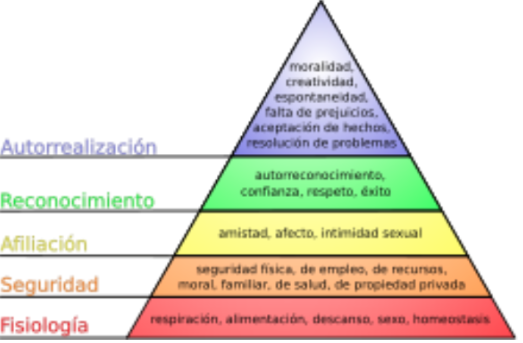
The central thesis of the pyramid of needs, which has been applied in various fields even beyond psychology, expresses that human beings have needs structured in different strata, in such a way that secondary or higher needs arise as the more basic ones are satisfied.
Just as Maslow developed the above, the American regenerative agronomist John Kempf developed the Plant Health Pyramid, composed of 4 levels of development, as described in the following graphic:
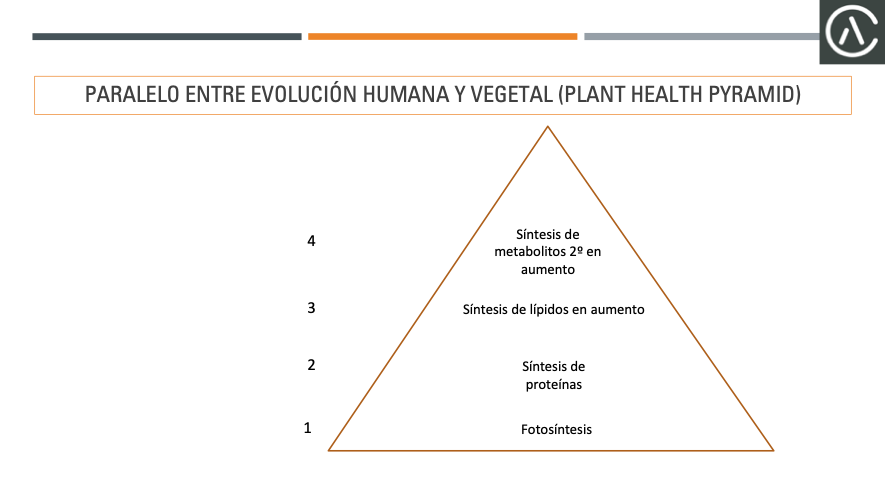
It is important to note that each of the stages described above overlaps with each other and each one is dependent on the function it performs at a lower level.
The fundamental and primary process is photosynthesis (characterized by the synthesis of ideally complex sugars), followed by the synthesis of proteins (transformation of ammonium and nitrates into amino acids and proteins), lipids, and finally secondary metabolites.
According to the author and multiple field experiments, plants that manage to maintain each of these functions in optimal condition are resistant to diseases and pests.
The first two levels are characterized by passive immunity, dependent on the internal chemical mineral balance of the plants, given by nutrition and chemical balance in the soil.
This state can be determined through sap analysis, similar to a human blood test, in which the cationic and anionic balances that give equilibrium to the internal metabolism of plants can be known, both as a whole and also dependent on adequate amounts of trace elements.
At the next two levels, plant immunity is active, originating mainly from the vigor present in the biology in the soil.
Similar to humans, higher levels are dependent on microbiology, both intestinal for humans, and the microbiology existing in the soil for plants.
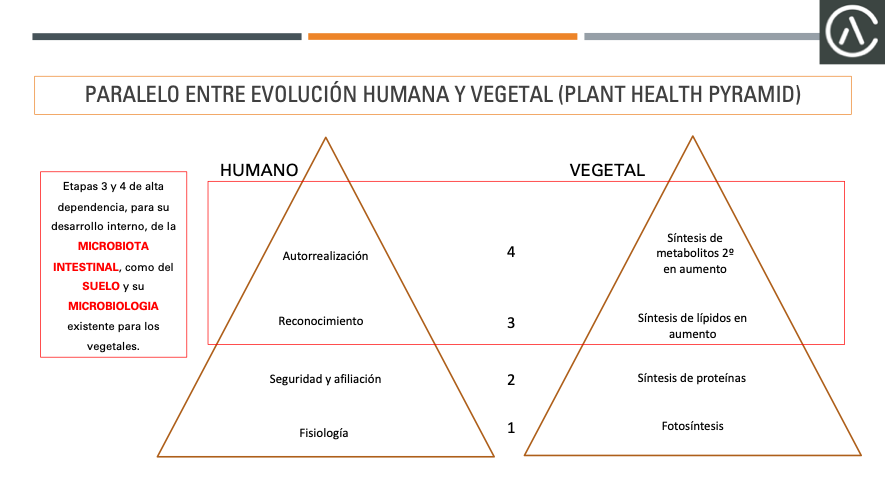
Having a soil enriched with life provides the plant with the ability to develop and express more noticeably the two known resistance systems, both induced and acquired (ISR and SAR).
Soil microbiology, in addition to allowing the development of these types of resistance in plants, provides them with secondary metabolites, fundamental bases of nutritional density in foods (fruits and vegetables), whatever they may be, pillars of a well-balanced and enriched human nutrition.
For all the reasons mentioned above, just as a well-nourished person with a healthy gut flora will be healthier and therefore more productive in different areas of life, so too will plants with more developed higher levels of gut flora.
Good mineral nutrition, based primarily on the synergistic relationship with the microbiological diversity of the soil, will generate plants that are more resilient to biotic and abiotic stresses, tolerant and even resistant to diseases and pests, but mainly, and what interests us as an industry, more productive.
Renzo Canepa Gutierrez Chile renzo@agrocanepa.cl - + 56 9 79053241 Agro Canepa SpA