The quality of Colombian Hass avocados: the foundation of trust
Chili
This week I was in Colombia providing consulting services, preparing to determine the visual indicators of the fruit that will be harvested in the coming weeks, corresponding to a small volume associated with a late flowering in 2024.
Quality characteristics such as fruit size, shape, and external appearance without signs of pest or disease damage are visual indicators that can also contribute to estimating the economic return for this fruit, whether sold in the domestic or export market. According to laboratory analysis results, this fruit comes from a balanced orchard, without mineral deficiencies or excesses in foliar analysis, and with a pulp nitrogen/calcium (N/Ca) ratio of 7.2. Thus, in accordance with the high demands of destination markets, this avocado will be marketed with good quality. However, before my return to Chile, I visited a supermarket in Medellín and saw Colombian fruit on the shelf, and just seeing it was enough to make me think of writing this column. I was concerned.
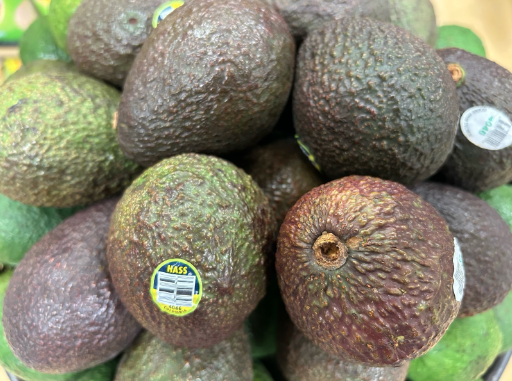
What I saw was fruit of a regular size, about 160 grams. The green skin was too bright and turned reddish, with spots associated with harvesting wet fruit (lenticellosis). Worse still, I observed a subcuticular fungal halo in the peduncular area, leading me to suspect the presence of peduncular rot caused by fungi of the Botryosphaeraceae group (Fig. 1). These four external observations led me to conclude that this fruit was unreliable and that, regardless of the price, it would not be sold again in the future.
Quality and trust
Whatever post-harvest treatment is applied to fruit from an orchard with management problems or undefined harvesting criteria, it will never improve the quality of the harvested fruit. Quality is an attribute determined on harvest day, based on the entire orchard management history prior to harvest. If the fruit exhibits characteristics suggesting uneven ripening, there is nothing that can be done; no post-harvest treatments will improve the quality. From that point forward, physiological maturity will progress more or less rapidly toward consumption ripeness, gradual softening, and/or deterioration, depending on the fruit's susceptibility. The selling price will be proportional to the confidence that the fruit inspires.
In Colombia, freshly set fruit is observed at various times of the year, so the exercise of determining fruit quality begins with recognizing the most distinctive features of a fruit close to harvest maturity.
Heterogeneous maturity in the tree
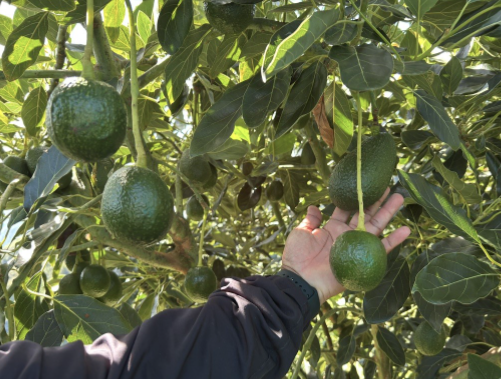
Avocado harvest maturity is associated with a dry matter content above 23%, but climatic conditions cause at least two flowering periods of varying intensity per year. So, which fruit on the tree should have a dry matter content above 23%? The process begins in the field, working with the harvest managers to determine which fruit should be picked. Sampling the fruit that shows the most growth, a more rounded or elongated shape, and less shine could indicate the fruit to be harvested.
The shape of the fruit is characteristic of a particular flowering period in the year, as cooler temperatures tend to produce rounder fruit, while warmer conditions during the growing season tend to produce elongated fruit. This can occur seasonally with the main or off-season flowering, and can also be observed locally within the same farm at different altitudes, with fruit at 2600 meters above sea level being more rounded than that from an altitude of 2450 meters above sea level.
Every avocado farmer should strive for the highest quality harvested fruit to achieve high reliability regarding quality, as this benefits not only individual farmers who can differentiate themselves, but also creates a virtuous cycle that benefits the entire avocado industry.
The field laboratory and some analytical quality indicators
Starting with understanding the quality of the fruit to be harvested, a dedicated dry matter laboratory can be set up. The required materials are a universal oven and an analytical balance with a precision of 0.01 g. Once the fruit has been identified according to its harvest maturity for the corresponding bloom, we go to the field to observe and establish a good visual correlation with the fruit to be harvested. This process should be learned by the foremen or harvest manager.
If the harvested fruit has uniform maturity, its post-harvest evolution and senescence rate are determined by the effectiveness of the applied fertilization plan. The indicators are foliar and mineral analyses of the fruit. Foliar nitrogen and potassium levels can be correlated with fruit quality. Nitrogen levels above 2.7% indicate a fertilization plan that may have generated excessive vigor at the expense of internal quality due to competition for absorbed calcium, which is diverted to the shoots instead of reaching the fruit. Conversely, high foliar potassium levels, above 2%, can indicate competition for potassium at the expense of calcium. These relationships are not absolute, but they are useful for making adjustments in the following season.
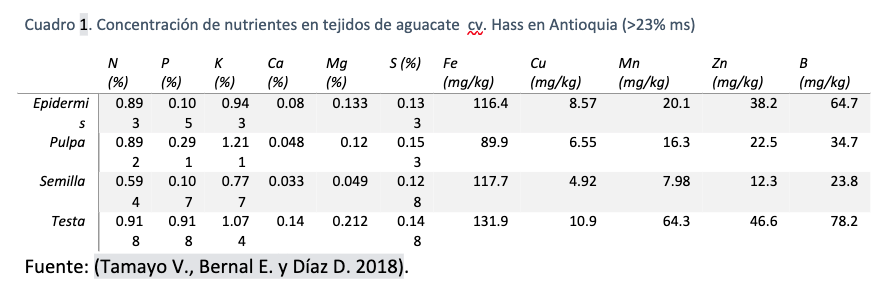
Complementary to foliar analysis are multimineral analyses of avocado pulp. Pulp analysis can determine nitrogen-to-calcium ratios, which can be a very good predictor of post-harvest fruit development. An N/Ca ratio of 18.5 (Table 1) may indicate that the fruit has a high susceptibility to pulp rot, compared to fruit with an N/Ca ratio of 7.2.
 References
Tamayo V., Álvaro, Jorge A. Bernal E., and Cipriano A. Díaz D. 2018. “Composition and Removal of Nutrients by the Harvested Fruit of Avocado Cv. Hass in Antioquia.” National Faculty of Agronomy Magazine Medellin 71 (2): 8511–16.
Francisco González Valdés, Avocado and Citrus Consultant - Bellotoagro +56 97478 7535 - fgonzalez@bellotoagro.cl