Hass avocado production in Chile continues its sustained upward trend, solidifying its position as a key player in the global market. Luis Zapata highlights this, noting that volume grew by 14% in 2025 alone, driven largely by favorable weather conditions, particularly increased rainfall in recent years. This scenario has led to improved orchard productivity, but has also brought about significant changes in the supply structure.
One of the main effects of this growth has been a shift in fruit size distribution. The industry has seen a significant increase in the proportion of large fruit, while smaller sizes—highly demanded by retailers—have decreased considerably. This shortage has forced producers to supplement local supply with imports, primarily from Peru , demonstrating a growing reliance on external markets to balance product availability for domestic consumption.
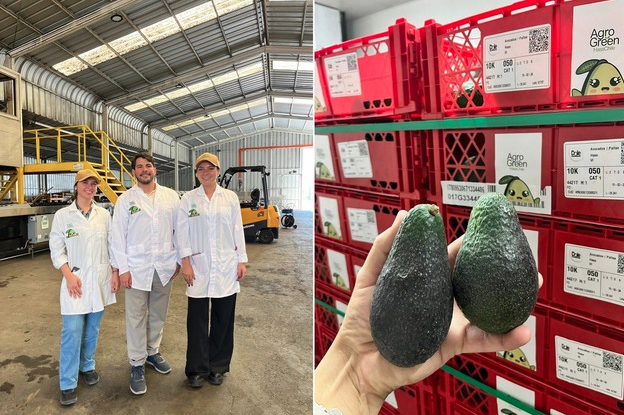
Internationally, the scenario is more challenging. Global overproduction of avocados has generated sustained pressure on prices in key markets such as Europe and the United States, limiting profit margins. This context forces exporters to operate more efficiently and redefine their commercial strategies in an increasingly competitive environment. Despite this, Chilean domestic consumption remains a fundamental pillar, with levels close to 9 kilos per capita annually and absorbing approximately 50% of national production.
Meanwhile, regional dynamism is reshaping trade flows. Argentina has emerged as a key market, especially for smaller sizes, whose demand has grown rapidly, driven by changes in consumption habits. This situation has strained domestic supply and led some exporters to prioritize this destination over the local market. In contrast, countries like Brazil maintain more limited demand for Hass avocados, due to a preference for sweeter varieties.
Finally, the narrow trade window between Chile and Peru adds another layer of complexity. With barely a month's transition between the two seasons, the opportunity for other origins is significantly reduced, intensifying competition and forcing the Chilean industry to optimize its commercial timing. In this context, the challenge lies not only in increasing volume but also in achieving a balance between supply, demand, and profitability in an increasingly demanding global market.